AUSTRALIA ONLY

Compare · Home batteries

Compare home batteries without the sales pitch.

Size it for your home, then compare compatible systems.

Sourced facts. Clearly labelled opinion.
A better way to start

Start with your household.

Use your bill, night usage and solar to estimate a sensible size.

Home battery planner · about 2 minutes

Tell us how your home uses power.

We estimate the useful battery size and inverter power.

Capacity is how long the battery lasts.
Power is what it can run at the same time.
1Start with your electricity billUse the total kWh and number of days shown on the same bill.

Example figures are prefilled so you can see how the planner works. Replace them with the numbers from your own bill.

Your bill averages 20.0 kWh per day. We use it as a baseline, not the final battery size.

2What solar and electrical supply do you have?Solar limits how much energy can be put back into the battery on a short winter day.

Not sure? Check your switchboard or electricity meter, or leave this selected. We will keep both supply types in the shortlist and flag that the installer must confirm compatibility.

Conservative winter planning estimate: 21.8 kWh of solar per day. Roof direction, shade and weather can move this substantially.

3How much grid use do you want to avoid?A regularly cycled battery usually makes more financial sense than one that sits half full.
4What should still run after sunset?Select the demanding appliances you want the battery and inverter to support. These are rough planning loads.
Your live estimate is ready15.0 kWh battery · 5 kW inverterView and validate the full result ↓
Share this exact shortlistThe link reopens these answers and recommendations.
Your live planning result

Here is how the numbers were built.

Every answer above updates this page. The headline result is followed by the full calculation trail so you can challenge the assumptions before asking for quotes.

Updates with every answer
Usable battery target15.0kWh

Enough stored energy for the selected high-use night plus losses, reserve and winter headroom.

Inverter power target5kW

Estimated continuous output needed when your selected appliances overlap, including a planning margin.

Winter solar refill check145%

Solar looks reasonably matched for a conservative winter day.

Calculation trail

Validate each step.

The planner deliberately shows its working. These are broad planning assumptions, not a simulation of your interval-meter data.

01

Daily-use baseline

Bill input
1200 kWh ÷ 60 days
Daily average
20.0 kWh
Solar-use correction
23.0 kWh/day

We add 15% because a power bill normally misses solar consumed directly in the home.

02

High-use night

Most overnight use
10.4 kWh
Base house + selected appliances
3.5 + 0.0 kWh
Higher scenario selected
10.4 kWh

The planner takes the higher of the bill-derived night and the appliance scenario, rather than adding both and counting the same usage twice.

03

Battery allowances

Conversion losses
+0.9 kWh
Seasonal / ageing headroom
+2.0 kWh
10% operating reserve
+1.5 kWh

After rounding to the next 0.5 kWh step, the usable battery target is 15.0 kWh.

04

Inverter concurrency

Base household load
1.2 kW
Selected appliance peaks
0.0 kW
85% overlap + 15% margin
1.4 kW

The target rounds up to 5 kW, with a 5 kW minimum. Motor start-up surges still need model-specific checking.

Solar refill test

6.6 kW of solar × 3.3 winter yield hours

That gives a conservative estimate of 21.8 kWh per day, or about 145% of the recommended battery. Roof direction, shade, weather and daytime household use can reduce what reaches the battery.

Maximum installed budget$25,000

Move the budget and the product shortlist will re-rank immediately.

$8kPlanning allowance only$80k
Research-based shortlist

Best matching battery + inverter systems

Your supply type is not confirmed, so the inverter model shown remains phase-dependent. Cost figures are planning allowances, not retailer quotes.

Why the inverter is now part of every result

DC-coupled batteries need a supported hybrid inverter. Integrated and AC-coupled batteries already contain their battery inverter, but may still need a controller, gateway or backup interface. The finder now selects the smallest verified model that covers the calculated continuous-output target; the exact code still needs to appear on the installer's proposal.

01
Sungrow brand markBattery brandSungrow

SBH100–400

Research match

Supports single-phase and three-phase; your home supply still needs confirmation. The suggested configuration is 0.0 kWh above the target.

Suggested battery configuration
15.0 kWh · 3 modules
Inverter power validation
Up to 8.0 kW covers the 5 kW target
Installed-cost allowance
$12,000
Within selected budget
Matched hybrid inverterPower target covered
Sungrow SH8.0RS

Compatible family: SH8.0/10RS

Sungrow lists the newer SH-RS family as a supported single-phase route for SBH storage.

  • Home supply: Single-phase - confirm this before accepting the recommendation
  • Planner target: 5 kW continuous output
  • Selected model output: 8.0 kW
  • Verified family ceiling: 10.0 kW

Check on the quote: Confirm the exact SBH module count, SH-RS generation and backup hardware.

Ready to price-check this match?

Your battery size, supply type and recommended inverter are carried into the form. TechManPat reviews the request before it is passed to a relevant Australian installer.

02
Enphase brand markBattery brandEnphase

IQ Battery 5P FlexPhase

Research match

Supports single-phase and three-phase; your home supply still needs confirmation. The suggested configuration is 0.0 kWh above the target.

Suggested battery configuration
15.0 kWh · 3 modules
Inverter power validation
Up to 11.5 kW covers the 5 kW target
Installed-cost allowance
$14,500
Within selected budget
Embedded AC inverterPower target covered
Enphase 3 × IQ Battery 5P embedded microinverter set

Compatible family: IQ Battery 5P embedded microinverters

Each battery includes grid-forming microinverters, so an existing solar inverter does not need to be replaced solely to add storage.

  • Home supply: Single-phase - confirm this before accepting the recommendation
  • Planner target: 5 kW continuous output
  • Selected model output: 11.5 kW
  • Verified family ceiling: 11.5 kW

Check on the quote: Backup operation requires the correct IQ System Controller and balance-of-system hardware.

03
iStore brand markBattery brandiStore

Smart String ESS

Research match

Supports single-phase and three-phase; your home supply still needs confirmation. The suggested configuration is 0.0 kWh above the target.

Suggested battery configuration
15.0 kWh · 3 modules
Inverter power validation
Up to 5.0 kW covers the 5 kW target
Installed-cost allowance
$11,500
Within selected budget
Matched hybrid inverterPower target covered
iStore iStore 5.0 kW single-phase hybrid

Compatible family: iStore Hybrid Inverter Range

The iStore battery is designed around the matching iStore hybrid ecosystem.

  • Home supply: Single-phase - confirm this before accepting the recommendation
  • Planner target: 5 kW continuous output
  • Selected model output: 5.0 kW
  • Verified family ceiling: 10.0 kW

Check on the quote: Several generations share similar names; require exact inverter and battery model codes.

Use this as an education and quote-checking tool.

It cannot see interval-meter data, appliance model numbers, roof shade, network limits, tariffs or installer design. Ask an accredited installer to verify usable capacity, continuous and surge power, phase behaviour, backup circuits and valid battery/inverter pairings.

Australian battery catalogue

Compare complete systems.

30 detailed profiles · 3,344 screened CEC model listings.

Tesla Powerwall 3
batteryOur opinion
Tesla brand markBattery brandTesla

Powerwall 3

A polished all-in-one battery with a built-in solar inverter.
Capacity
13.5–54 kWh
Design
Integrated
Supply
Single-phase
Facts, configurations and opinion
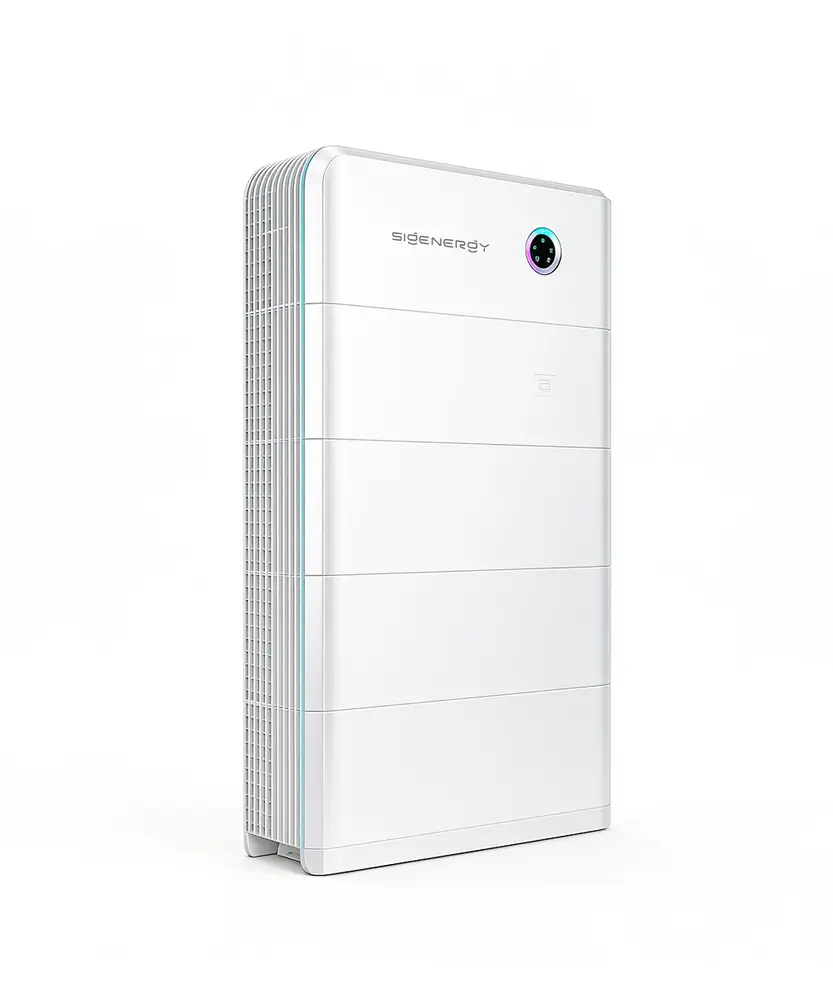
Sigenergy SigenStor
batteryOur opinion
Sigenergy brand markBattery brandSigenergy

SigenStor

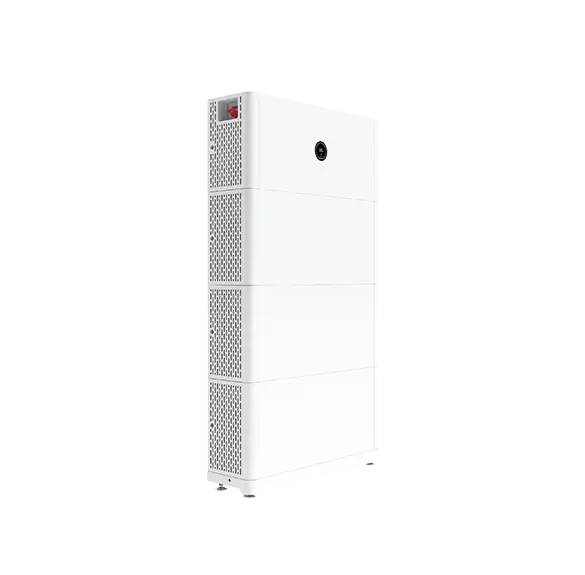
A modular 5-in-1 system that combines storage, inverter and energy control.
Capacity
5.2–48 kWh
Design
Integrated
Supply
1 & 3 phase
Facts, configurations and opinion
Growatt APX HV
batteryOur opinion
Growatt brand markBattery brandGrowatt

APX HV

A flexible LFP stack designed around Growatt hybrid inverters.

Capacity
4.5–27 kWh
Design
DC-coupled
Supply
1 & 3 phase
Facts, configurations and opinion
Sungrow SBR096–256
batteryOur opinion
Sungrow brand markBattery brandSungrow

SBR096–256

A widely paired high-voltage LFP battery for Sungrow hybrid systems.

Capacity
6.4–25.6 kWh
Design
DC-coupled
Supply
1 & 3 phase
Facts, configurations and opinion
Sungrow SBH100–400
batteryOur opinion
Sungrow brand markBattery brandSungrow

SBH100–400

A higher-power 5 kWh modular LFP stack for newer Sungrow hybrid systems.

Capacity
10–40 kWh
Design
DC-coupled
Supply
1 & 3 phase
Facts, configurations and opinion
Fox ESS CQ7
batteryOur opinion
Fox ESS brand markBattery brandFox ESS

CQ7

A new high-voltage LFP stack spanning large residential and light-commercial capacities.

Capacity
13.92–97.44 kWh
Design
DC-coupled
Supply
1 & 3 phase
Facts, configurations and opinion
View all home batteries Search 3,344 screened CEC-approved model listings across 133 manufacturer labels →

Do not ignore the inverter

The inverter matters too.

Check output, phases, backup hardware and compatibility.

Compare 17 inverter families →Open the battery price per kWh index →Embed the free battery calculator →
HOW TECHMANPAT COMPARES

Facts and opinion stay separate.

  • Australian availability
  • Valid battery and inverter pairings
  • Usable capacity and real output
  • Backup behaviour
  • Warranty conditions