

The short version
What you need to know.
- The NSW incentive is available from 1 September 2026 to apartment buildings with at least four units, with no current closing date.
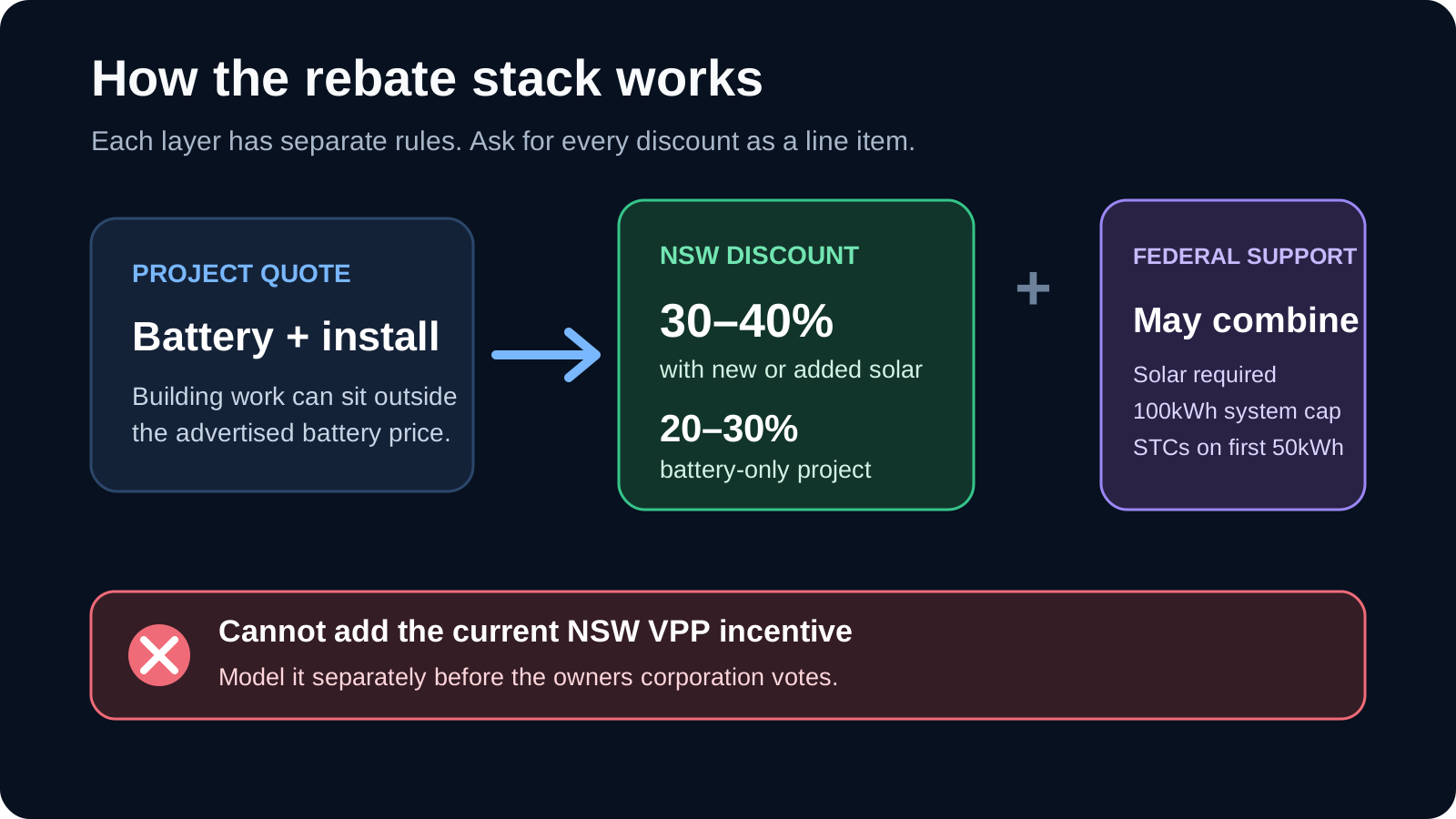
- The indicative discount is 30–40% on the battery installation when new or additional solar is installed, or 20–30% for a battery by itself.
- A renter cannot claim it for their own unit. The owners corporation must select the project and pass a sustainability infrastructure resolution with at least 50% support from people present at the meeting.
- Eligible batteries must provide 20–200kWh of usable capacity, appear on the approved product list, be installed outdoors and be installed by an SAA-accredited battery installer.
- The NSW discount may be combined with the federal Cheaper Home Batteries Program if both sets of rules are met, but it cannot be combined with the current NSW VPP incentive.
This is a building discount, not a rebate for one apartment
Apartment residents have mostly missed the home-battery boom for an obvious reason: the useful parts of the building are shared. The roof, switchboard, common electrical supply and most realistic battery locations usually belong to the owners corporation. One resident cannot simply order a Powerwall, put it beside the bins and send the invoice to NSW.
The new incentive is aimed at the whole apartment building. It is open to NSW buildings with at least four units and there is no upper limit on the number of apartments. The discount is applied upfront through a participating installer, so strata does not pay full price and wait for a government reimbursement later.
The headline number is genuinely substantial. NSW estimates a discount of about 30–40% on the battery installation when new or additional solar is installed within 90 days of the battery. A battery-only project receives a smaller indicative discount of 20–30%. The final figure depends on the battery, building, installer, compliance work and margin, which is why the government tells buildings to obtain multiple quotes.
Who is actually eligible?
The building must be in NSW, contain at least four units, have the required planning approval and not have used this particular NSW apartment-battery discount before. A building that already has a battery may still qualify for an additional system, provided it has not previously claimed this incentive.
The battery requirements are narrower than the headline. Total usable capacity must be at least 20kWh and no more than 200kWh. The selected model must be on the approved battery list, the installation must be outdoors and the work must be completed by, or under the on-site supervision of, a Solar Accreditation Australia-accredited battery installer.
Outdoor-only installation could be the practical deal-breaker for some buildings. A large system needs a compliant location with suitable clearances, access, protection from vehicles and consideration of fire separation, drainage and residents. A basement car park or an unused electrical room may look convenient, but it does not satisfy the current NSW incentive requirement. The government says it is investigating other installation options.
Can the NSW and federal discounts be combined?
Yes, potentially. NSW explicitly says an eligible apartment building can combine its discount with the Australian Government's Cheaper Home Batteries Program. That does not mean every 20–200kWh NSW-eligible project receives both automatically.
The federal program has separate rules. It supports battery systems from 5–100kWh nominal capacity, creates certificates for only the first 50kWh of usable capacity, and requires a qualifying battery to be connected with existing or new solar. An on-grid system must also be technically capable of participating in a virtual power plant, although the owner does not have to join one.
This matters most for larger apartment projects. A 150kWh shared battery may fit inside the NSW program but sit outside the federal program's maximum system size. The installer needs to show every incentive as its own line item and confirm why the proposed electrical arrangement qualifies. Do not accept a sales pitch that simply adds two headline percentages together.
There is another catch: the NSW apartment-battery discount cannot be combined with the current NSW VPP incentive. That choice should be shown clearly in the financial model, rather than discovered after the owners corporation votes.
What could it cost for a small, medium or large building?
There is no honest universal price-per-apartment because strata buildings vary wildly. A clean modern switchboard, spare rooftop solar capacity and a simple embedded network are a different job from an older block that needs metering, cabling, fire and civil work before the battery arrives.
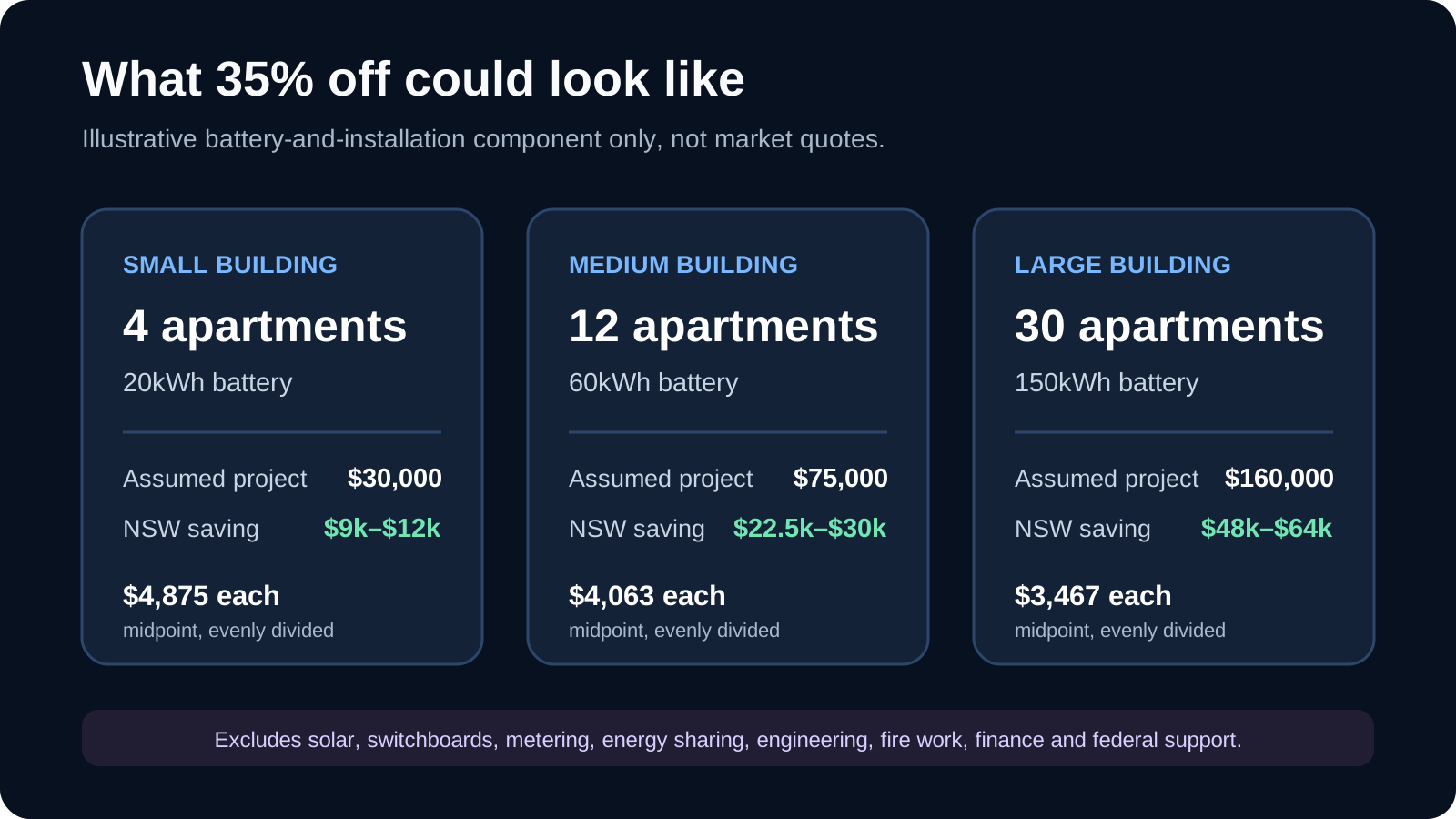
The examples below model only the battery-and-installation component and use round pre-discount assumptions, not live quotes. They apply the 35% midpoint of NSW's 30–40% solar-plus-battery range. Solar panels, switchboard upgrades, metering, energy-sharing equipment, engineering, planning, finance and ongoing maintenance are excluded. Federal battery support is also excluded because eligibility depends on the final system architecture.
- Small: 4 apartments, 20kWh battery, assumed $30,000 battery project. NSW discount range $9,000–$12,000; midpoint remaining cost $19,500, or $4,875 per apartment if divided evenly.
- Medium: 12 apartments, 60kWh battery, assumed $75,000 battery project. NSW discount range $22,500–$30,000; midpoint remaining cost $48,750, or about $4,063 per apartment.
- Large: 30 apartments, 150kWh battery, assumed $160,000 battery project. NSW discount range $48,000–$64,000; midpoint remaining cost $104,000, or about $3,467 per apartment.
The strata vote is only one part of the hard work
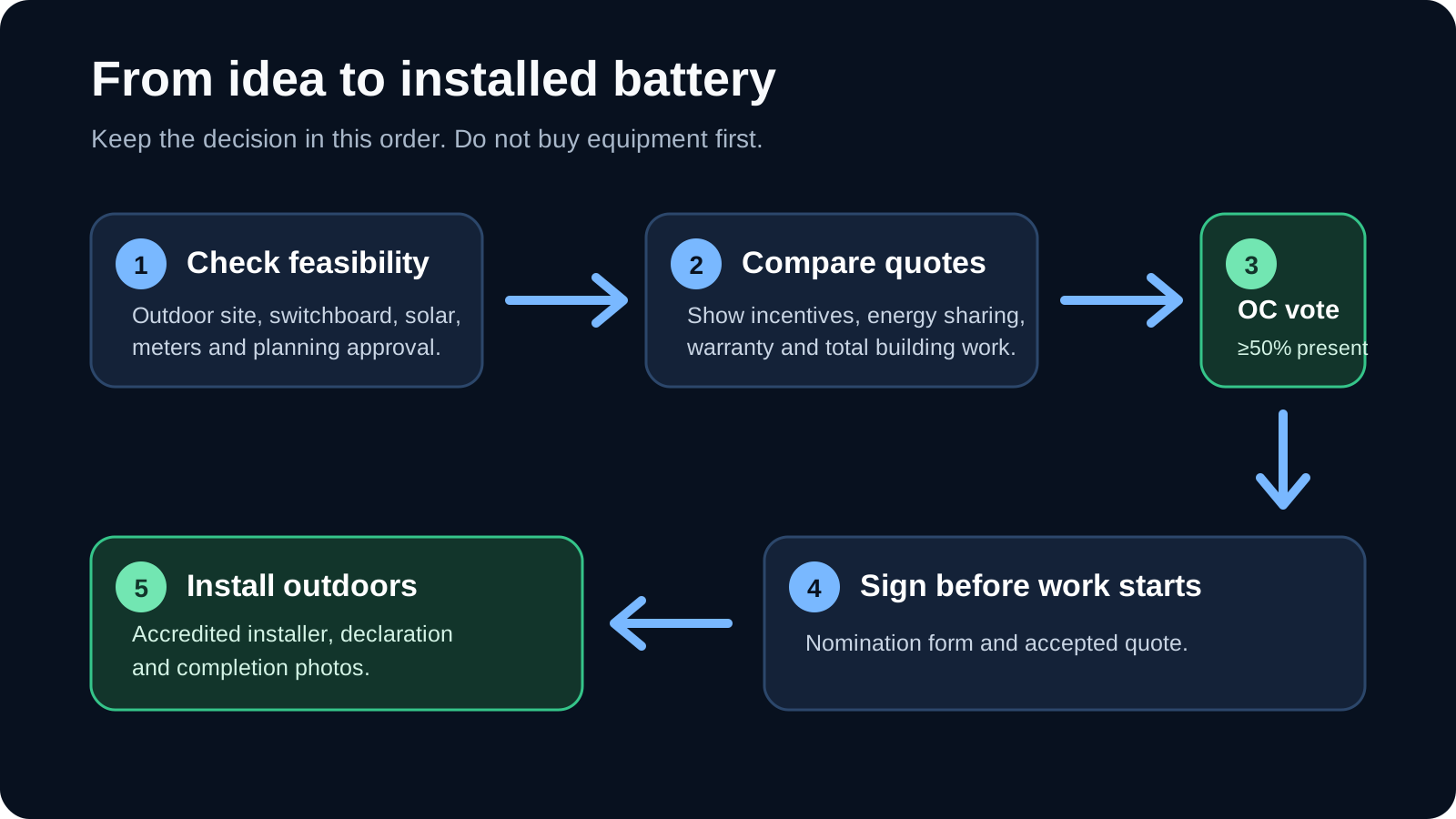
The strata committee cannot approve this alone. After obtaining several options, the owners corporation must vote on the preferred installation through a sustainability infrastructure resolution. NSW says the motion succeeds with 50% or greater support from those present at the meeting.
The proposal should arrive with more than a glossy battery brochure. Owners need the installed price after incentives, the proposed funding source, expected maintenance and warranty responsibilities, insurance implications, location, metering design and an explanation of how the savings will be distributed. Funding may come from the capital works fund, a special levy or another agreed arrangement.
The nomination form must be signed before installation begins because completed work is not reimbursed retrospectively. After installation, the building signs a declaration and the installer records photographic evidence of the completed system.
Can renters access it? Sort of, but not directly
The government lists renters among the people who can benefit, but a tenant cannot commission a common-property battery or force strata to apply. A renter must first speak to their landlord, who can then raise the proposal with other owners and the strata manager.
Even if the project proceeds, renters should ask how the benefit reaches their meter. A battery connected only to common-area loads might reduce strata electricity costs, but that does not automatically lower a tenant's retail electricity bill. A system designed to allocate solar and stored energy across apartments needs suitable metering, billing and energy-sharing technology.
That creates the familiar split-incentive problem. Owners may fund the project while tenants receive some of the bill savings. Strata should decide in advance whether value appears through lower common-property costs, individual electricity allocation, levies, rent or a combination. If nobody can explain the allocation in plain English, the financial proposal is not ready for a vote.
My verdict: a real opportunity, but start with the building
A discount of up to 40% makes shared batteries far more plausible for NSW apartments. The ability to combine the NSW and federal programs may improve the numbers again for qualifying systems. This is meaningful policy, not a token $200 coupon.
But apartments are not oversized houses. The hardest questions are where the battery sits, what it connects to and who receives the stored energy. A cheap battery that mainly shifts common-area lighting will deliver a very different result from a well-designed solar-sharing system across dozens of homes.
My advice is to spend the first meeting approving a proper feasibility exercise, not approving a particular battery. Collect interval data, inspect the switchboard and outdoor locations, map the meters, request at least three like-for-like quotes and make every incentive visible. Then residents can judge the actual cost and benefit instead of voting for the words 'up to 40% off'.
When the shortlist is ready, use Compare's Australian home-battery catalogue to check usable capacity, chemistry, warranty, backup capability and local support. The catalogue will not solve strata, but it can stop a complicated building project being made worse by the wrong product.
Primary sources
Read the evidence.
- Batteries for apartment buildings incentiveNSW Climate and Energy Action ↗
- Cheaper Home Batteries Program eligibilityAustralian Government DCCEEW ↗
- NSW virtual power plant incentiveNSW Climate and Energy Action ↗
- Sustainability upgrades in strataNSW Government ↗
- Presidio apartments solar case studyCity of Sydney ↗
- NSW apartment solar installation reportingABC News ↗
Program rules and eligibility were checked on 4 September 2026. The cost examples are transparent illustrations, not quotes or forecasts, and exclude several building-specific costs. This is general consumer information, not financial, strata, legal, engineering or electrical advice.
Community
Add to the article.
Useful experiences, questions and corrections make the next reader’s decision easier.
Comments appear here after moderation.