
The short version
What you need to know.
- From 1 July 2026, NBN removed the previous requirement for FTTC customers to order a high-speed plan—generally 100/40Mbps or above—to request an FTTP upgrade.
- NBN says the change covers all 860,000 customers remaining in its FTTC footprint, but you still need an address-level eligibility result and an order through a participating internet provider.
- Renters can request an upgrade, but must obtain landlord permission before the appointment because the work commonly involves drilling and may involve digging.
- FTTP is installed in parallel with the existing FTTC service. Once the fibre service is activated and the old service is cancelled, the copper no longer carries your NBN connection, although it may remain physically in place.
- A lower-speed plan does not become faster simply because it runs over fibre, but the connection can be more reliable and responsive, avoids copper line limitations and is ready for faster plans later.
What changed on 1 July 2026?
Until July, most households upgrading from Fibre to the Curb to Fibre to the Premises had to order a residential service based on an NBN wholesale speed of 100/40Mbps or above. That made the fibre installation look free, but it could force a household onto a more expensive plan than it actually needed.
NBN has now removed that speed trigger for all 860,000 customers remaining in its FTTC footprint. Its announcement says customers can contact their internet provider and request full fibre on whatever speed plan meets their needs. In practical terms, an eligible household may be able to keep a lower-cost NBN 50 or NBN 100-style retail plan while replacing the last piece of copper with fibre.
This is an infrastructure upgrade, not a free internet plan. You still pay your provider for the monthly service, plan names and speeds vary between retailers, and the order must be placed through a participating provider. Standard NBN-supplied equipment installation is generally included, but NBN advises that extra charges can arise from building type, complexity, private cabling or a provider's own terms.
FTTC and FTTP sound similar, but the last few metres matter
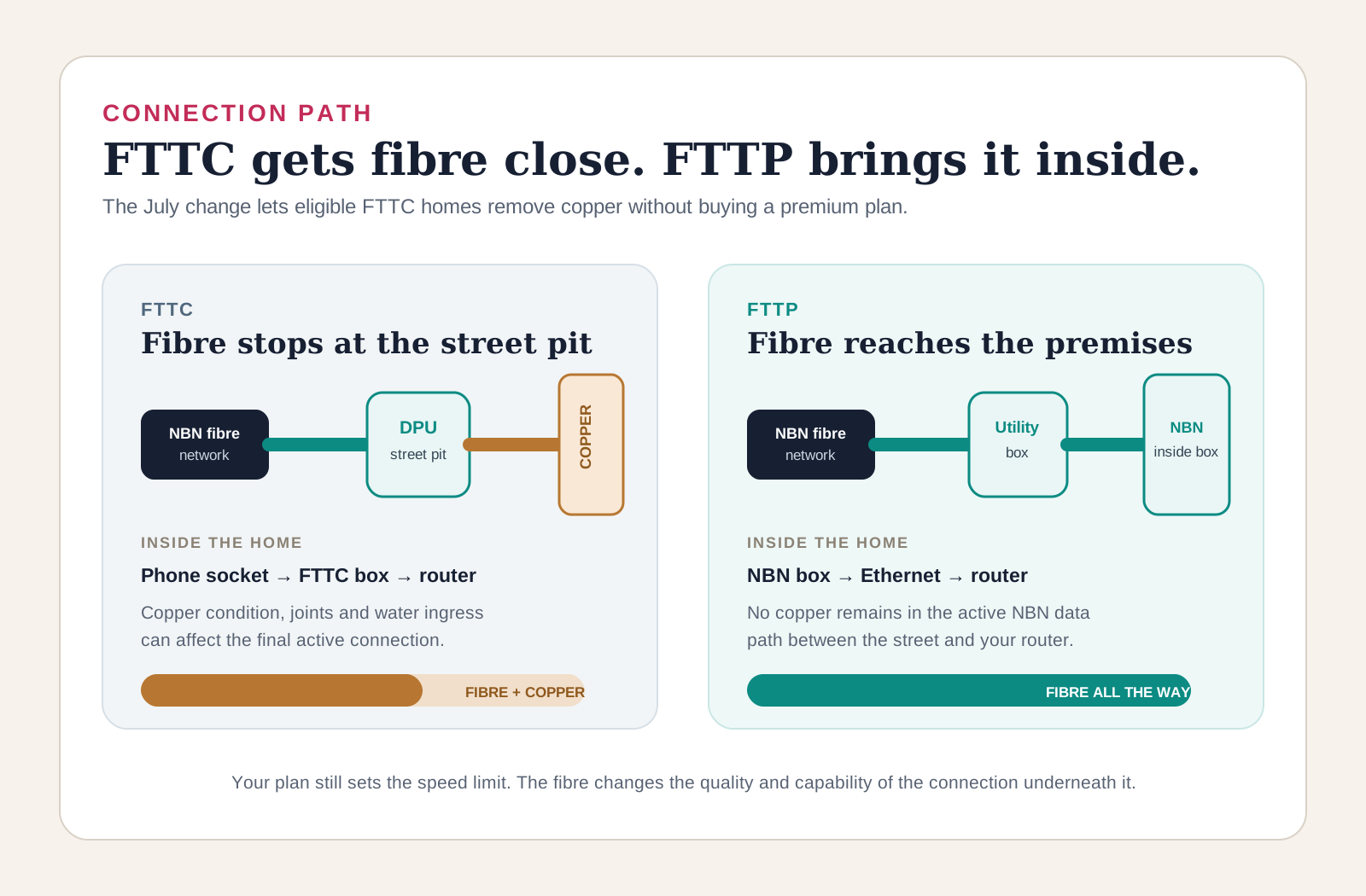
FTTC already brings fibre close to the property. It normally ends at a small distribution point unit, or DPU, in a pit near the kerb. The signal then travels over the property's existing copper lead-in to a telephone socket and a powered FTTC connection device inside the home.
FTTP removes that copper section from the active data path. Fibre runs from the street to an NBN utility box on or near the outside of the premises, then continues to an NBN connection box inside. Your router connects to that box by Ethernet rather than through a telephone socket.
The distance is short, but copper remains sensitive to joints, corrosion, water, electrical interference and physical condition. NBN says it is prioritising FTTC for an accelerated transition because the technology has higher fault rates than its other copper-based networks.
Are all 860,000 FTTC addresses automatically ready?
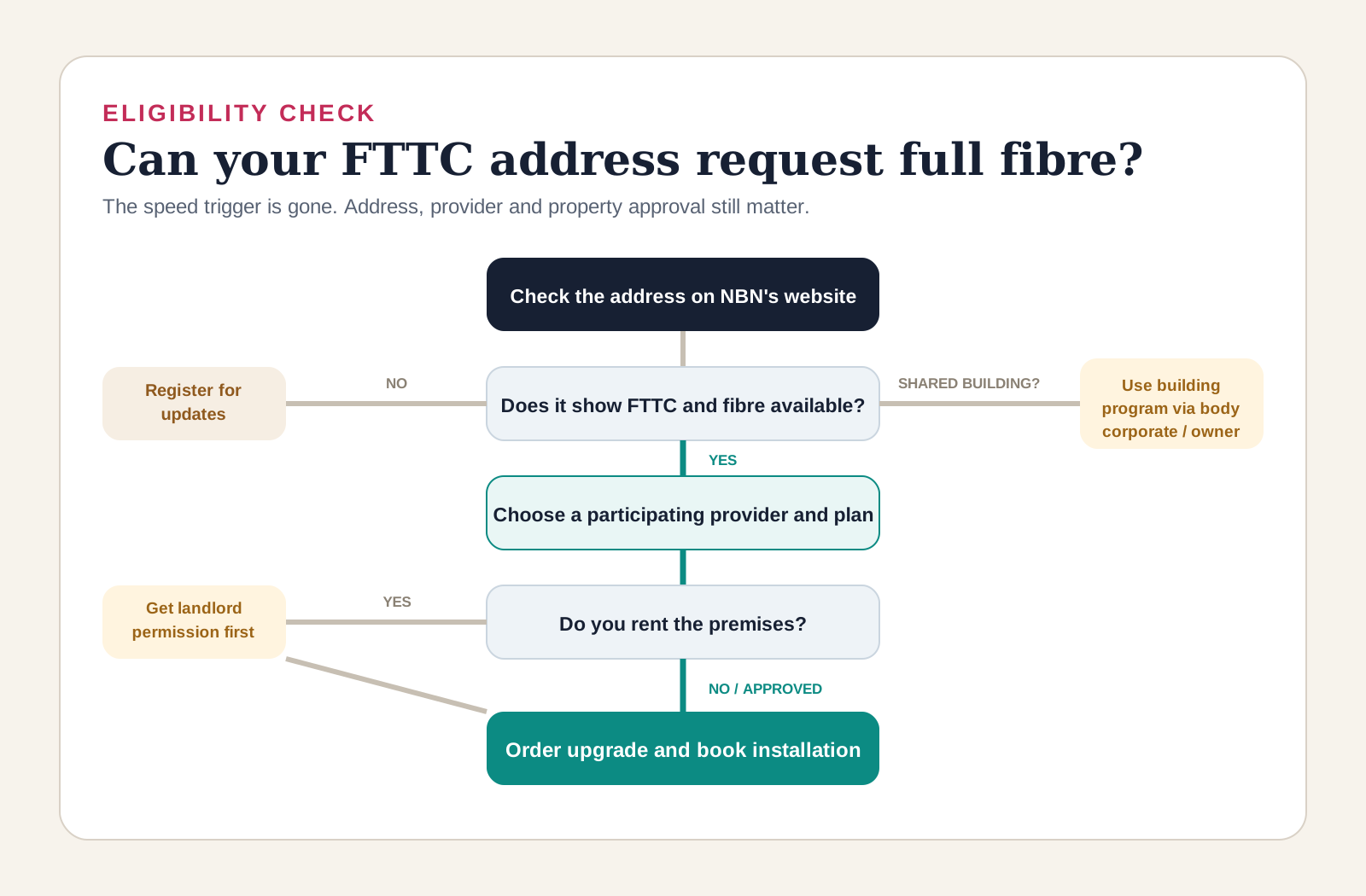
The announcement removes the speed-plan barrier across the FTTC footprint. It does not mean you should book a contractor yourself or assume every provider's ordering system will show the same option immediately. Start with NBN's address checker, then confirm the result with a participating provider.
Some premises need extra network work, a usable pathway or a more complex design before the fibre can be completed. Apartment buildings, townhouses, gated communities and other properties with shared communications infrastructure may need NBN's separate program for complex multi-dwelling properties. Those properties were already exempt from the high-speed-plan requirement, but an individual tenant generally cannot authorise a building-wide upgrade alone.
If the NBN checker says full fibre is available, ask the provider to confirm that its lower-speed plan can be used to place the upgrade order. NBN has removed its wholesale trigger, but retail product availability, discounts, contract conditions and any downgrade or cancellation fees remain provider decisions.
Can renters request the upgrade?
Yes, but a renter needs the owner's permission. NBN's installation guide says landlord approval must be obtained before installation day because technicians typically drill and sometimes need to dig. If you deal through a property manager, get the approval in writing and send the proposed appointment details before the technician arrives.
The upgrade adds fixed NBN equipment to the property, so it stays behind when the tenant moves. That makes the request easier to justify to a landlord: FTTP improves the property's long-term connection options and does not lock the owner into the tenant's chosen internet provider.
For an apartment or complex, the problem may be bigger than permission for one wall box. If fibre must pass through common property or shared communications infrastructure, the body corporate, owners committee or building owner may need to approve and register the upgrade for the whole building.
What the FTTP installation actually involves
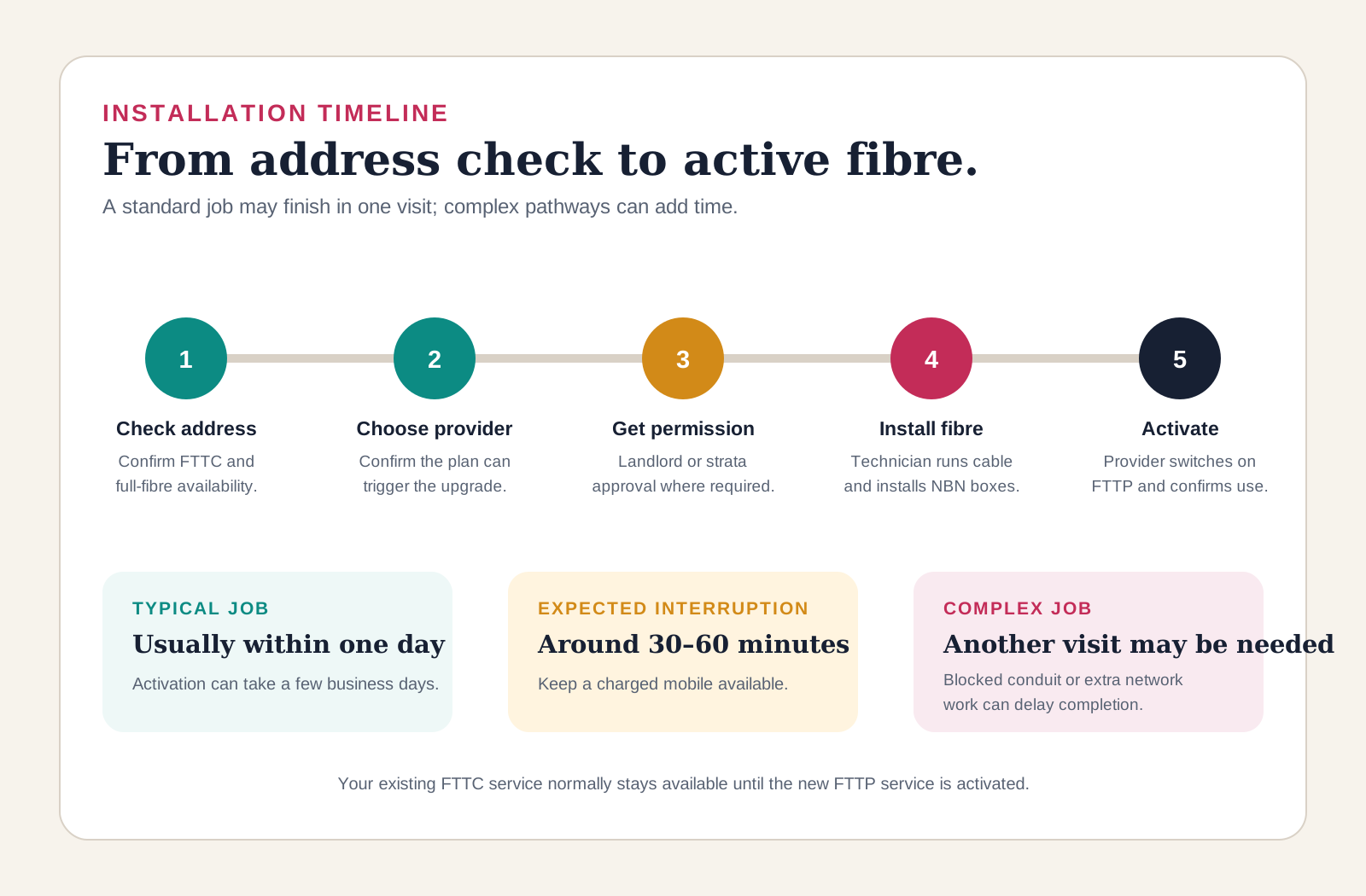
You do not order the upgrade directly from NBN. A participating phone or internet provider places the order and arranges the appointment. Someone over 18 must remain at the premises for the appointment and approve the installation route and equipment locations before work starts.
The technician runs fibre from the street, installs an external utility box where required, installs an NBN connection box inside and tests the equipment. The inside box needs power and its position matters because this is where your router connects. Do not casually approve the first location if it leaves the router trapped in a garage, front cupboard or far corner with poor Wi-Fi coverage. Ask what standard locations are available before signing off.
NBN says work is usually completed within a day, although blocked conduit, missing pathways, difficult access or third-party approvals can require another visit. Power or internet may be interrupted for roughly 30 to 60 minutes. The existing FTTC service can normally remain usable until the provider activates the new fibre service, which may happen the same day or take a few business days.
What happens to the copper lead-in and old FTTC box?
The new FTTP connection is installed in parallel with the existing FTTC service. That avoids cutting off the household while the fibre is being built and tested. When the FTTP service is active, confirm with the old provider that the FTTC service has been cancelled so you are not billed for two connections.
At that point the copper lead-in, telephone socket and FTTC connection device are no longer part of the active NBN data path. The fibre connection bypasses them completely. Do not assume the technician will pull every old copper cable out of the ground or wall, however. NBN's public upgrade material promises a new fibre path and equipment, not physical removal of all legacy cabling; what remains in place depends on the property and installation route.
The NBN-supplied FTTP connection box and utility box belong with the premises. Do not remove them when moving house. Ask the provider what to do with the detachable FTTC connection device once the old service has been decommissioned rather than throwing NBN equipment away.
Why upgrade if you are staying on NBN 50 or NBN 100?
The best reason is reliability, not a magic increase in the speed printed on the bill. A 50Mbps plan remains limited by the plan. If your FTTC service already holds full speed, never drops out and has low latency, the first speed test after moving to fibre may look almost identical.
The value is removing a failure-prone section from the connection. FTTP is not constrained by the condition of a copper lead-in, is less susceptible to electrical interference and gives NBN more headroom to support consistent performance. NBN describes full fibre as more reliable, responsive and resilient through severe weather than copper-based access technologies.
It also gives the property an upgrade path. If your household later needs faster downloads, higher uploads or a multi-gigabit plan, the physical work is already done. You can compare retail plans without first coordinating a technician visit, landlord approval and fibre construction during a busy move or work deadline.
- Fewer connection faults caused by old copper, joints or the street-side FTTC equipment.
- More consistent line performance because distance and copper quality no longer set the access limit.
- Potentially lower latency and better responsiveness, although routing and provider performance still matter.
- Immediate access to higher FTTP speed tiers later without another technology upgrade.
- A more attractive fixed connection for a future tenant or buyer.
What full fibre will not fix
FTTP does not repair every slow internet problem. Weak Wi-Fi in a back bedroom, an overloaded five-year-old router, poor mesh placement, congested provider links, slow overseas servers and a device limited to old wireless standards can all remain after the technician leaves.
The NBN connection box is not a Wi-Fi router. Your existing router may work if it has a suitable Ethernet WAN port and your provider supports it, but an old modem-router may require different settings or replacement. The provider should confirm compatibility before the appointment.
If your current FTTC connection is stable and you expect to move soon, the disruption may not feel urgent. But when the standard fibre installation is available without a forced plan upgrade, the balance has shifted. You are accepting a small amount of installation effort to remove copper from the active path and future-proof the premises without committing to a premium monthly bill.
Should you request the upgrade?
For most eligible owner-occupiers, I would. The old rule made households pay for speed to receive better infrastructure. The new rule lets you improve the infrastructure first and choose speed on its own merits. Even if NBN 50 is enough today, a standard FTTP installation is difficult to value at zero simply because your current download number does not change.
I would move more quickly if the FTTC service has dropouts, water-related faults, unstable sync, slow repair history or a damaged lead-in. Renters should still ask, but the practical decision belongs with the landlord and can take longer. Apartment residents should check the building program rather than assuming the single-dwelling process applies.
Before ordering, compare the full first-year plan cost, confirm the provider will process the upgrade on your preferred tier, ask about contract or downgrade conditions, secure the required permissions and plan the connection-box location. The fibre is the long-term asset; the retail plan can change later.
Primary sources
Read the evidence.
- NBN removes high-speed plan requirement for FTTC upgradesNBN Co ↗
- Check and request an NBN full-fibre upgradeNBN Co ↗
- Step-by-step FTTP installation guideNBN Co ↗
- Full-fibre upgrade frequently asked questionsNBN Co ↗
- Fibre to the Curb explainedNBN Co ↗
- Fibre to the Premises explainedNBN Co ↗
- Full-fibre upgrades for buildings and complexesNBN Co ↗
Information was checked on 29 August 2026. The 1 July rule change removes NBN's high-speed-plan requirement for FTTC upgrades. Address eligibility, participating providers, retail plan availability, pricing, complex-installation charges and appointment timing can vary. NBN wholesale speeds are not guaranteed end-user speeds.
Well I guess this is good…