
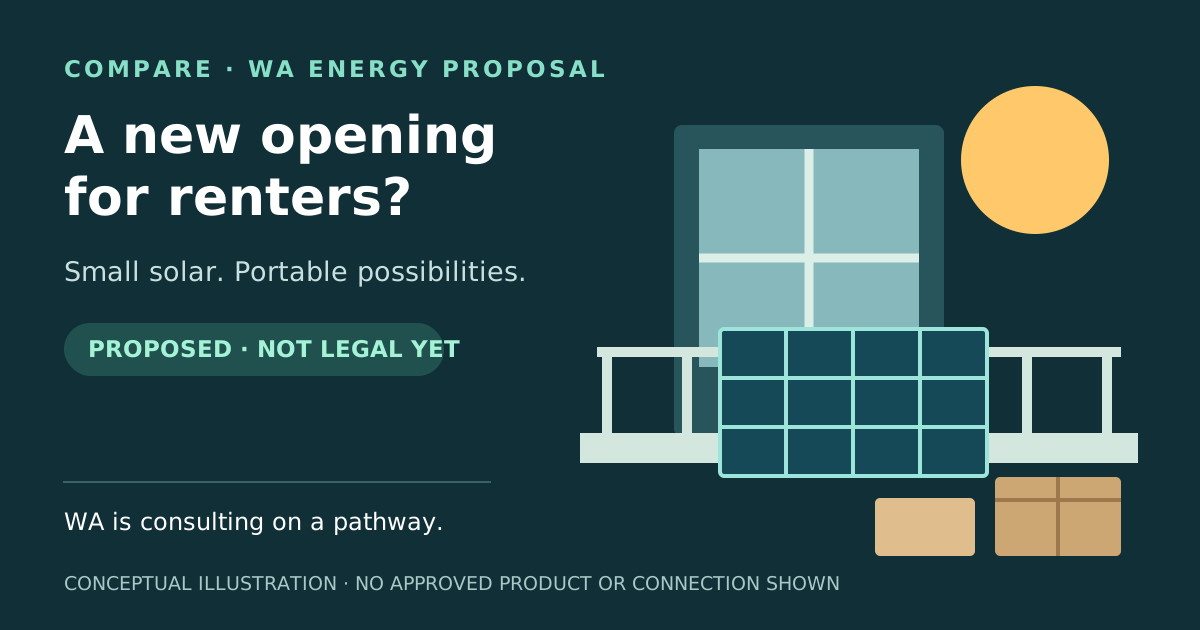
The short version
What you need to know.
- WA is consulting on a proposed pathway; imported plug-in systems are not legal to connect today.
- Portability could give renters a smaller entry point into home energy.
- Feedback closes at 5 pm AWST on 9 December 2026. February 2027 is anticipated standards work, not a consumer start date.
A pathway worth paying attention to
Western Australia wants to legalise plug-in solar and batteries, giving households a smaller way into home energy without committing to a permanent rooftop installation. For renters watching everyone else talk about solar savings, that is a development worth paying attention to.
The WA Government has released a proposed regulatory pathway and draft technical standard for consultation. The important word is proposed: this is work towards legalisation, not a change that makes imported kits legal to connect today. WA consultation
We’ve already explored why balcony solar is attractive. This development gives that discussion something much more useful: a state government putting an actual pathway on the table.
A smaller system could make a bigger difference to access
The appeal is easy to understand. A renter might want to generate some electricity without buying an upgrade that stays with someone else’s property. WA’s FAQ identifies portability as a benefit: people could take these systems when they move, with updated notification details. It also says renter access and strata arrangements still need work. WA balcony solar FAQ
That possibility is what excites me. Home energy should have an entry point below “own a suitable roof and organise a major installation”. A modest system that follows you to your next home could make participation feel a lot more realistic.
I’m not expecting a balcony to replace a rooftop covered in panels. The interesting comparison is with having no solar option at all. A smaller contribution can still be worthwhile if the eventual equipment, permissions and price make sense.
What WA is proposing
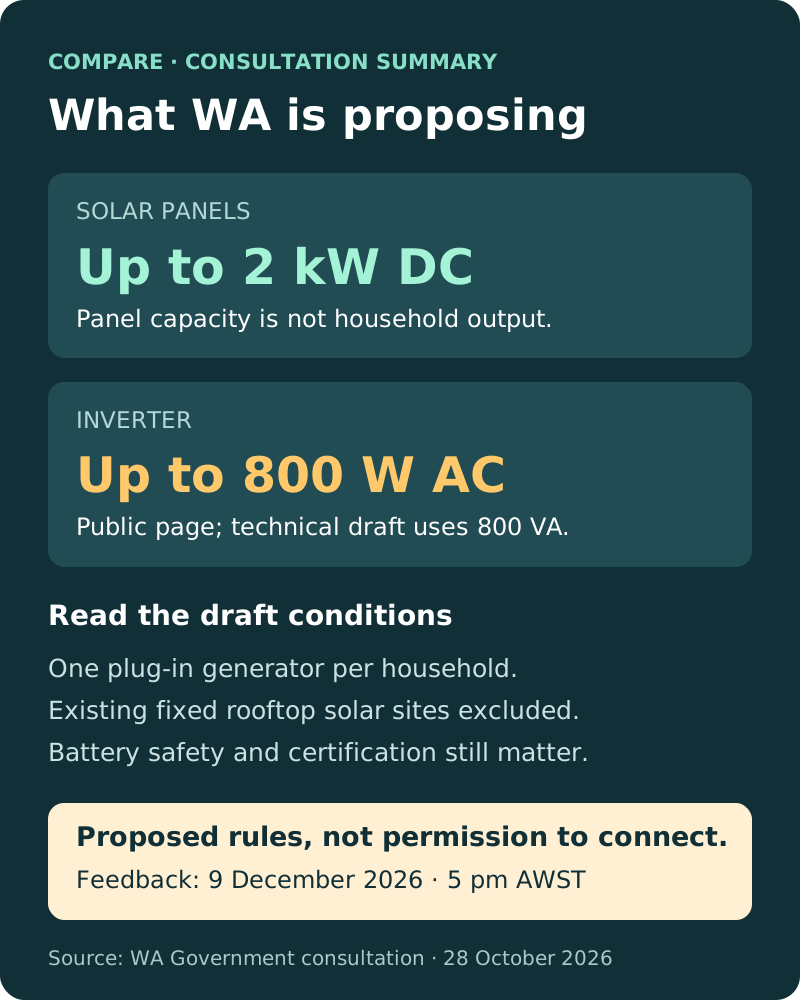
The public proposal describes solar panels totalling up to 2 kW of direct-current capacity and an inverter rated up to 800 W on the alternating-current side. Panels and inverter output are different limits; this is not a promise of 2 kW flowing into your home. Battery storage is included in the proposed approach, without a storage-capacity cap. WA proposal
There is important fine print. The draft technical standard specifies an 800 VA apparent-power limit, would allow only one plug-in generator per household and excludes sites with an existing fixed installation, such as rooftop solar. This is not being proposed as an unlimited collection of extra panels plugged around the house. Draft technical standard, sections 1 and 4
The rules also need to address electrical protection, battery safety and secure mounting. I want accessible solar, not a race to see who can put the cheapest mystery kit on a balcony.
Exciting does not mean ready to buy
WA’s FAQ is clear that using imported systems remains illegal while this pathway is being developed. Apartment rules can also affect what gets installed. A state-level announcement does not automatically settle a strata dispute. WA balcony solar FAQ
Nor should anyone promise a particular household a bill reduction from this announcement alone. I’d want to compare the eventual compliant kit’s cost, usable sunlight, household consumption and warranty before calling it good value. Portability is appealing; paying for equipment you cannot use properly is rather less so.
The consultation paper anticipates updated certification and technical-standard work by February 2027, subject to consultation and cross-agency work. Regulatory changes would follow. February is therefore not a confirmed date when consumers can start connecting systems. Consultation paper, next steps
My view: this is exactly the kind of practical energy idea worth getting excited about. Make the products trustworthy, the process understandable and access genuinely workable for renters, and WA could create a useful new way in.
For now, contribute to the consultation rather than rush to buy an overseas kit. Feedback closes at 5 pm AWST on 9 December 2026. Have your say
Primary sources
Read the evidence.
- Plug-in to power up consultationGovernment of Western Australia ↗
- Balcony solar consultation FAQGovernment of Western Australia ↗
- Draft technical standard: plug-in generatorsGovernment of Western Australia ↗
- Consultation paper: proposed regulatory pathwayGovernment of Western Australia ↗
Approved article checked 28 October 2026 against WA consultation material. Proposed settings, not current permission or a confirmed consumer commencement date. No storage-capacity cap in the proposal does not waive safety requirements. Independent document-based editorial; no firsthand kit testing, guaranteed savings or product approval claims. Original Compare conceptual illustrations.
Community
Add to the article.
Useful experiences, questions and corrections make the next reader’s decision easier.
Comments appear here after moderation.