
The short version
What you need to know.
- Starlink is available now and can provide proper broadband to a rural home, but its Wi-Fi only reaches as far as the local network you build around it.
- Government drive testing has found roads where carrier maps predicted coverage but the audit found none. The maps are useful estimates, not promises for every house, paddock or road.
- NBN Sky Muster remains the supported satellite option today. NBN's lower-latency Amazon Leo replacement is expected to begin rolling out from around mid-2027.
- Telstra Satellite can provide messages and selected lightweight apps on eligible phones, but it is not full mobile internet and cannot directly call or text Triple Zero.
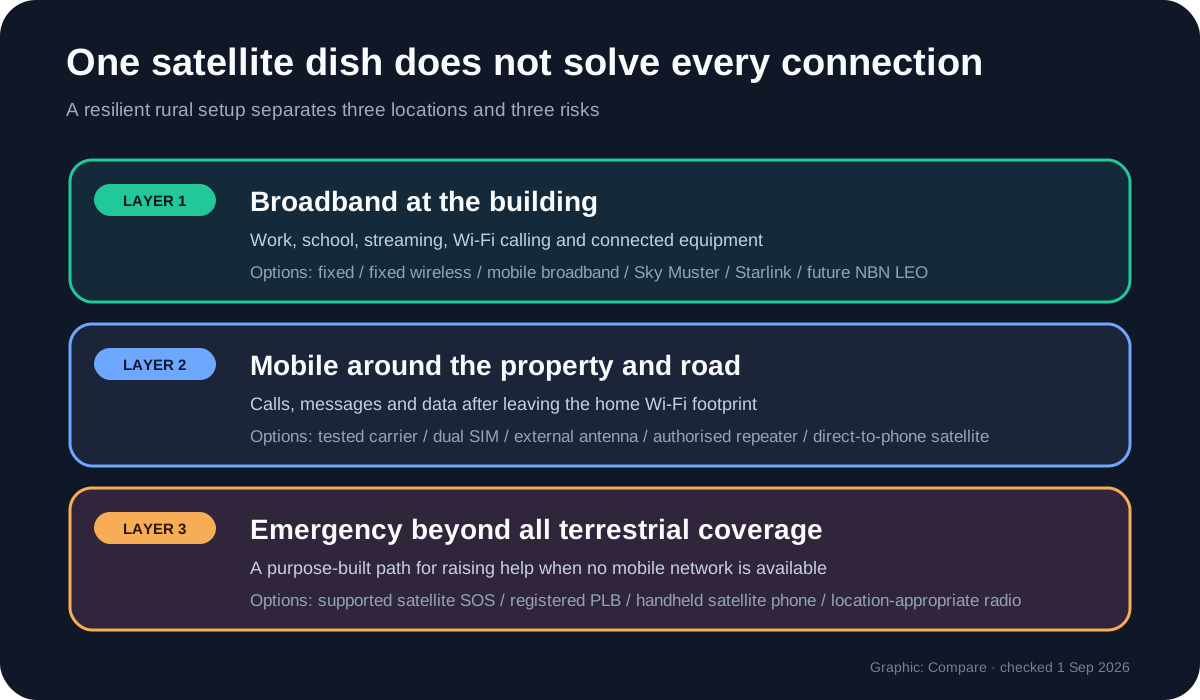
- For many rural households, the sensible answer is layered: broadband at home, a tested mobile option away from Wi-Fi and a purpose-built emergency backup for genuinely remote travel.
Why this conversation changed after the 3G shutdown
The 3G shutdown was supposed to be a fairly clean technology upgrade. Old 3G networks would close, 4G would take over and carriers said their overall coverage would be maintained or improved. For plenty of people, that is probably what happened.
But that is not the experience being reported everywhere. Regional residents have described calls dropping, phones falling back to emergency-only service and coverage that no longer works in places where it used to. Some households have responded by adding Starlink, sometimes while keeping an existing NBN or mobile service as backup.
That reaction makes sense, but it also mixes together two different problems. A bad home internet connection and a mobile black spot are not the same thing. Starlink can be excellent at fixing the first one. It does not automatically fix the second.
The coverage map is not the same as your coverage
Here is the part that will feel very familiar if you live outside a major city: the carrier map shows coverage, but your phone disagrees. The government's National Audit of Mobile Coverage has now put some proper data behind that frustration.
Carrier maps mostly show predicted outdoor handheld coverage. They are created using modelling, with assumptions chosen by each network. The national audit then drives the roads and compares those predictions with measurements in the real world.
The audit has found non-aligned road segments, including locations classed as ‘coverage not found’. In plain English, the map said there should be service and the drive test found none. Trees, hills, buildings, congestion, faults and even the phone being used can all change the result. So the map is still a useful starting point, but I would never treat it as proof that a service will work at a particular house.
What Starlink actually fixes
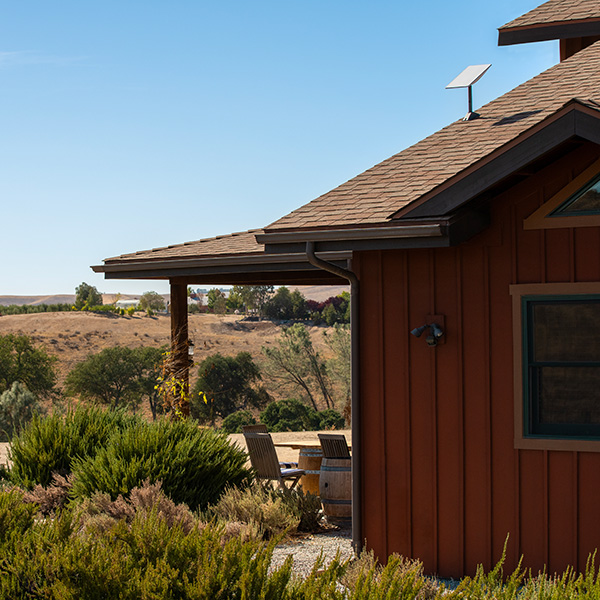
Starlink's biggest strength is that you can buy it now. With a clear view of the sky, it can turn an unreliable rural connection into internet that is genuinely useful for video calls, remote work, streaming, security cameras and cloud-based farm systems.
At the house, Wi-Fi calling can also make a compatible mobile feel normal again. Calls travel through the internet instead of the nearest mobile tower. That is a very useful side effect, especially in a metal-roofed home that blocks an already weak signal.
The catch is range. Once you drive down the road, walk behind a hill or move beyond the Wi-Fi network, Starlink is no longer helping that phone. You can extend Wi-Fi between buildings with proper networking equipment, but covering a large property is a separate design job. One dish on the roof is not a 4G tower.
The four connection types are not interchangeable
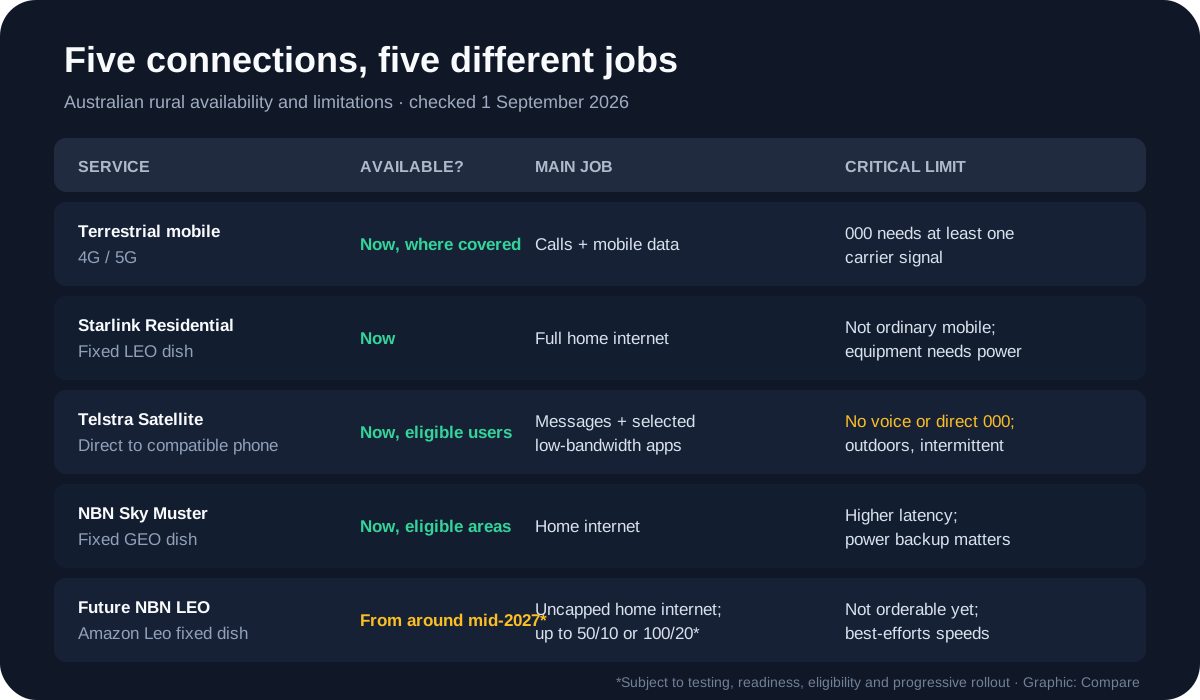
If mobile broadband is stable at your address, it is usually the simplest option. There is no dish, installation is easy and a good 4G or 5G connection can be fast. The obvious problem is that it relies on the same mobile network that may already be unreliable.
NBN Sky Muster is available to eligible remote premises and now has uncapped Plus Premium plans. It comes with professional installation and Australian provider choice, but the satellites sit about 36,000 kilometres above Earth. That distance is why the connection can feel slow to respond even when a speed test looks reasonable.
Starlink uses low-Earth-orbit satellites, so it normally feels much more responsive. NBN is also moving in that direction through Amazon Leo. Its first planned products offer uncapped data with best-efforts wholesale speeds up to 50/10Mbps or 100/20Mbps, but eligible customers are not expected to begin transitioning until around mid-2027, subject to testing and capacity.
Direct-to-phone satellite is useful, but still limited
Telstra Satellite is now available to eligible Upfront customers using compatible phones. Outside Telstra mobile coverage, and with a clear view of the sky, it can send messages and run a selected group of lightweight apps such as maps, weather and messaging services.
That is a meaningful improvement. If the ute breaks down outside mobile coverage, being able to message someone is much better than seeing ‘SOS only’ and hoping another network is nearby.
But this is not full mobile coverage from space. Telstra says the connection can be intermittent, it works outdoors, and it does not support normal voice calls, unrestricted internet, streaming or large downloads. Most importantly, it cannot call 000 or 112, and you cannot directly text Triple Zero through the service.
Triple Zero is where the distinction really matters
ACMA says a mobile can place a Triple Zero call through any available Australian carrier, even if your own provider has no signal. That is why a phone may show ‘SOS only’ and still be able to call for help.
There is one hard limit: at least one Australian mobile network must be available. You also cannot contact 000 or 112 by an ordinary text message. A direct-to-phone messaging service does not change that unless it specifically supports the emergency call system.
Power matters too. Most NBN services stop in a blackout, and Starlink also needs electricity for the dish, router and any Wi-Fi calling. If the connection is part of your emergency plan, put the necessary equipment on suitable backup power and test how long it actually runs.
What I would check before paying for another connection
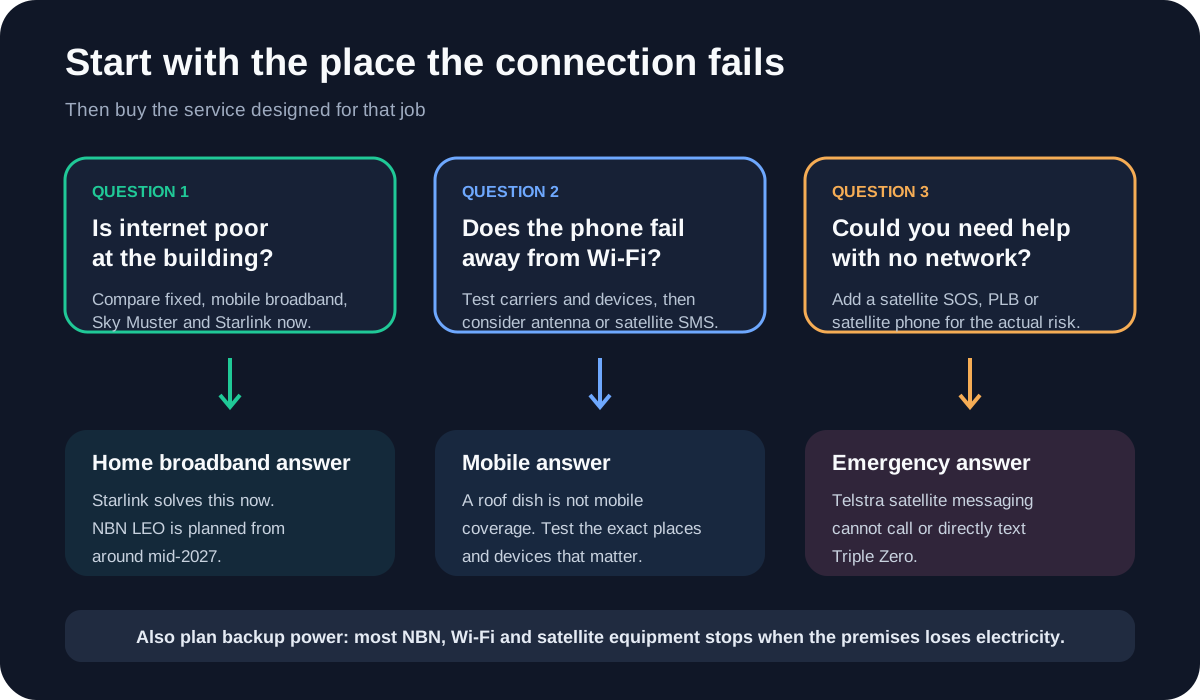
First, test the exact locations that matter. That means inside the house, around sheds, at the front gate and along the roads you regularly use. Try another carrier before assuming every network has the same black spot, and make sure the phone properly supports Australian 4G voice calling.
Second, identify the actual problem. If the issue is internet at the house, compare mobile broadband, Sky Muster and Starlink. If the issue is weak mobile service around the property, look at another carrier, a correctly installed antenna, an authorised repeater or direct-to-phone capability. Cheap illegal boosters are not a clever shortcut.
Finally, separate convenience from safety. People working alone, travelling beyond coverage or living with bushfire and flood risk may need a phone with a supported satellite SOS feature, a registered personal locator beacon, a handheld satellite phone or another device designed for the environment. Buy that equipment for the risk, not because the broadband marketing looked reassuring.
My verdict: satellite internet can be essential, but one connection is not enough for every job
If poor broadband is stopping a rural household from working, studying, running a business or simply making a reliable video call, then yes, Starlink can feel essential. I would not tell someone to tolerate another year of unusable internet while waiting for an NBN LEO service that is not yet orderable or priced.
But I also would not pretend the dish has fixed every communications problem. It provides internet at the property. It does not guarantee a mobile signal down the road, it needs power, and it is not a purpose-built emergency beacon.
The encouraging part is that the choices are improving. Sky Muster is better than it used to be, NBN LEO is planned from around mid-2027, and satellite-to-phone services are beginning to fill some gaps. The sensible rural setup is still the slightly boring one: use the best connection for each job, test it yourself and keep a backup for the moments that actually matter.
Primary sources
Read the evidence.
- NBN LEO plans and mid-2027 transition timingNBN Co ↗
- National mobile coverage audit non-alignmentsDepartment of Infrastructure ↗
- ACCC inquiry into regional mobile servicesAustralian Government ↗
- Telstra Satellite availability and limitationsTelstra ↗
- Telstra Satellite support and emergency limitationsTelstra ↗
- How Australian emergency calls use available networksACMA ↗
- Senate report after the 3G shutdownABC News ↗
- Consumer reports of reduced coverage after 3GCHOICE ↗
Information was checked on 2 September 2026. Satellite availability, supported phones, apps, plans, prices and coverage can change. NBN LEO timing and speeds remain subject to testing, readiness, best-efforts operation and progressive capacity rollout.
Community
Add to the article.
Useful experiences, questions and corrections make the next reader’s decision easier.
Comments appear here after moderation.