
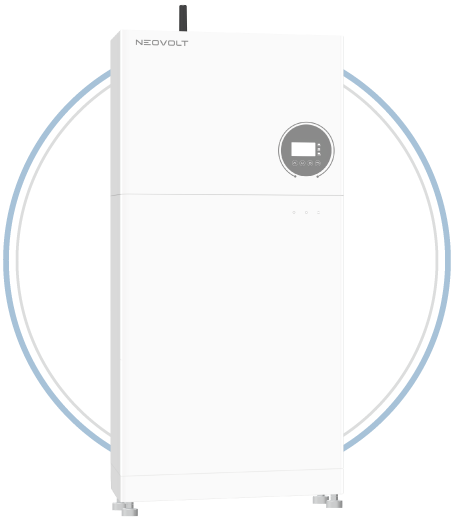
The short version
What you need to know.
- Our view: clear product identification should be a basic requirement at every price.
- The CEC's finding concerns distinguishing imported stock by variant; it does not establish that every installed customer's battery is unidentifiable.
- This article separates the proposed listing action, Neovolt's response and the answers we believe customers deserve.
This should be the easy question
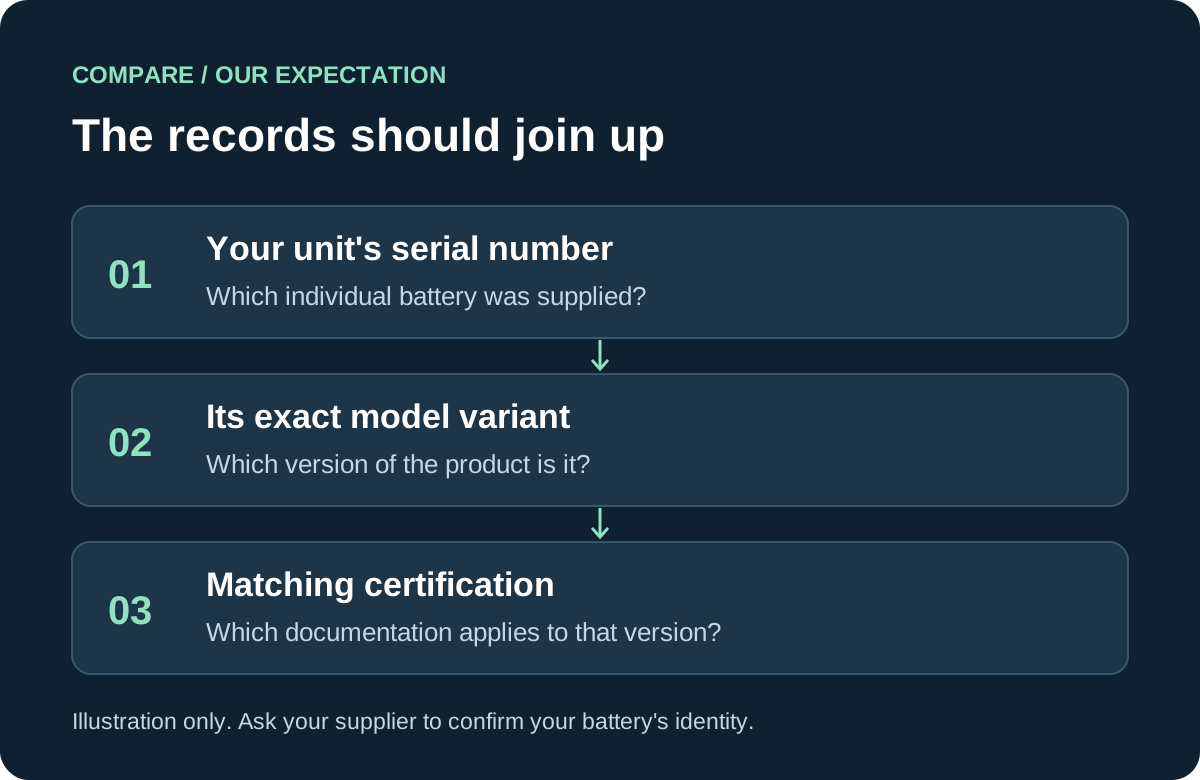
If I spend thousands of dollars on a home battery, I expect the manufacturer to be able to answer a pretty basic question: which battery did you supply?
I don't mean the brand on the front or the name on a sales brochure. I mean the exact model variant, the record identifying that particular unit, and the documentation that belongs with it. Customers should not have to become detectives to join those things together.
That is why the Neovolt story bothers me. Home batteries are sold on long-term confidence. You are buying hardware, installation and the expectation that somebody will still understand your system when it needs support years later. Reliable records should be part of the product.
On the evidence currently published, I think this is an unacceptable failure of product traceability. A competitive price does not make that responsibility optional.
What has actually happened?
RenewEconomy's 8 September report brought attention to a threatened suspension affecting seven Neovolt models made by Bytewatt Technology. The CEC notice names BW-BAT-9.6P and its I, II, III, IV, V and VI variants.
The CEC says the IEC 62619 certificate used to list variants I–VI is now invalid, supplied nameplates differ from the certification records, and Bytewatt cannot satisfactorily distinguish its imported variants.
The proposed start date is 15 September 2026. As checked on 10 September, this remains an intended suspension, rather than a completed delisting. The CEC explicitly says the action is not based on a recall or an identified product safety issue.
Why I think this is more than an admin problem
Imagine asking for help with your battery in a few years. You would reasonably expect its serial number to lead to a clear record of what was supplied. You should not be left wondering whether a label, an invoice and a certificate are describing the same version.
The public notice does not tell us what the physical differences between these variants are. We should not invent an explanation involving different cells, hidden substitutions or inferior components. There is no basis here to make those accusations.
But uncertainty about the differences makes a proper explanation more valuable, not less. A manufacturer ought to be able to describe its variants and show how its records distinguish them.
Traceability also matters when a product needs attention later. If a particular component or production batch ever required a service campaign, reliable identification would help a company work out who to contact. That is an illustration of why good records matter, not a claim that such a campaign is needed here.
Calling something a documentation problem can make it sound harmless. Sometimes documentation is exactly how a customer, installer and approval body establish what they are dealing with. I would take a failure in that chain seriously even if the battery on my wall appeared to be working perfectly.
Neovolt has responded. The practical answers still matter.
In its 7 September statement, Neovolt says resolving the listing matters is a priority and that it is cooperating with the CEC and other parties. It wants to minimise disruption and will provide updates when more information is confirmed. It also stresses the absence of an identified safety concern.
That response deserves to be included. The company has publicly acknowledged the issue and says it is working on it.
What the statement does not provide is a customer-facing method for matching a particular battery to its variant, an explanation of how the identification problem arose, or a firm completion date. Those are gaps in the published statement; they do not prove no work is happening behind the scenes.
My view is that customers now need something more practical than an assurance about priorities. Show people how their equipment will be identified and give them a clear contact who can explain the result. That would do much more to rebuild confidence.
Already own one? Start with a written answer.
If this were my battery, I would gather my invoice, installation paperwork and any model or serial details already supplied. I would ask the retailer or installer to confirm the exact variant in writing and explain how that identification has been checked with the manufacturer.
I would also ask whether my paperwork needs correcting, who is responsible for doing that, and whether there is anything specific I need to do. A written response is easier to follow up than a quick phone reassurance.
Keep the request sensible. An owner should not need to open equipment or dismantle a battery to resolve a manufacturer's record problem. If a label is inaccessible, ask the installer to handle identification.
This notice alone does not establish that an existing owner's warranty has disappeared or that a previously received rebate will be clawed back. Those are separate questions. For an individual system, take questions about operation, service and warranty to Neovolt and the retailer or installer.
Waiting for installation? Don't rely on an old quote.
If suspension proceeds, installations during it cannot receive small-scale technology certificates (STCs), including installations using stock already in Australia. The CEC allows corrective action until 14 December; successful correction can restore eligibility prospectively, otherwise delisting follows.
My advice to someone with an installation booked is to ask the retailer to check the current listing before work goes ahead and explain, in writing, what happens to the quoted price and installation date if eligibility changes.
I would want to know what options the retailer proposes: waiting for a confirmed resolution, supplying an agreed alternative, or another arrangement. I would not accept an unexplained substitution, and I would not make a rushed decision simply because somebody says the rebate is about to disappear.
The question is whether the specific equipment and planned installation meet the applicable requirements when installed. A reassuring brochure or an earlier quote does not answer that on its own.
What we want the manufacturer to do next
Fixing the listing issue is essential. Rebuilding trust also requires making the outcome understandable to the people who paid for the equipment. Here is what I would like to see:
- A clear explanation of the variants and the records used to distinguish individual units.
- A practical identification process for owners and installers, including what happens when the paperwork disagrees.
- Confirmation of the corrected certification and listing position, with links customers can check.
- A straightforward update for customers waiting on installation, with a responsible contact and clear next steps.
A cheaper battery still needs proper records
I like seeing more affordable home batteries. Plenty of households cannot justify the most expensive option, and a lower price should not automatically disqualify a good product.
But affordability cannot be an excuse for uncertainty about what has been supplied. Equally, an expensive badge should not exempt another manufacturer from the same questions. Clear identification, dependable support and verifiable documentation belong on every buyer's checklist.
For now, I would pause a new purchase of an affected model until the position is clear. That is my buying judgement based on unresolved compliance and identification questions, not a prediction that the product will fail.
Neovolt has an opportunity to put this right and explain the fix properly. Customers should not be left doing that work for it. If a manufacturer expects us to trust a battery for years, being able to tell us exactly which version it supplied is a reasonable place to start.
Primary sources
Read the evidence.
- Bytewatt / Neovolt intended suspension, model list and customer guidanceClean Energy Council ↗
- Neovolt Australia response — 7 September 2026Neovolt / Bytewatt ↗
- Original reporting — 8 September 2026RenewEconomy ↗
- Official Neovolt product imageryNeovolt / Bytewatt ↗
Independent editorial opinion by Patryk Lazarz, based on the linked public notice, manufacturer statement and reporting checked on 10 September 2026. We have not inspected affected batteries or independently identified their variants. Listing status can change; consult the CEC's current notice before an installation.
Community
Add to the article.
Useful experiences, questions and corrections make the next reader’s decision easier.
Comments appear here after moderation.