

The short version
What you need to know.
- The federal certificate factor falls from 6.8 to 5.7 on 1 January 2027 for eligible installs.
- Only the portion of a 20 kWh battery above 14 kWh gets the 60% weighting.
- Ask for the installed price on either side of 1 January, in writing.
Start with two quotes
If I were getting a battery quote this weekend, I’d have my electricity usage open before I looked at the rebate. Start at dinner. How much power does the house buy between the solar dropping away and the panels picking up the next morning? That’s a better starting point than whatever size stack happens to be on special.
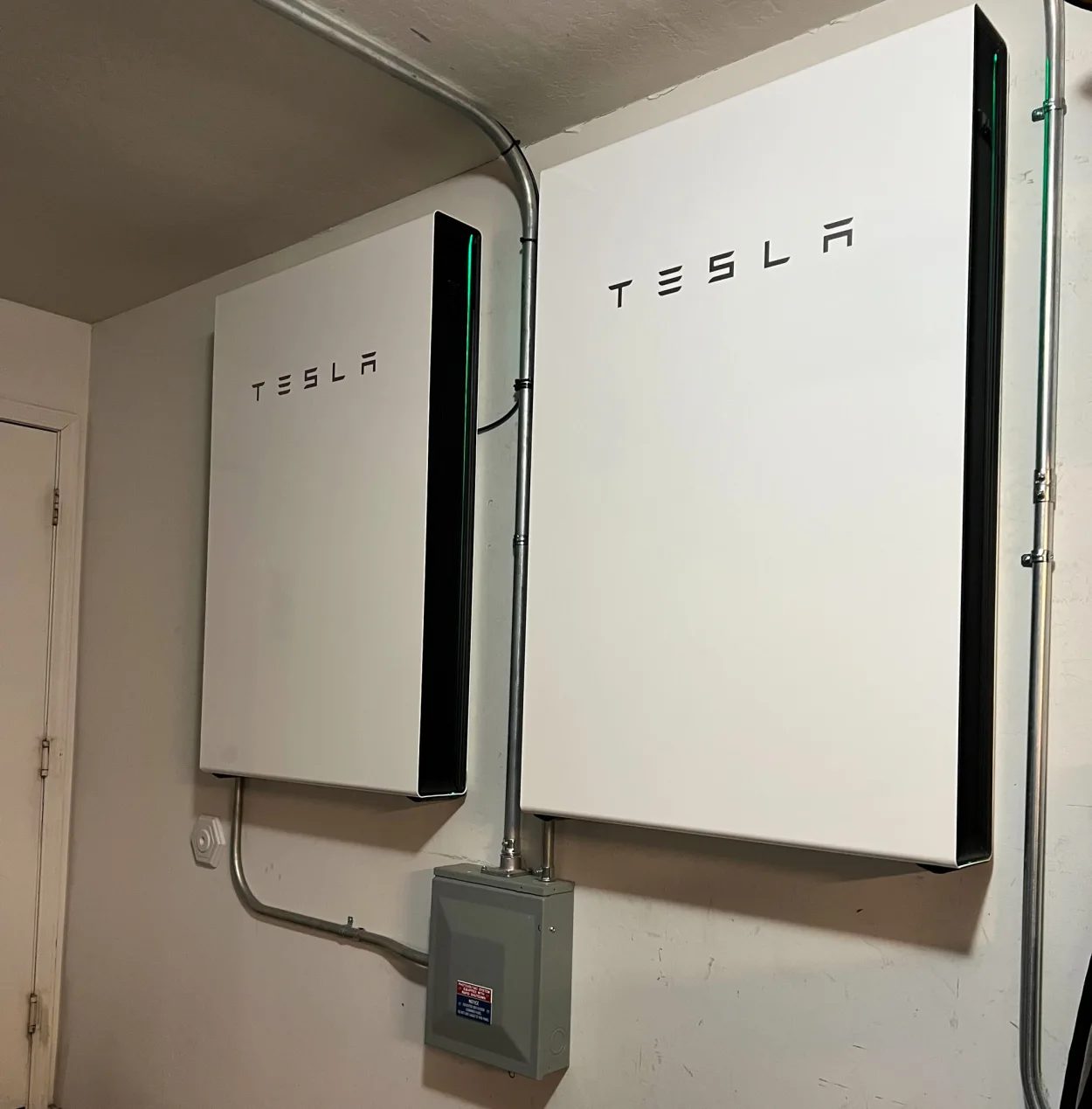
The Clean Energy Regulator’s September-quarter report shows how quickly the sizes people buy can change. In April, 75% of approved installations were over 28 kWh. Across May to September, it was 28%. The federal incentive began giving proportionally less support to larger batteries on 1 May. That helps explain the shift. It still doesn’t tell you which battery belongs on your garage wall.
Check what you use, then check what you can refill
Pull up a couple of weeks of interval data from your retailer or meter. Look at the electricity you import after the panels wind down. If the house usually buys about 10 kWh overnight and gets through 18 kWh once in a while, I’d ask for a quote sized around the ordinary nights first. Then ask the installer to show what the extra modules would save on those bigger nights. A cold snap is a reason to check the numbers, not to size the whole system from one Tuesday.
Then look at daytime exports on the days when the solar is having a fairly ordinary time. A larger battery needs more spare generation to fill. If your plan is to top it up from the grid instead, put the actual charging rate and the price of the power you’d avoid buying into the calculation. The same regulator report found that about 59% of approved batteries installed from May to September went in alongside new or upgraded solar, up from about 45% in April. If your panels are staying as they are, run the numbers on the roof you have.
If blackout backup matters, put the circuits you need on both quotes. Get the same inverter output and backup reserve in both proposals, so the prices reflect the battery size rather than a change in what stays running. That reserve is energy you won’t routinely use to shave the evening bill.
What changes on 1 January
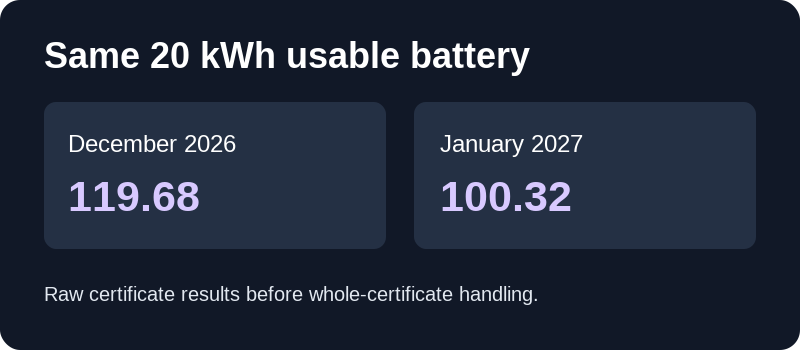
For an eligible system, the certificate factor steps down from 6.8 through December to 5.7 from 1 January 2027. Take the same 20 kWh usable battery on both quotes. The first 14 kWh count in full; the next six count at 60%, so the calculation uses 17.6 weighted kWh. The raw calculation comes to 119.68 versus 100.32, before the calculator handles whole certificates. Use the regulator’s calculator for the actual whole-certificate estimate. The gap isn’t a fixed dollar saving. Ask what the installer is allowing per certificate and what you’ll pay once everything is installed.
The installation date determines the rate, so a deposit in December won’t lock in December’s factor. Get the expected completion date and the price if it slips into January in writing. I’d take a properly sized January install over a rushed December job or an extra module I’ll rarely use. If the right system can go in safely before Christmas, then by all means take the better price.
Sources
Read the evidence.
- September quarter 2026 carbon market reportClean Energy Regulator ↗
- Certificate factors, tiers and calculatorClean Energy Regulator ↗
- How installation timing determines the rateClean Energy Regulator ↗
Information was checked on 28 November 2026. Details can change.
Community
Add to the article.
Useful experiences, questions and corrections make the next reader’s decision easier.
Comments appear here after moderation.