

The short version
What you need to know.
- The main flexible trading rules commenced on 1 November 2026 in the NEM; WA and the NT are outside that market.
- Secondary settlement points let eligible EV chargers or batteries be accounted for separately, subject to suitable metering.
- Small customers must keep the same financially responsible participant at both points. Dedicated deals still depend on providers, equipment and costs.
A dedicated deal for the flexible part of your bill
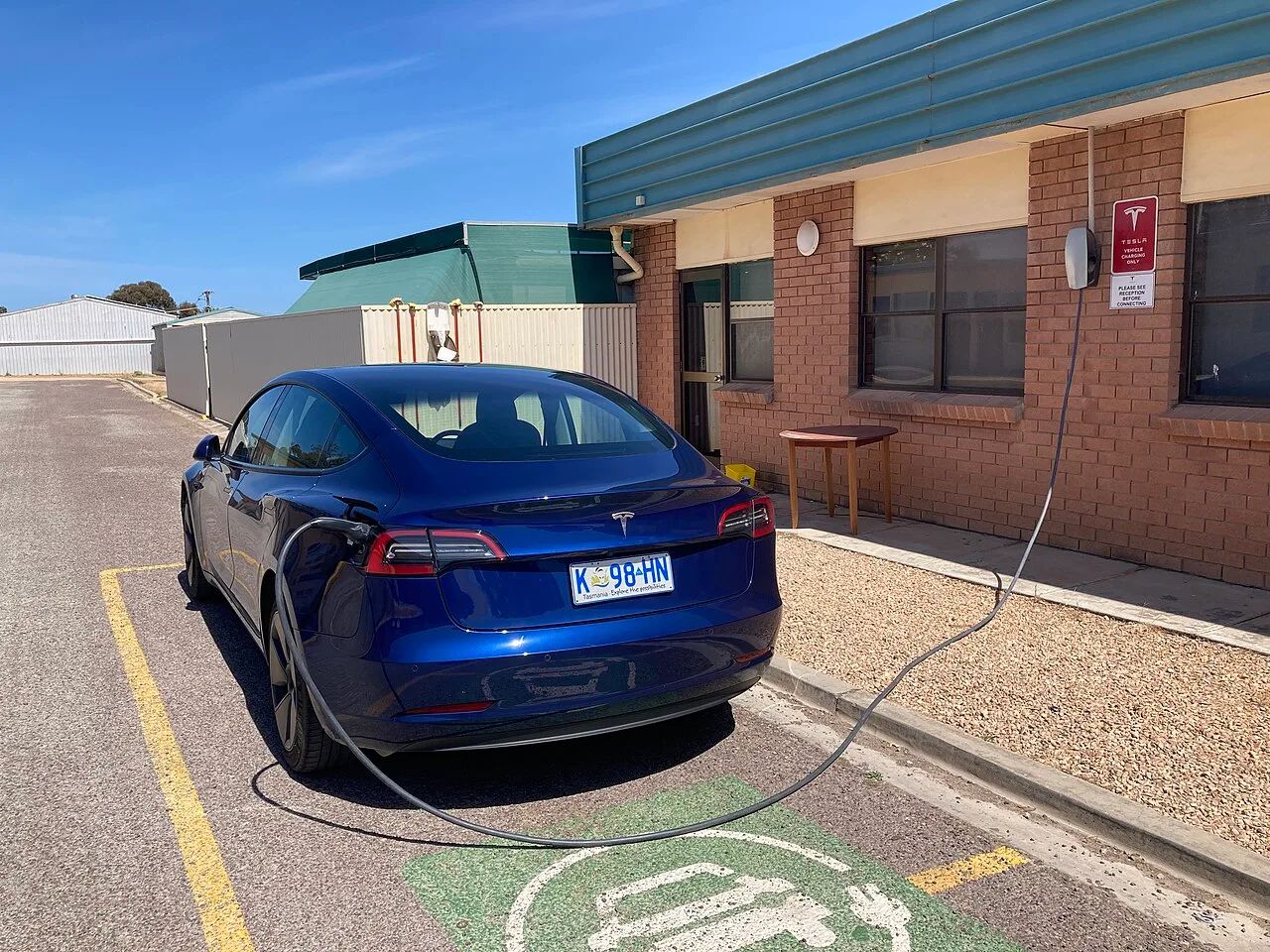
Your EV might be the biggest flexible electricity user in your house. It can sit plugged in for hours, waiting for a cheaper time to charge, while the fridge rather reasonably insists on staying on. Australia's new flexible trading rules are designed to recognise that difference. The opportunity is a dedicated deal for the charger or battery, but the rule change alone does not put one on your bill.
What changed on 1 November?
The main Flexible Trading Arrangements rules took effect on 1 November 2026 in the National Electricity Market. The Australian Energy Market Commission's November rules consolidation confirms their commencement, following its final decision in August 2024.
That covers the NEM jurisdictions: Queensland, NSW, the ACT, Victoria, South Australia and Tasmania. Western Australia and the Northern Territory are outside that market. So, for WA readers, this does not create a new Synergy tariff or change your existing electricity plan.
The reform introduces secondary settlement points and new metering arrangements for eligible flexible equipment. Participation is voluntary. Retailers and service providers still have to turn that framework into products customers can actually use.
Separate measurement, without a second grid connection
A secondary settlement point is a metering point inside a customer's premises that lets an eligible energy resource, such as an EV charger or battery, be accounted for separately in the electricity market.
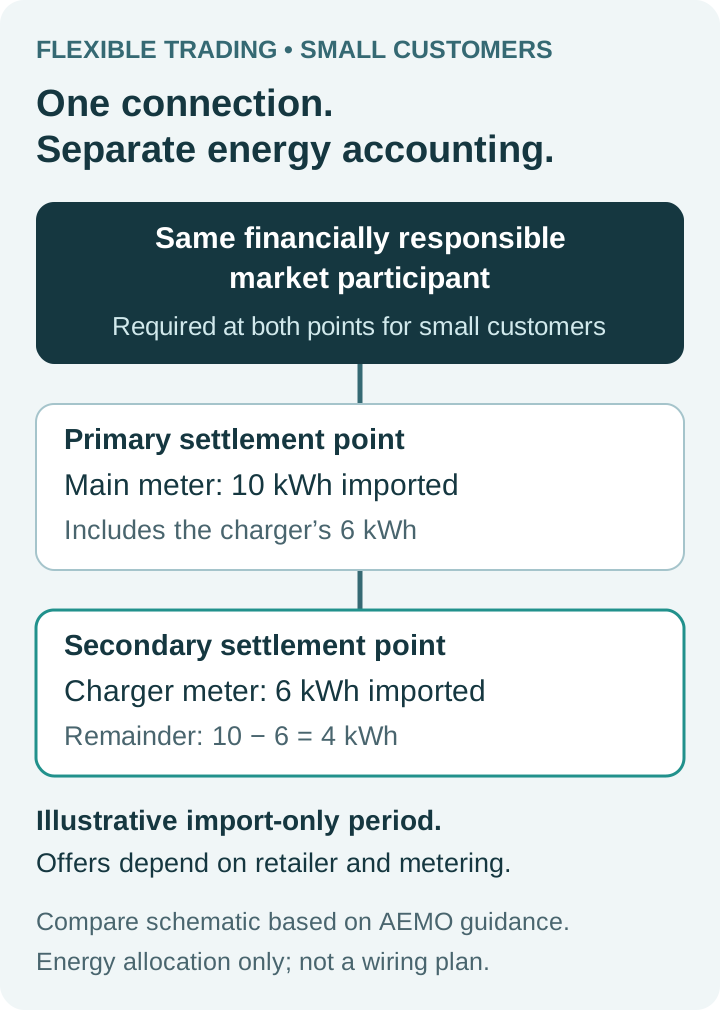
The main connection still measures the premises' exchange with the grid. For settlement, the market's process of allocating energy and payments, the secondary point's validated energy is subtracted from the primary reading. In a simple import-only example, 10 kWh at the main meter including 6 kWh through the charger becomes 6 kWh allocated to the charger and 4 kWh to the remainder. It is accounting, not six mysterious extra kilowatt-hours appearing in the garage.
Type 8 metering supports these secondary points. Type 8B is designed for small customers and can support suitable in-built measurement technology. An app displaying charging consumption is not, by itself, proof that the charger meets market requirements. The separate Type 9 arrangements, which commenced on 31 May, address uses including kerbside charging and smart streetlighting.
The household catch: the same responsible participant
Here is the detail worth reading before anyone sells you the dream of shopping around for two independent electricity retailers.
For a small customer, the primary connection and secondary settlement point must have the same financially responsible market participant. That is the business responsible for the relevant wholesale energy settlement, generally your retailer. Large customers can have different participants at the two points.
Households may therefore gain dedicated tariffs or services for flexible equipment, potentially involving other service providers, while keeping that shared financial responsibility. The rules do not give ordinary households an unrestricted right to put the car with one electricity retailer and the rest of the house with another.
What should you ask before signing up?
AEMO says the arrangements enable retailers to introduce dedicated tariffs for consumer energy resources. That is an opportunity, not a verified list of offers available at your address today.
Ask a prospective provider which chargers or batteries qualify, whether extra metering or installation is needed, and who pays. Check ongoing fees, charging windows, who can control the equipment, whether you can override charging, and what happens when you switch retailers. Compare the annual cost of the entire household arrangement, including the remaining household tariff. A cheap charging rate can lose its shine if the rest of the bill gets more expensive.
My take: separating flexible equipment from everyday household demand is a sensible direction. The useful test is whether retailers deliver understandable offers with worthwhile savings after costs. Until then, keep the sales pitch separate from the rules, and do not buy a new charger purely because someone says it is ready for the future.
Sources
Read the evidence.
- Flexible Trading Arrangements initiative and FAQsAEMO ↗
- Secondary Settlement Point fact sheet, July 2026AEMO ↗
- Flexible trading rule change explainedAustralian Energy Regulator ↗
- National Electricity Rules version 256: commencement on 1 November 2026Australian Energy Market Commission ↗
- National Electricity Rules clause 2.3.4: small-customer financial responsibilityAustralian Energy Market Commission ↗
Official sources checked 6 November 2026. This is a rules explainer, not a test of a charger, metering system or retail offer. Availability and costs depend on participating providers and suitable equipment. NEM reforms do not change WA or NT retail tariffs.
Community
Add to the article.
Useful experiences, questions and corrections make the next reader’s decision easier.
Comments appear here after moderation.