
The short version
What you need to know.
- ECOVACS' 4 September announcement describes a physical shield that blocks the AIVI camera lens when closed.
- The launch material checked does not explain, feature by feature, what works differently with the shield closed.
- A camera cover is not a microphone mute, a map-deletion button or an internet off-switch.
Finally, a privacy feature you can understand
I like privacy features I can explain in one sentence. Close a cover, block a lens. No digging through three menus and hoping a little toggle means what you think it means.
That is the appeal of the physical Privacy Shield announced for ECOVACS' DEEBOT X12S OmniCyclone on 4 September. The company says it covers the AIVI camera. For a device roaming around bedrooms and under furniture, that feels like a sensible thing to offer.
Should every camera-equipped robot vacuum have something similar? My answer is yes, provided the manufacturer also explains the compromises. But I would stop well short of calling the X12S a private robot simply because it has a camera cover. There is a lot more going on inside a connected cleaner than a lens.
This is an assessment of public documentation, not a hands-on review. I have not tested the shield, checked the robot's network traffic or measured its cleaning performance.
What the shield actually promises
The confirmed claim is narrow: with the Privacy Shield closed, the AIVI camera lens is physically blocked. That is useful because an optical barrier does not depend solely on a software setting to keep a scene out of view.
It is not confirmation that the camera's electrical power is disconnected. Nor does the release establish whether the cover can be operated remotely, what its default position is or how clearly the app reports its state. Those are questions for the manual and an actual unit, not blanks I am going to fill with guesses.
The distinction matters. An effective, fully closed opaque cover should prevent that lens from seeing your room. It cannot erase something captured before it closed, and it says nothing by itself about microphones, stored information or cloud connections.
What happens to obstacle avoidance? We still need a proper answer
ECOVACS describes AIVI 3D 4.0 as combining camera vision and 3D laser sensing. Blocking the camera necessarily removes its view of the scene. The presence of another sensor is not proof that every recognition or navigation feature continues unchanged.
The product listing promotes recognition of awkward furniture shapes and avoidance around hazards such as loose wires and pet waste. Before buying primarily for privacy, I would want ECOVACS to demonstrate which of those functions remain available with the cover closed and which become less capable or unavailable.
That does not mean the robot stops cleaning. It means the material checked does not provide a feature-by-feature closed-cover explanation. Neither 'everything works normally' nor 'it becomes useless' is a justified conclusion yet.
The useful test is straightforward: run the same room with the cover open and closed, using the same obstacles, and show the difference. Until that exists, the shield is a promising control with an incompletely explained trade-off.
There are two different covers. Don't confuse them
The camera Privacy Shield is separate from the Mop Roller Smart Cover. The latter is a cleaning feature intended to keep the wet roller away from carpet as the roller lifts. A close-up of that mechanism is not a photograph of the privacy shutter.
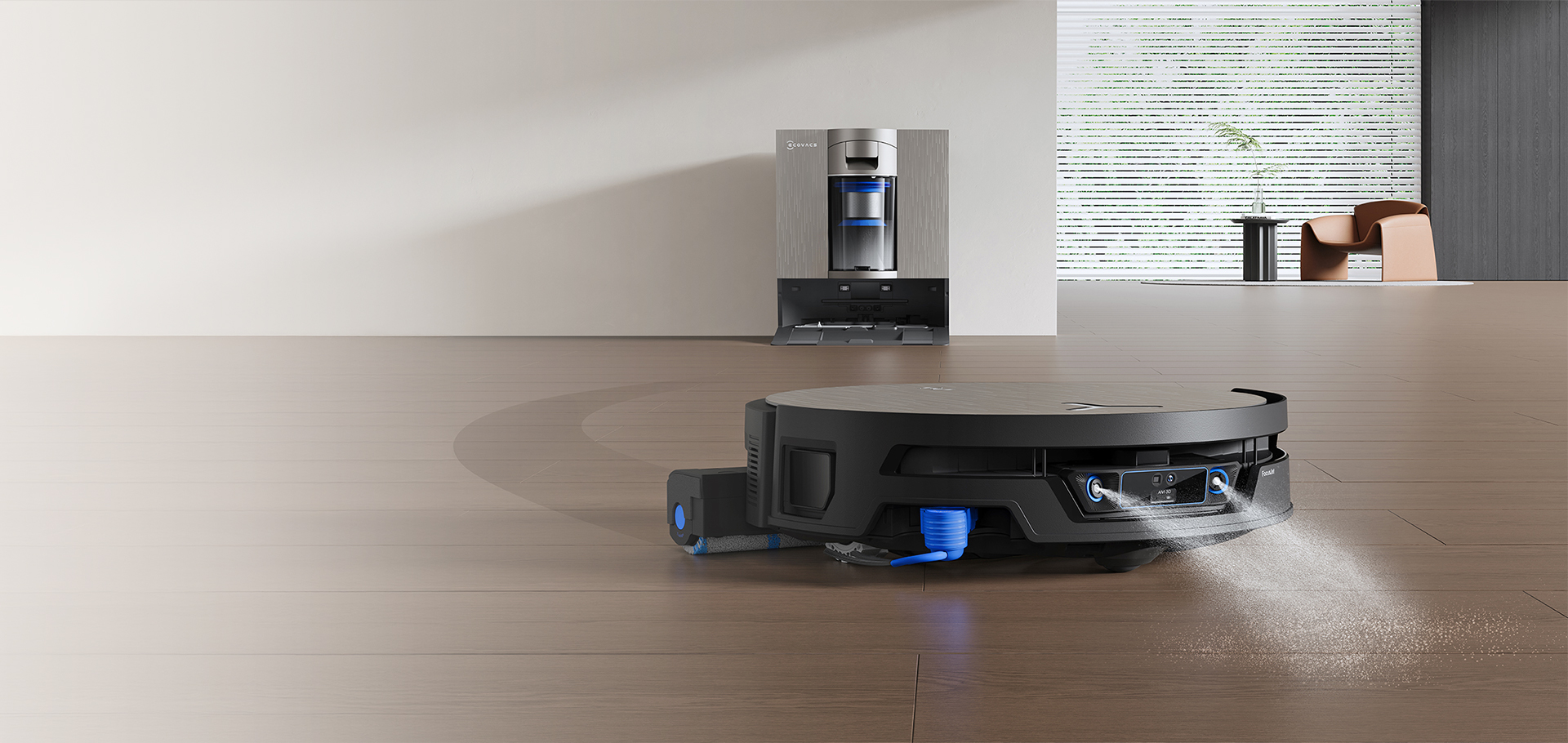
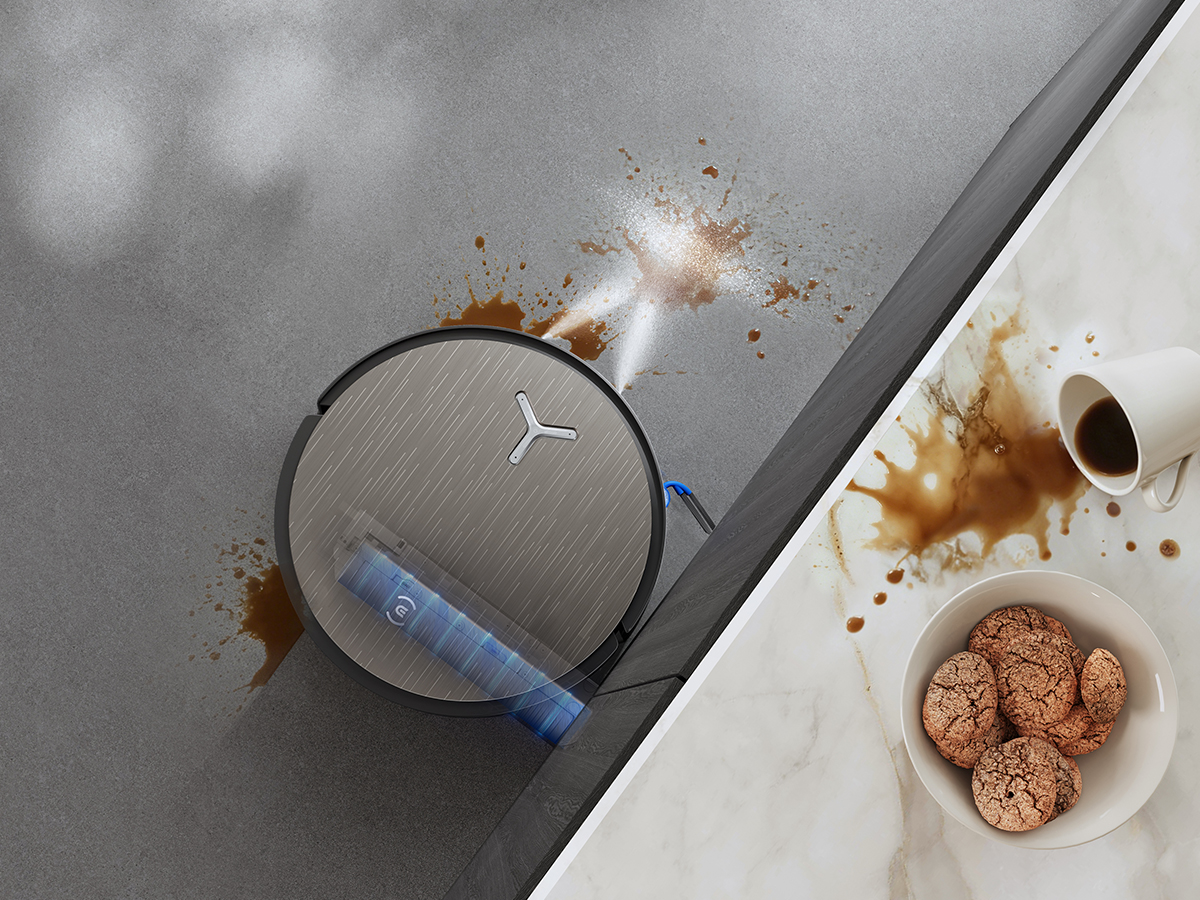
The wider X12S package also includes a bagless station, a continuously washed roller and FocusJet stain spraying. Those may matter more to your daily cleaning than a camera cover, but they should be judged on cleaning results, maintenance and price, not bundled into a privacy claim.
I have included verified official X12S imagery here. I could not verify a dedicated Privacy Shield close-up in the official assets checked, so neither product image should be read as showing the cover open or closed.
A covered camera is not a disconnected robot
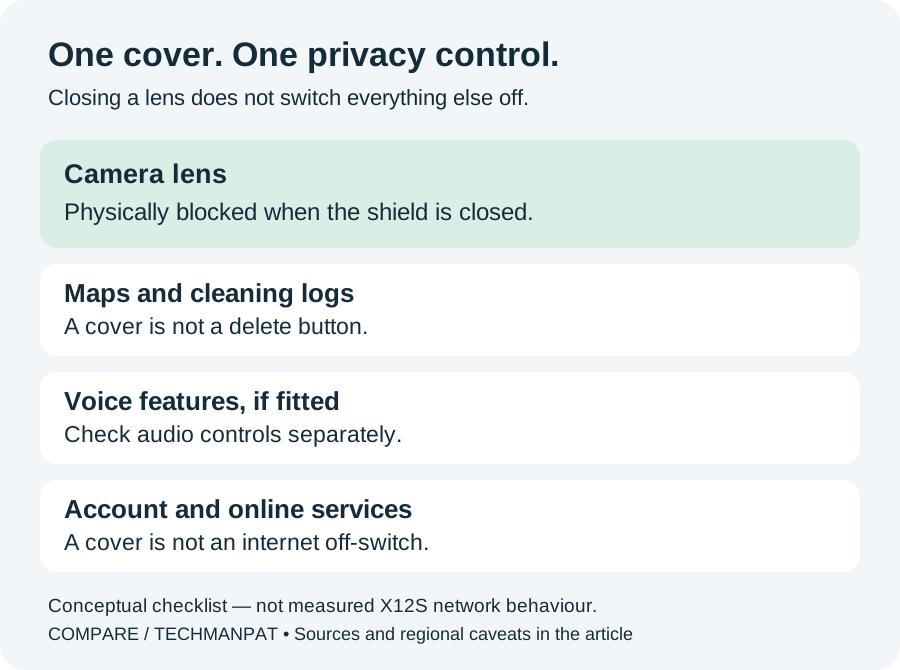
Think of privacy as several separate controls. The lens is one. Audio is another. Maps, cleaning history, account information and online services sit elsewhere. Moving a piece of plastic across a lens does not automatically switch off those other systems.
The ECOVACS HOME app privacy policy linked from its Google Play listing describes device and service information that can include operational logs, maps and, where applicable, voice or visual material. It also discusses account information and server processing. That is a description of the wider service, not evidence that this specific X12S uploads every listed category.
There is an important regional caveat: the policy checked is the DEFAULT version on ECOVACS' US-hosted service, dated 24 November 2025. It says the selected region determines the applicable terms. Australian buyers should read the notice actually presented in their app; I have not treated this version as a verified Australian X12S data-flow specification.
The practical conclusion is modest: don't assume the shield stops mapping, deletes history, mutes audio or disables server communication. Each requires separate documentation and controls.
Your phone's camera permission is a different thing again
Another easy trap is treating an app permission as the robot's hardware control. The ECOVACS HOME listing describes phone-camera uses such as scanning a pairing code. Denying that permission is not the same thing as physically covering the camera on the cleaner.
Likewise, account deletion and clearing a saved map are different actions. Before selling or handing down a connected robot, follow the model's reset and account-removal instructions rather than assuming a closed shutter has dealt with its history.
I would also avoid improvising with tape over unidentified openings. Without knowing which window serves which sensor, you could interfere with navigation and still fail to cover the component you intended.
Six questions I'd ask before buying
The shield is a good starting point for a conversation with a retailer. It is not the end of that conversation. These are the answers I would want for the exact Australian model before paying extra for the feature.
- Can I clearly see that the lens is fully covered, and can software or another user reopen it?
- Which obstacle-recognition, navigation and camera functions change with the cover closed?
- If voice features are fitted, how do I disable them, and what does that control actually mute?
- What information is stored locally or online, how long is it retained and how do I delete it?
- What security-support period applies to this exact model in Australia?
- Does the Australian version include the same shield, and are local pricing, stock and support confirmed?
My take: make the cover standard, then explain the rest
On a robot with an indoor camera, I would like a physical cover to become normal. Not because every robot is secretly spying on you, but because people should have an understandable way to decide when a camera can see inside their home. A robot without a camera obviously does not need one.
The next step is transparency: a clear closed-cover feature list, understandable audio controls, accessible deletion options and a published support period. A shutter is valuable precisely because it does one specific job. Marketing should not stretch that into a promise about everything else.
Would I replace a working cleaner just for this announcement? No. I would first weigh its actual cleaning, the sensors I am comfortable having indoors and the manufacturer's answers. Our X11-versus-Dyson comparison is still useful background for that broader buying decision, but it is not a test of the X12S.
For now, I like the direction. Give me the cover. Then give me the documentation that tells me exactly what happens when I close it.
Primary sources
Read the evidence.
- ECOVACS X12S announcement, 4 September 2026ECOVACS / Business Wire ↗
- Official X12S overview and product imageryECOVACS ↗
- US X12S product listing and cleaning featuresECOVACS ↗
- ECOVACS HOME app policy: DEFAULT regional version checkedECOVACS ↗
- ECOVACS HOME app functions and phone permissionsECOVACS / Google Play ↗
- Australian product security-support informationECOVACS ↗
Sources checked 5 September 2026. Manufacturer descriptions are claims, not independent tests. Closed-cover performance, Australian availability and the Australian X12S-specific data flow remain unverified. Images are official manufacturer marketing assets. The privacy graphic is an original conceptual checklist.
Community
Add to the article.
Useful experiences, questions and corrections make the next reader’s decision easier.
Comments appear here after moderation.