
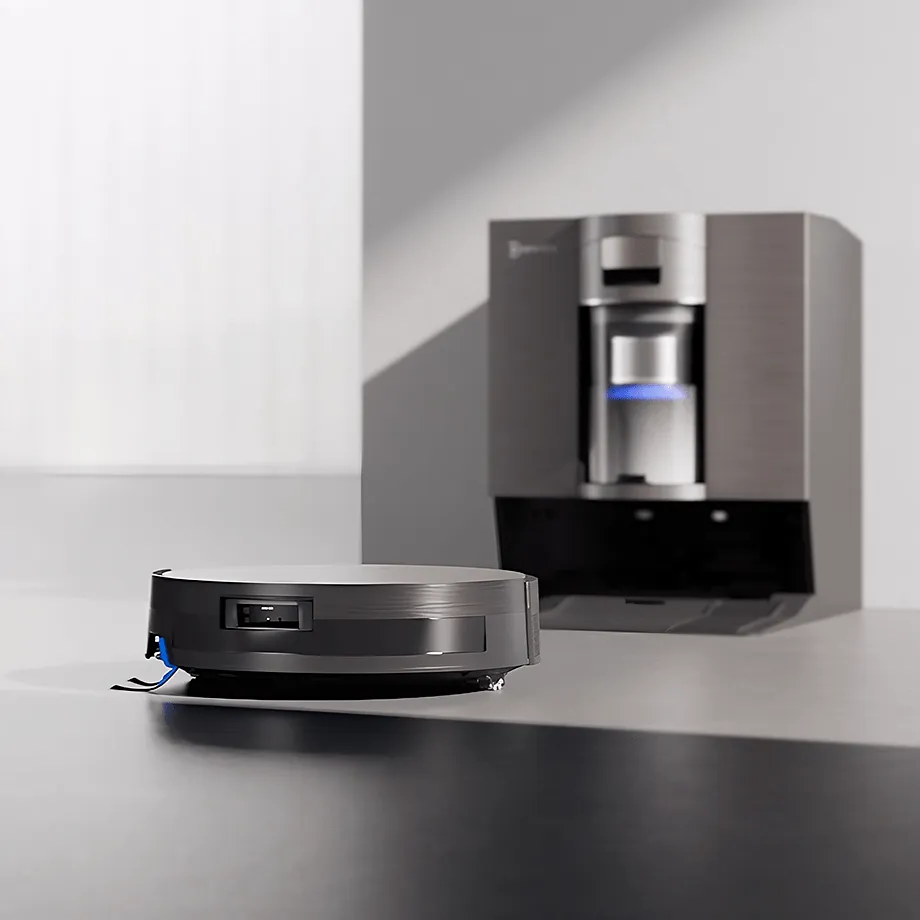
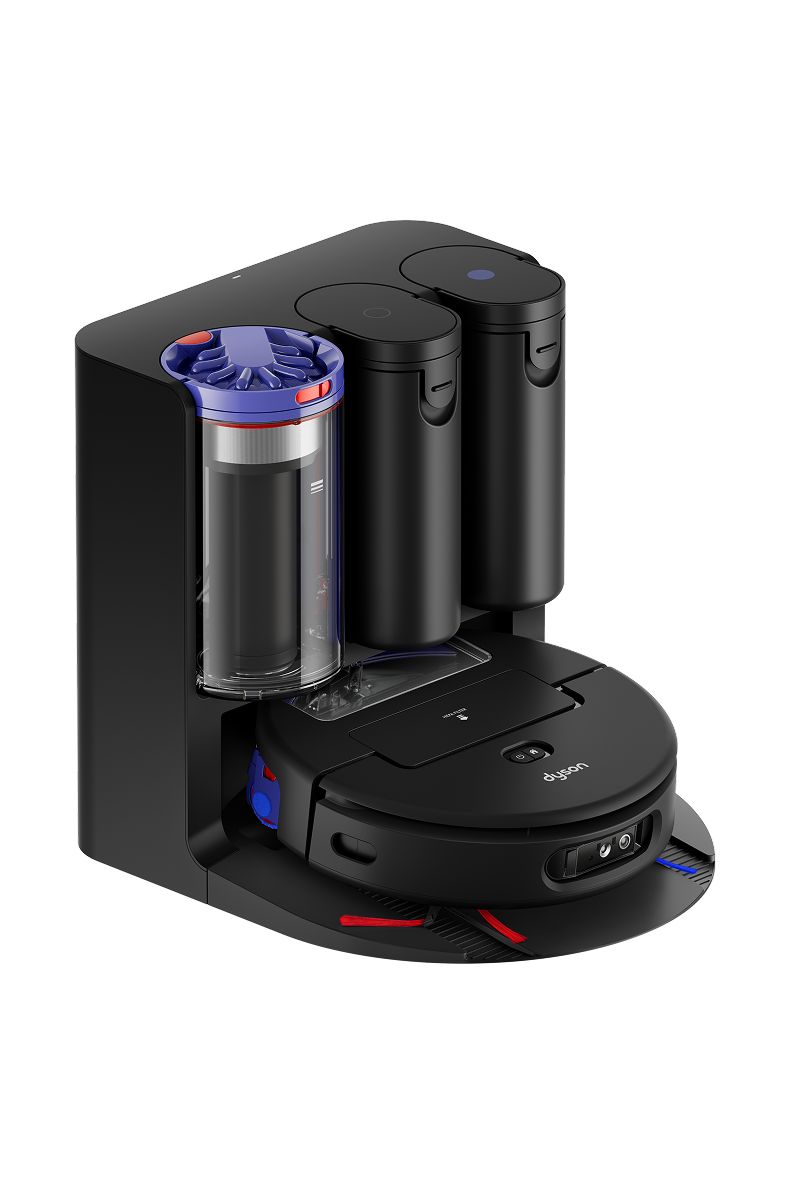
The short version
What you need to know.
- At their official Australian RRPs, the ECOVACS costs A$2,999 and the Dyson costs A$1,999. That A$1,000 difference matters more than the small gap between their claimed suction figures.
- In Vacuum Wars' same-method testing, the X11 was the stronger carpet, pet-hair and mopping performer. Dyson was capable rather than class-leading, but its obstacle avoidance and crevice pickup stood out.
- Both docks are bagless, wash and dry the roller, refill clean water and remove dirty water. Bagless saves replacement-bag costs, but it does not remove bin and filter cleaning.
- My pick for heavy shedding, mixed flooring and large homes is the X11. For mostly hard floors and ordinary household mess at official RRP, the Dyson is the more rational buy.
My verdict: the X11 is the better cleaner; the Dyson is the better-value purchase
If I ignore price and ask which machine has the stronger body of cleaning evidence, I land on the ECOVACS DEEBOT X11 OmniCyclone. Its roller mop, pet-hair pickup, tangle control, carpet deep cleaning and large-home battery system all tested exceptionally well. It is the one I would choose for a shedding household with rugs and hard floors, or a large floor plan where a robot is expected to do serious daily work.
I cannot ignore price, though. ECOVACS Australia lists the X11 at A$2,999, while Dyson lists the Spot+Scrub Ai at A$1,999. The Dyson is not a cut-price machine; it is still a premium robot. But it gives you a bagless cyclonic dock, a fresh-water roller mop, 60°C dock washing, strong obstacle avoidance and genuinely useful stain detection for A$1,000 less.
That makes the Dyson my value pick for many Australian homes, especially those dominated by hard floors and normal crumbs, dust and spills. You pay for the X11 when pet hair, embedded carpet dirt, higher thresholds, richer app control or very long cleans are your actual problems—not because 19,500Pa sounds larger than 18,000Pa.
One important disclosure: I have not pretended to personally test two robots that were not in my home. I compared the Australian products and prices using manufacturer documentation, then checked those claims against independent reviewers who used the machines for weeks and, where available, put both through the same repeatable tests.
ECOVACS X11 OmniCyclone vs Dyson Spot+Scrub Ai: the important specifications
Both brands advertise very large suction numbers: 19,500Pa for ECOVACS and 18,000Pa for Dyson. I would not turn that into a 1,500Pa victory. Pascal claims are measured by manufacturers under their own conditions and do not tell us how well the brush contacts carpet, how much airflow reaches the floor or how the robot handles real debris. Independent pickup tests are more useful.
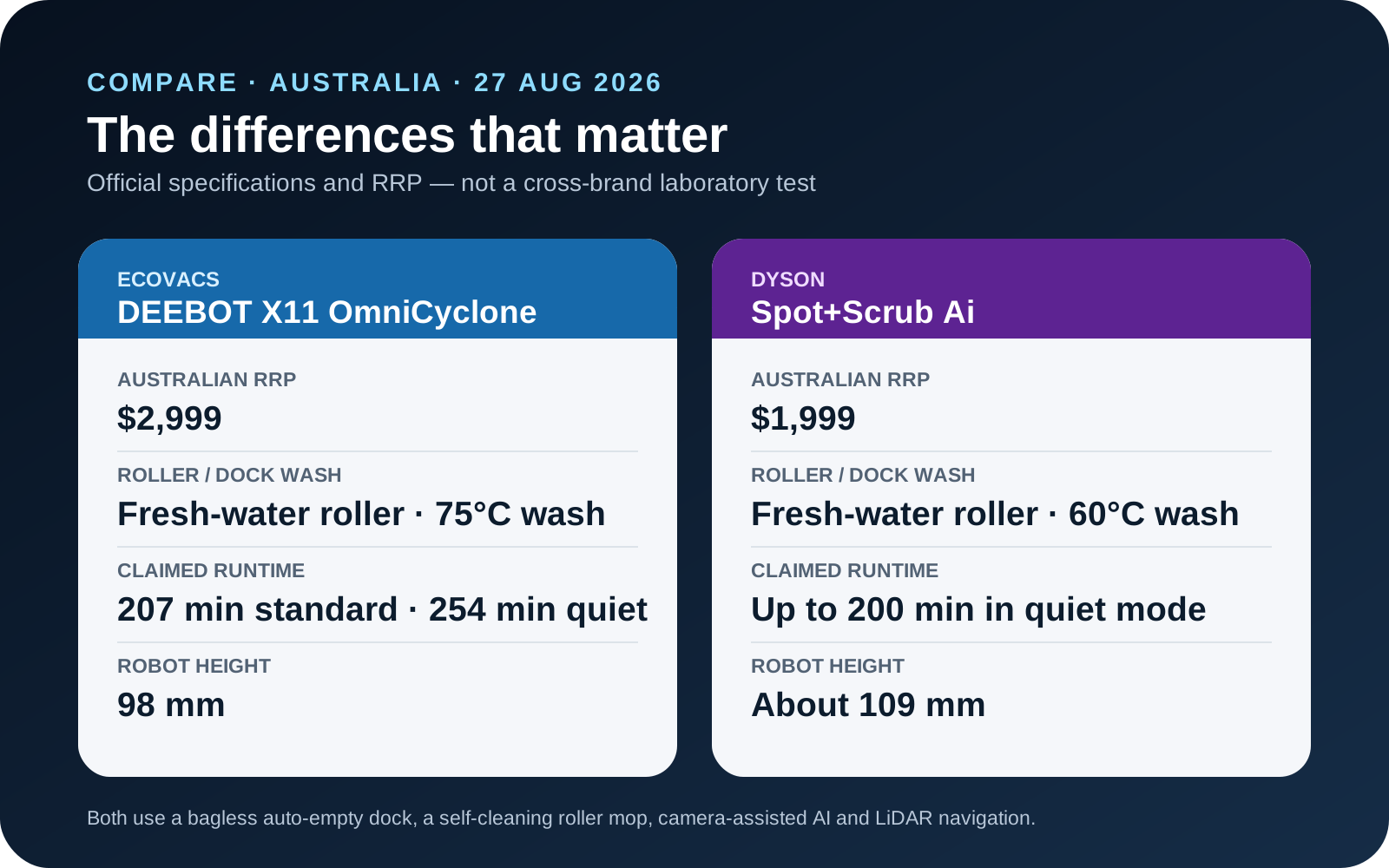
The closer comparison is their architecture. Each robot vacuums and mops, uses LiDAR plus a camera-assisted recognition system, raises its wet roller over carpet, extends cleaning hardware towards edges and returns to an automated bagless dock. The X11 is 98mm high and 353mm wide. Independent measurements put the Dyson at about 109mm high and roughly 373mm wide, so it needs more clearance under furniture and between chair legs.
- Australian RRP: ECOVACS A$2,999; Dyson A$1,999.
- Claimed suction: ECOVACS 19,500Pa; Dyson 18,000Pa. Do not treat cross-brand Pa claims as a laboratory comparison.
- Claimed runtime: X11 207 minutes in standard vacuuming or 254 minutes in quiet mode; Dyson up to 200 minutes in quiet mode.
- Mop washing: X11 dock up to 75°C; Dyson dock 60°C, followed by 45°C hot-air drying.
- Thresholds: X11 claims 24mm for a single threshold and up to 40mm for certain multi-level tracks; independent testing lists Dyson at 20mm.
- Wet-roller lift: 10mm on both, so owners of unusually thick or high-pile rugs should still create carpet rules in the app.
Vacuuming and pet hair: this is where the X11 earns its premium
Vacuum Wars bought and tested both products, which gives us the cleanest like-for-like evidence I found. In its medium-pile carpet deep-clean test, the X11 removed 85% of embedded debris against a 76% category average at the time. The Dyson removed 76% in its corresponding test, slightly below that review's 78% average. Those results tell me far more than either manufacturer's suction headline.
The pet-hair gap is larger. The X11 picked up 100% of flattened 2.5-inch pet hair and recorded no wrap with seven-inch hair in Vacuum Wars' tests. The Dyson picked up 81% of flattened pet hair and had 31% of seven-inch hair wrap around its brush. Dyson's anti-tangle design is not useless—Australian reviewers found it practical with pets—but ECOVACS supplied the stronger controlled result.
Dyson did have a very good crevice score, which is relevant for tile grout and floorboard joins. Tom's Guide also reported strong everyday pickup across crumbs, kitty litter and carpet, although its side brushes occasionally flicked debris away. This is a capable vacuum. It simply does not turn Dyson's upright and stick-vacuum reputation into an automatic robot-vacuum win.
For a home with one short-haired pet and mostly hard floors, the Dyson result may be entirely adequate. For multiple shedding animals, long hair or carpet where debris becomes embedded, I would pay closer attention to the X11's brush and pickup advantage.
Mopping and stain removal: Dyson has the cleverer story, ECOVACS has the stronger measured result
Both products solve the biggest weakness of old robot mops: dragging the same dirty pad around the house. Their rollers are continually supplied with clean water while used water is extracted into a separate tank. Both can extend the roller towards a wall and lift it by about 10mm when carpet is detected.
Dyson's distinctive feature is its green illumination and front camera. The company says the robot compares messes with nearly 200 types of household substances, decides how many cleaning passes are needed, checks the result and can repeat the pass up to 15 times. Processing takes place locally and Dyson says images are not stored on the robot. In practical terms, this is targeted spot cleaning rather than simply increasing the whole room's mop intensity.
Reviewers generally found that system useful, but not infallible. Tom's Guide reported that the robot detected but initially left part of a sriracha spill, then removed it on a second mission and handled dried tea marks reliably afterwards. Better Homes & Gardens Australia praised the machine's low-effort approach and stain detection. Vacuum Wars measured above-average dried-coffee removal, although its combined mopping result was around the category average.
The X11 was less theatrical and more convincing under the same reviewer's test method. Vacuum Wars gave it 136 points for dried-on stain removal against a 110-point average, and it left less water than average on the floor. ECOVACS also offers separate normal and heavy-duty solution paths, with the dock able to switch treatment for greasier kitchen and dining-room work.
My conclusion is slightly counter-intuitive: Dyson has the more interesting stain-recognition system, while the X11 has the better evidence for raw mopping performance. If your problem is an occasional visible spill, Dyson's targeted passes are useful. If your problem is an entire hard-floor level that needs consistently strong washing, I trust the X11 result more.

Navigation and obstacle avoidance: both see clutter well, but neither is small
Both robots avoided 20 of 24 objects in Vacuum Wars' obstacle course. That is a strong result for socks, cables, toys and other everyday clutter, but it is not permission to leave pet waste or fragile objects on the floor. Camera-assisted avoidance reduces risk; it does not guarantee a perfect detection every time.
Dyson scans its surroundings seven times per second using 24 sensors and dual-laser LiDAR. Independent reviewers praised its obstacle avoidance and accurate maps, but also found that it can avoid an awkward area rather than finding a better path through it. At roughly 109mm tall and 373mm wide, it may not fit under low cabinetry or between dining chairs.
The X11 is smaller, but not dramatically slim at 98mm. Its first-run navigation drew the most serious criticism in Vacuum Wars' review: a confused initial map and a long detour around a bathroom rug. The reviewer said it improved after remapping and several runs, then became dependable. Its mechanical TruePass system is the more useful advantage for Australian homes with raised room transitions or sliding-door tracks.
If your layout is open but often cluttered, both are credible. If your floor has tight furniture gaps, measure before buying. If thresholds are the reason your current robot gets stranded, the X11 is the safer choice.
The bagless docks save bags, not maintenance
The word 'OmniCyclone' makes ECOVACS sound like the only bagless option here, but Dyson also uses a cyclonic bagless auto-empty system. Both docks charge the robot, empty dry debris, refill clean water, extract dirty water, wash the mop roller and dry it. That is a meaningful reduction in weekly labour and disposable-bag costs.
The ownership trade-off is dust handling. A sealed disposable bag is unpleasant to buy but usually tidy to remove. A reusable cyclone bin exposes you to the collected dirt and needs cleaning. Vacuum Wars found damp debris could stick inside the X11's bin when vacuuming and mopping together, making regular rinsing necessary. The same reviewer found Dyson's separated debris remained dry after nearly two weeks in a two-cat home, which is an encouraging real-world point in Dyson's favour.
Dyson claims its dock can hold dry debris for up to 100 days, but that is a maximum under its test conditions, not a household schedule. Pet hair, floor area and cleaning frequency will change it. ECOVACS lists a 1.6-litre reusable dust cup, 3.2-litre clean-water tank and 2.7-litre dirty-water tank. In either case you will still empty dirty water, add clean water, wash tanks and trays, clean filters, remove hair and replace worn brushes and rollers.
Dyson's transparent cyclone is easy to inspect but visually prominent. The X11 hides more of the mess behind a conventional cabinet-like dock. Decide where the dock will live before treating design as a minor detail; both need permanent floor space and access from the front.
Apps, privacy and support: Dyson makes the clearest security promise
The ECOVACS HOME app gives you the deeper set of controls: multi-floor maps, room and zone cleaning, floor direction, mop and dock settings, video features and the YIKO voice assistant. That flexibility suits an enthusiast who wants to tune each room, although a richer interface also takes more time to learn.
MyDyson covers the essentials—2D and 3D maps, room order, schedules, no-go areas, cleaning types, hydration and target cleans—but multiple reviewers described it as less configurable than mature robot-vacuum apps. One Australian review reported unpredictable Wi-Fi during setup; Tom's Guide found setup and mapping straightforward. That variation is a useful reminder that router placement, 2.4GHz compatibility and home layout affect the experience.
Both robots use cameras, so privacy belongs in the buying decision. ECOVACS includes optional video monitoring. Dyson says its AI processing remains on the robot, has no cloud dependency for image recognition and does not store images. Dyson also publishes a defined security-update period through at least 1 September 2033. That is the clearest support commitment I found for either product.
Australian consumer guarantees apply regardless of a written warranty. Dyson advertises a two-year guarantee and a 45-day direct-purchase return policy. ECOVACS warranty terms can vary by seller and promotion, so check the named Australian retailer, invoice and warranty period before paying—especially if a discount listing is not sold directly by ECOVACS.
Which one should you choose for your home?
Choose the ECOVACS X11 OmniCyclone if your floor plan is large, you have several pets or long hair, carpet cleaning matters as much as mopping, or ordinary thresholds have defeated a previous robot. Its fast top-ups during dock visits, stronger measured cleaning and richer controls are features you can actually use. I would still wait for a meaningful sale if your home does not need those advantages, because A$2,999 is difficult to justify in a fast-moving category.
Choose the Dyson Spot+Scrub Ai if your home is mostly hard floor, stains and spills are the daily problem, you want a bagless dock without paying X11 money, or local image processing and a published security-support date matter to you. It is also the easier recommendation for someone already comfortable with the MyDyson app and Australian support network.
Choose neither if your home is small, your furniture clearance is low, you mainly want a robot for light maintenance or you are uncomfortable with a floor-level camera. There are capable vacuum-mop docks below A$1,500, and saving twenty minutes of manual work is not automatically worth spending another thousand dollars.
- Best for pet hair and long hair: ECOVACS X11 OmniCyclone.
- Best for embedded carpet dirt: ECOVACS X11 OmniCyclone.
- Best for targeted stain intelligence: Dyson Spot+Scrub Ai.
- Best for high thresholds and large floor plans: ECOVACS X11 OmniCyclone.
- Best at official Australian RRP for most hard-floor homes: Dyson Spot+Scrub Ai.
- Best published camera/privacy commitment: Dyson Spot+Scrub Ai.
The final decision comes down to one honest question
Do you have a cleaning problem that the X11 solves A$1,000 better? For heavy pet hair, mixed carpets and hard floors, awkward thresholds or a very large home, the answer can be yes. Its performance advantage is supported by more than a spec sheet.
For an ordinary hard-floor household, I think the answer is usually no. The Dyson is not as strong in the controlled vacuum and hair tests, but its cleaning is competent, its obstacle avoidance is excellent, its roller-mop design is hygienic and its targeted stain system is genuinely differentiated. At A$1,999 it leaves enough of the budget for a quality stick vacuum to handle stairs, upholstery and the areas no round robot can reach.
So my overall winner is the ECOVACS X11 OmniCyclone, but my recommendation at today's official Australian prices is split: buy the X11 only when you need its measurable performance strengths. Everyone else should buy the Dyson on value—or step down another price tier entirely.
Primary sources
Read the evidence.
- DEEBOT X11 OmniCyclone Australian product page and specificationsECOVACS Australia ↗
- Dyson Spot+Scrub Ai Australian product page, specifications and FAQsDyson Australia ↗
- Ecovacs Deebot X11 OmniCyclone review and laboratory testsVacuum Wars ↗
- Dyson Spot+Scrub AI review and laboratory testsVacuum Wars ↗
- Dyson Spot+Scrub Ai reviewTom's Guide ↗
- Dyson Spot + Scrub AI Australian reviewBetter Homes & Gardens Australia ↗
- Dyson Spot+Scrub Ai test results and comparisonsRTINGS.com ↗
- Review: Ecovacs DEEBOT X11 Omni CyclonetechAU ↗
Australian RRPs, official specifications, availability and product claims were checked on 27 August 2026. Independent review findings are attributed to the publishers that performed the tests. Test scores from different publishers are not treated as directly interchangeable, and manufacturer suction claims are not treated as a controlled cross-brand comparison. This is Patryk's researched buying analysis, not a claim that he personally conducted hands-on testing of both units.
Community
Add to the article.
Useful experiences, questions and corrections make the next reader’s decision easier.
Comments appear here after moderation.