
The short version
What you need to know.
- A surface robot does not replace a floor robot. It collects floating leaves, insects and pollen before they sink; the floor robot still handles the pool below.
- Aiper's EcoSurfer S2 is currently the cheapest at $599.99 direct, followed by Beatbot iSkim at $699, Dolphin Skimmi 200 at $849 and Skimmi 300 at $949.
- Beatbot has the biggest published basket at 9L. The Skimmi 300 has 6L, the Skimmi 200 and EcoSurfer S2 have 4L.
- Two robots make most sense for heavily treed pools because the surface and floor can be cleaned at the same time.
- Light leaf loads, covered pools and owners happy to use a net occasionally should keep the money and run one robot.
The surface is a separate cleaning job
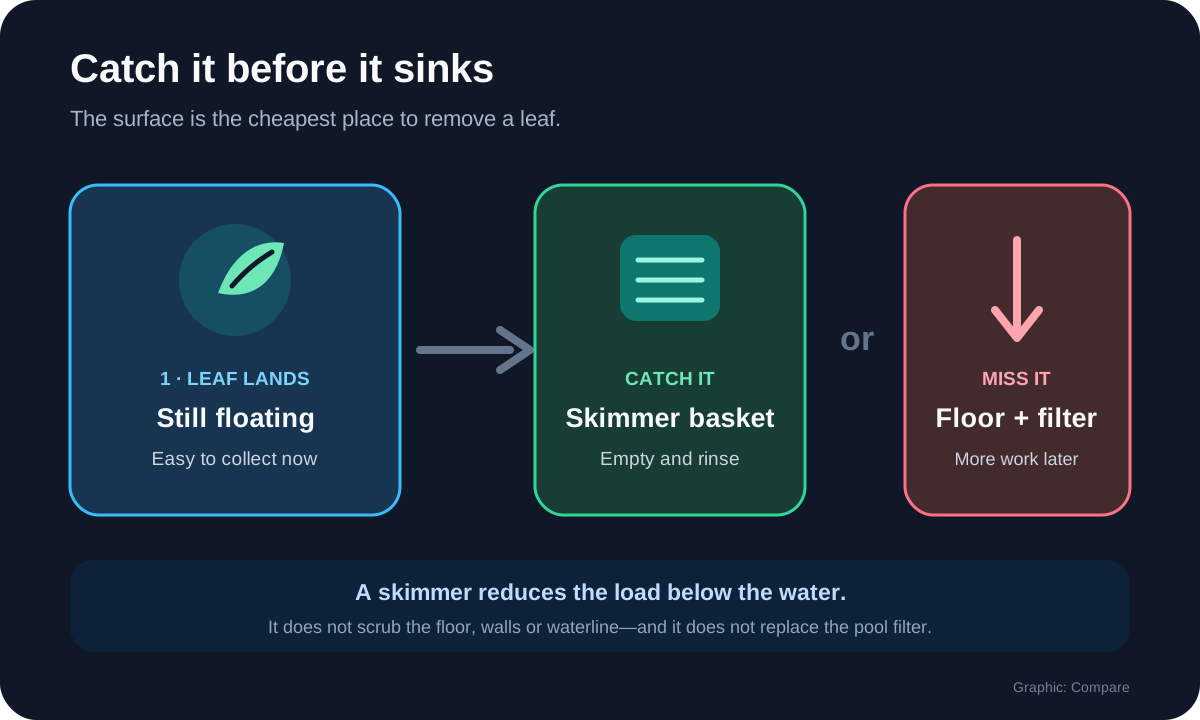
The phrase 'two pool robots' sounds excessive until you own a pool beneath gum trees. My pool can go from tidy to a floating leaf collection after one decent gust of wind. A conventional robot may clean the floor, walls and waterline beautifully, but it cannot collect a leaf that is still sitting on top.
I have used Aiper's EcoSurfer S2 alongside its Scuba V3 in my own pool. The simple lesson was that they were not duplicating each other. The EcoSurfer chased floating leaves and bugs while the Scuba worked below. That is also the argument Dolphin and Beatbot are making with their dedicated skimmers.
The second robot is not automatically necessary, though. A good pool skimmer box, sensible pump schedule and a quick pass with a leaf net can be enough. The question is not whether a solar robot can collect leaves. It is whether your pool receives enough surface debris, often enough, to justify spending another $600 to $950 and maintaining another machine.
What these solar skimmers actually do
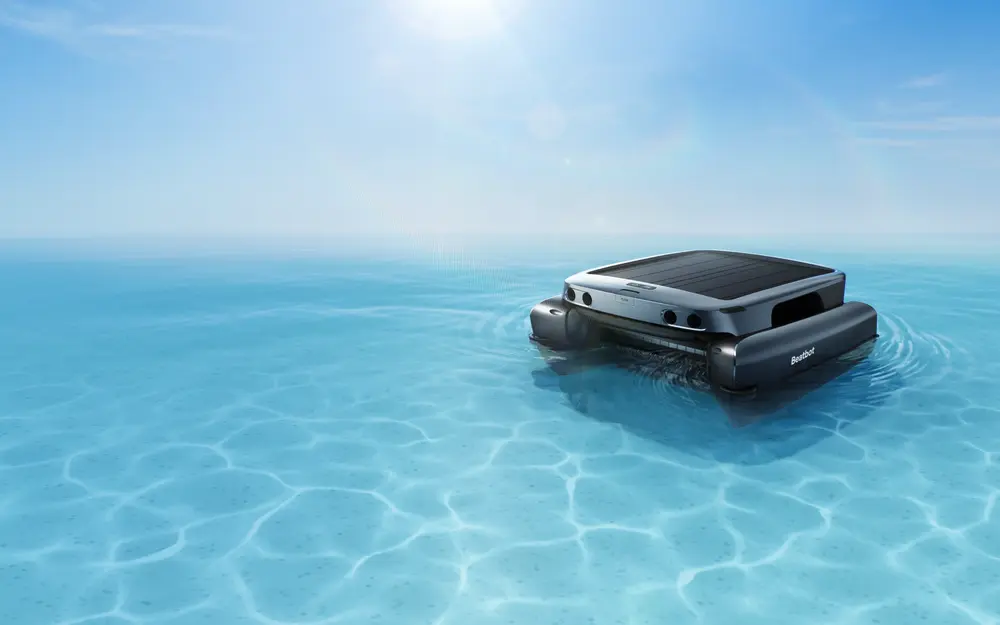
Dolphin Skimmi, Aiper EcoSurfer and Beatbot iSkim all follow the same broad recipe. A floating body uses small motors to patrol the surface, a front opening guides debris into a basket, sensors help it avoid walls and obstacles, and the large solar panel on top keeps charging an internal battery.
That makes them different from the fixed skimmer box in the side of your pool. The pool skimmer waits for the circulation system to bring debris towards one opening. A robot actively travels to the leaf. It can also work independently of the pool pump, although it does not remove the need to run that pump for filtration and water treatment.
The marketing phrase '24/7 cleaning' needs a reality check. Solar charging depends on available light, and shade from trees, buildings or a pool cover changes the equation. Every basket still fills. Long gum leaves can bridge an inlet, twigs can jam moving parts and a robot can loiter near steps, ledges or an aggressive return jet. Solar removes the daily charging cable; it does not remove maintenance.
Dolphin Skimmi 200 and 300: pay more for capacity and control
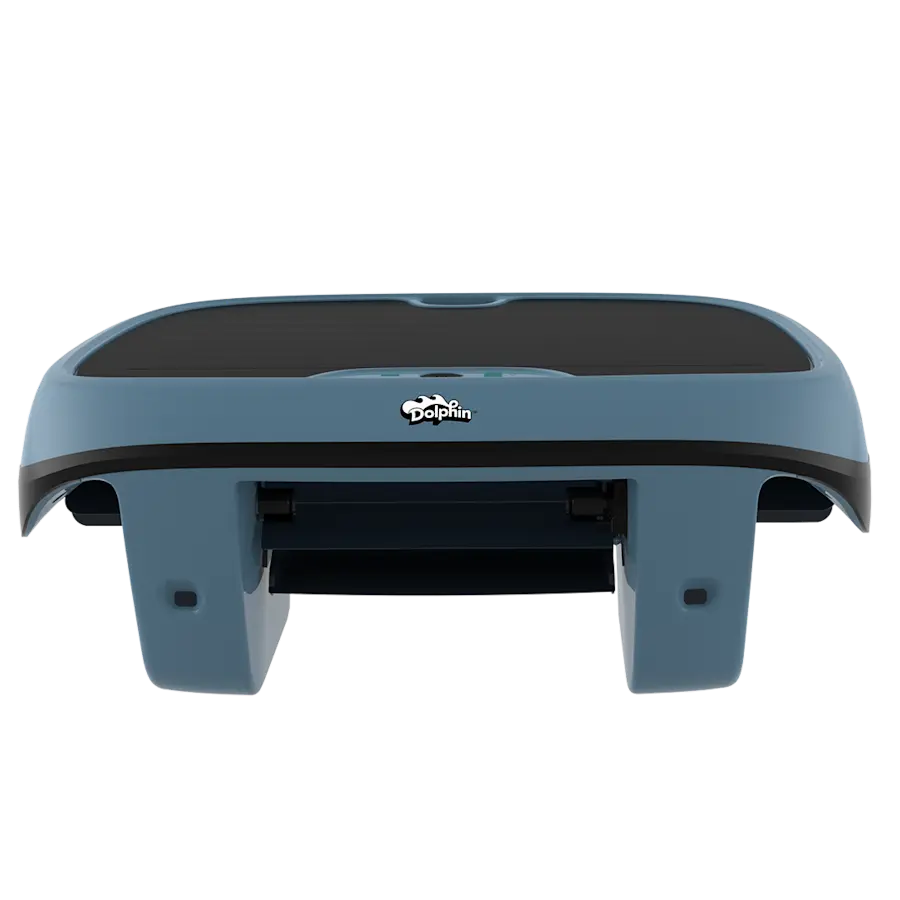
Maytronics sells two Skimmi models in Australia. The Skimmi 200 is $849 and carries a 4L filter basket. The Skimmi 300 costs $949 and increases that to 6L. Both are solar-powered, weigh a published 4kg, suit pools up to 20 metres and connect to the Maytronics One app.
The $100 upgrade is unusually easy to understand. The Skimmi 300 is the one for heavier debris. It adds a dedicated edge-cleaning mode, short, medium and long Eco sessions, and the app's Call to Edge retrieval function. Maytronics also lists a Leaf Capture mode that keeps targeting larger floating material until the battery runs out.
For a gum-tree pool, I would skip the 200 unless the lower price matters more than basket capacity. Two extra litres does not sound dramatic in a specification table, but bulky leaves fill volume long before they become heavy. The 300 is still smaller than Beatbot's 9L basket, yet it brings Maytronics' established Australian dealer and service network.
I have not tested either Skimmi in my pool, so this is a specification and published-review comparison rather than a personal verdict on its navigation. Independent testing has been positive about its solar operation and ability to run alongside a floor robot, while also noting that the app is useful rather than essential.
Aiper EcoSurfer S2: the cheapest, and the one I have used
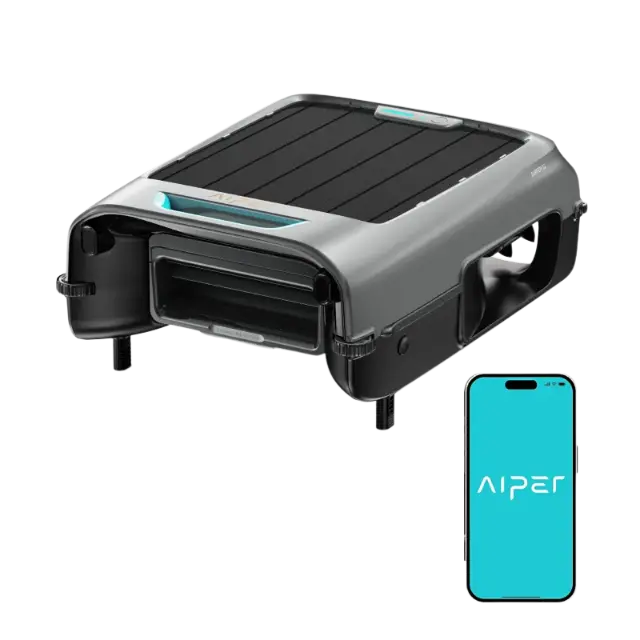
Aiper's EcoSurfer S2 is currently $599.99 from the Australian direct store, reduced from $699.99 when checked. It uses a 4L side-drawer basket with a 150-micron filter, and Aiper claims up to 35 hours from an adapter charge before solar top-ups are considered.
In my pool it did the job I wanted: catching surface debris while the floor machine dealt with sand, dirt and anything that had already sunk. The 4L basket is not huge, but the debris-retaining baffle helps stop collected material washing straight back out when the robot reverses. The app can schedule runs, steer it manually and show battery status.
Aiper also includes a chlorine-tablet holder. I would treat that as an optional convenience, not a substitute for testing and correctly dosing the water. Chemical needs vary, and a roaming dispenser does not make a pool self-managing.
The practical limitation is the same one I found with earlier surface robots: the cleaner the pool stays, the easier it is to forget the machine is doing real work. You only notice it again when the basket needs emptying or it finds a pool feature it dislikes. An Australian hands-on review found it handled leaves, gum nuts and insects well; another independent test reported occasional delays freeing itself after a head-on wall impact.
Beatbot iSkim: the basket is the headline
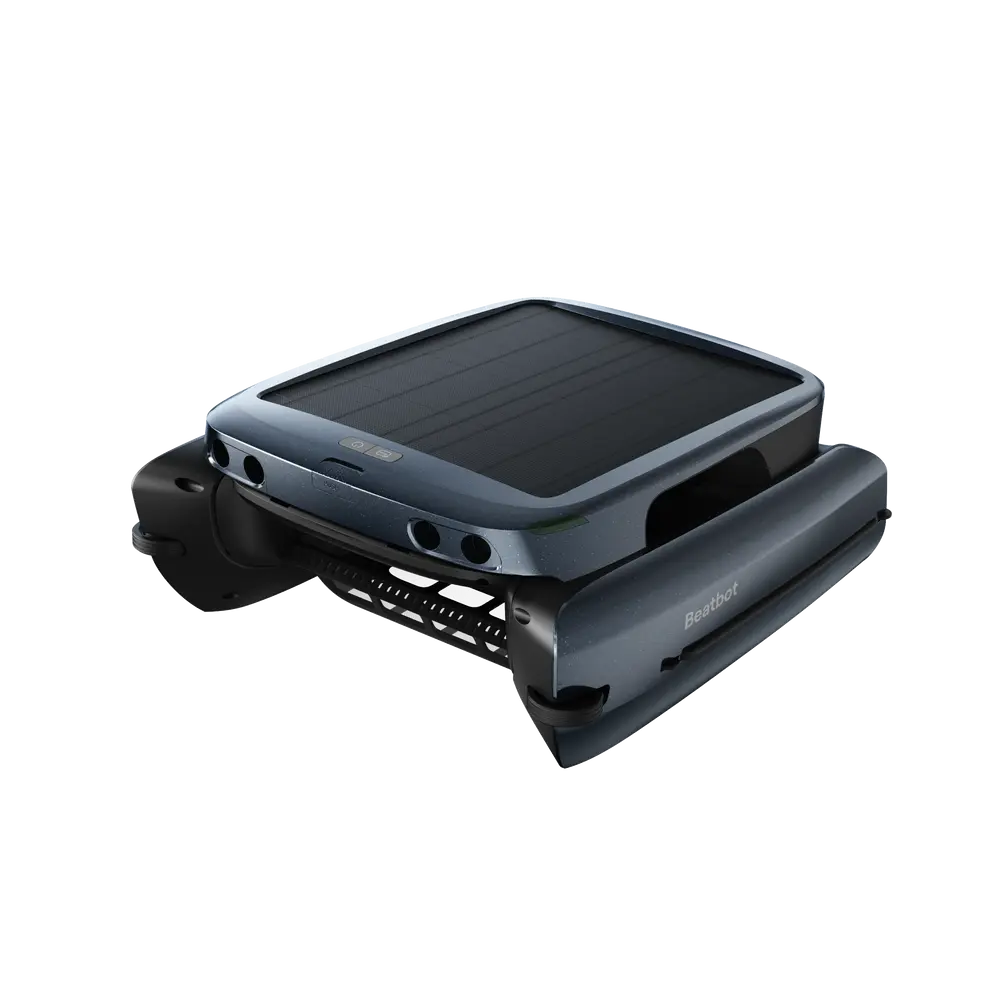
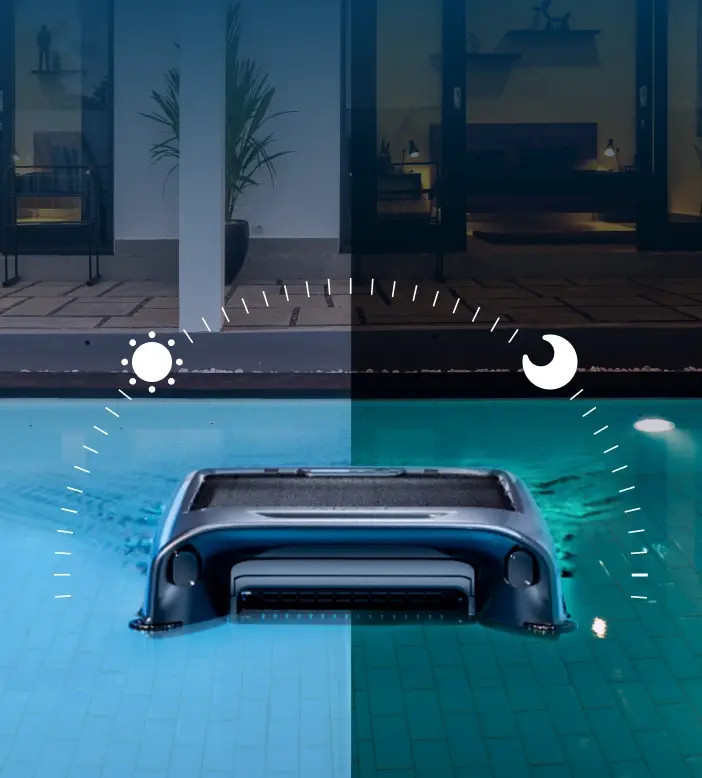
Beatbot's new iSkim is listed at $699 in Australia. Its standout feature is a 9L basket—more than double the EcoSurfer S2 and Skimmi 200, and 50 per cent larger than the Skimmi 300. The front inlet is a wide 29 by 270mm, which is exactly the sort of specification that matters when long leaves arrive in clumps.
Beatbot pairs that basket with a 24W solar panel, 10,000mAh battery and a claimed 28 hours of operation without sunlight from a full charge. Ultrasonic sensing handles obstacles, guided wheels are intended to work along edges, and the app covers monitoring, schedules and one-tap recall. The Australian distributor advertises a three-year replacement warranty.
The catch is availability. On 4 September, the Australian product page still carried a 'pre-order for end of August 2026' message even though that date had passed. I would confirm dispatch timing and local stock before ordering rather than treating the add-to-cart button as proof it is sitting in a warehouse.
I have not tested this model. A recent two-month independent test praised the large basket, app and low-maintenance surface cleaning, but also called the robot bulky. That trade-off makes sense: the basket that reduces emptying also creates a bigger object that must navigate around steps, toys and a narrow pool neck.
The real cost of running two robots
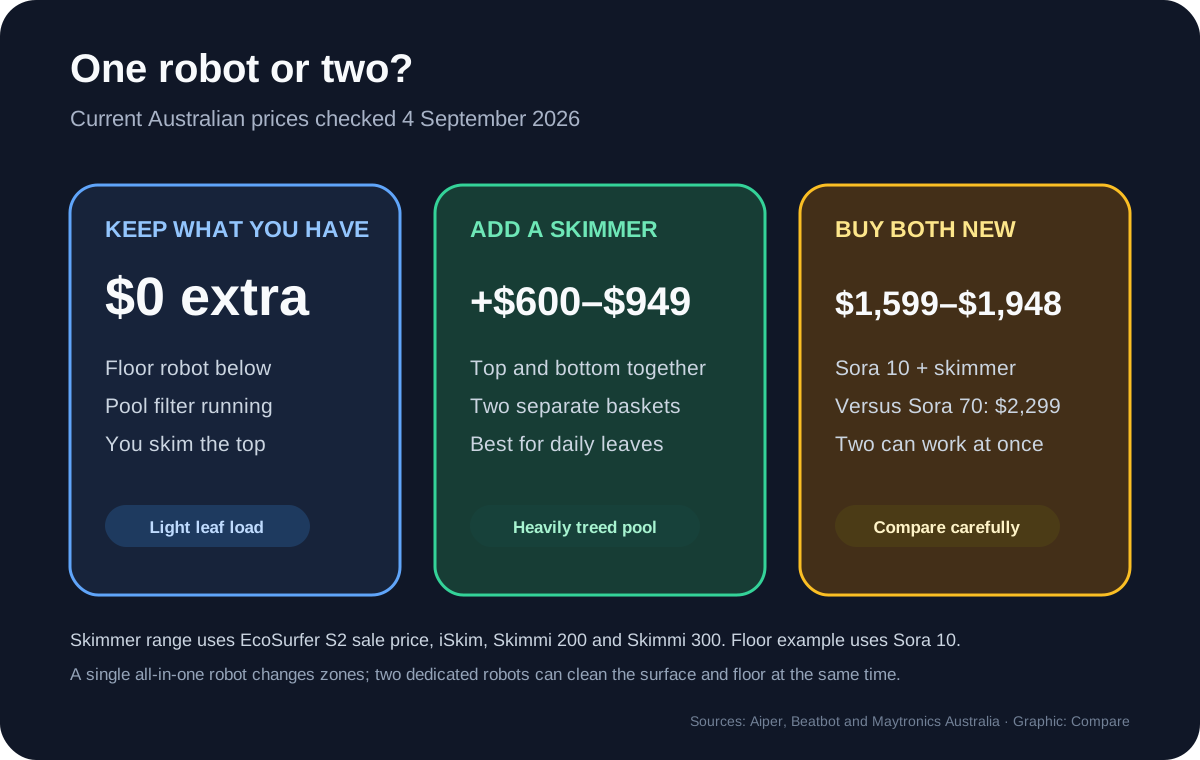
If you already own a floor robot, the calculation is simple: a skimmer adds between $599.99 and $949 at today's direct prices. You are paying to remove daily netting and to reduce the amount of material that sinks into the floor robot, pump basket and main filter.
Starting from nothing makes the comparison more interesting. Using Beatbot's $999 Sora 10 as a straightforward floor-robot example, a two-machine setup costs $1,598.99 with the sale-priced EcoSurfer S2, $1,698 with iSkim, $1,848 with Skimmi 200 or $1,948 with Skimmi 300. Beatbot's single Sora 70, which can clean below the water and switch into surface mode, costs $2,299.
The important difference is simultaneous work. One all-in-one robot changes jobs and zones. Two dedicated robots can clean the surface and floor at the same time. The price advantage is not universal—sales move and there are many other floor robots—but it shows why two machines are no longer automatically the extravagant option.
Who genuinely needs the second robot?
Buy a dedicated skimmer if the pool collects floating leaves or insects most days, if debris regularly sinks before the fixed skimmer catches it, or if the floor robot's basket keeps filling with material that began on the surface. Pools under gums, jacarandas, palms or heavy garden cover are the obvious candidates.
Keep one robot if the pool is covered, sits in an open yard with a light debris load, or needs a quick net only after occasional windy weather. I would also wait if the pool has a narrow channel, beach entry, prominent spillway or return jets that already trap floating equipment. Those shapes can expose navigation weaknesses that no litre figure solves.
Whichever model you choose, watch it for the first few cycles. Check how it behaves around the skimmer-box opening, steps, ladders, cleaner cables and return jets. Empty the basket before a forecast windy day, rinse it regularly, and remove oversized branches rather than asking a small plastic impeller to prove a point.
- Light debris: keep the floor robot and use a net when required.
- Moderate debris and a tight budget: EcoSurfer S2 is the value choice at its current sale price.
- Heavy leaves: Beatbot iSkim has the largest basket, subject to confirmed local stock.
- Heavy leaves plus local pool-shop support: Dolphin Skimmi 300 is the safer service-led choice.
My verdict: two robots can be the sensible option
For a clean, lightly exposed pool, no—you do not really need two robots. A dedicated surface skimmer is a convenience purchase, and $600 buys a very good leaf net with an enormous amount left over.
For my kind of pool under gum trees, the answer changes. Catching debris while it floats keeps the pool looking better between floor cycles and stops the underwater cleaner becoming the last line of defence for everything. The two robots have different jobs, and that is why the arrangement works.
The EcoSurfer S2 is my value pick at the current $599.99 sale price and the only one of these three I can speak about from my own pool. The Beatbot iSkim is the most interesting specification choice for severe leaf loads because of its 9L basket. The Dolphin Skimmi 300 costs more, but its 6L basket, targeted modes and established Australian support make it the conservative long-term choice.
Before buying, compare the live prices and specifications in our Australian pool-robot catalogue. Most importantly, buy for the debris you actually have—not the robot collection an enthusiastic marketing meeting would like you to build.
Primary sources
Read the evidence.
- Dolphin Skimmi 200 Australian product pageMaytronics Australia ↗
- Dolphin Skimmi 300 Australian product pageMaytronics Australia ↗
- Maytronics Skimmi 200 and 300 comparisonMaytronics ↗
- Aiper EcoSurfer S2 Australian specificationsAiper Australia ↗
- Aiper EcoSurfer S2 Australian store priceAiper Australia ↗
- Beatbot iSkim Australian product pageBeatbot Australia ↗
- Australian EcoSurfer S2 hands-on reviewImpulse Gamer ↗
- Independent 2026 robotic pool-skimmer comparisonBob Vila ↗
Australian prices, availability and specifications were checked on 4 September 2026. Patryk has hands-on experience with the Aiper EcoSurfer S2 and a separate Aiper floor robot; he has not personally tested the Dolphin Skimmi or Beatbot iSkim. Manufacturer runtime and coverage claims vary with sunlight, shade, pool shape, water flow, debris and maintenance. This is independent editorial, not paid placement.
Community
Add to the article.
Useful experiences, questions and corrections make the next reader’s decision easier.
Comments appear here after moderation.