
The short version
What you need to know.
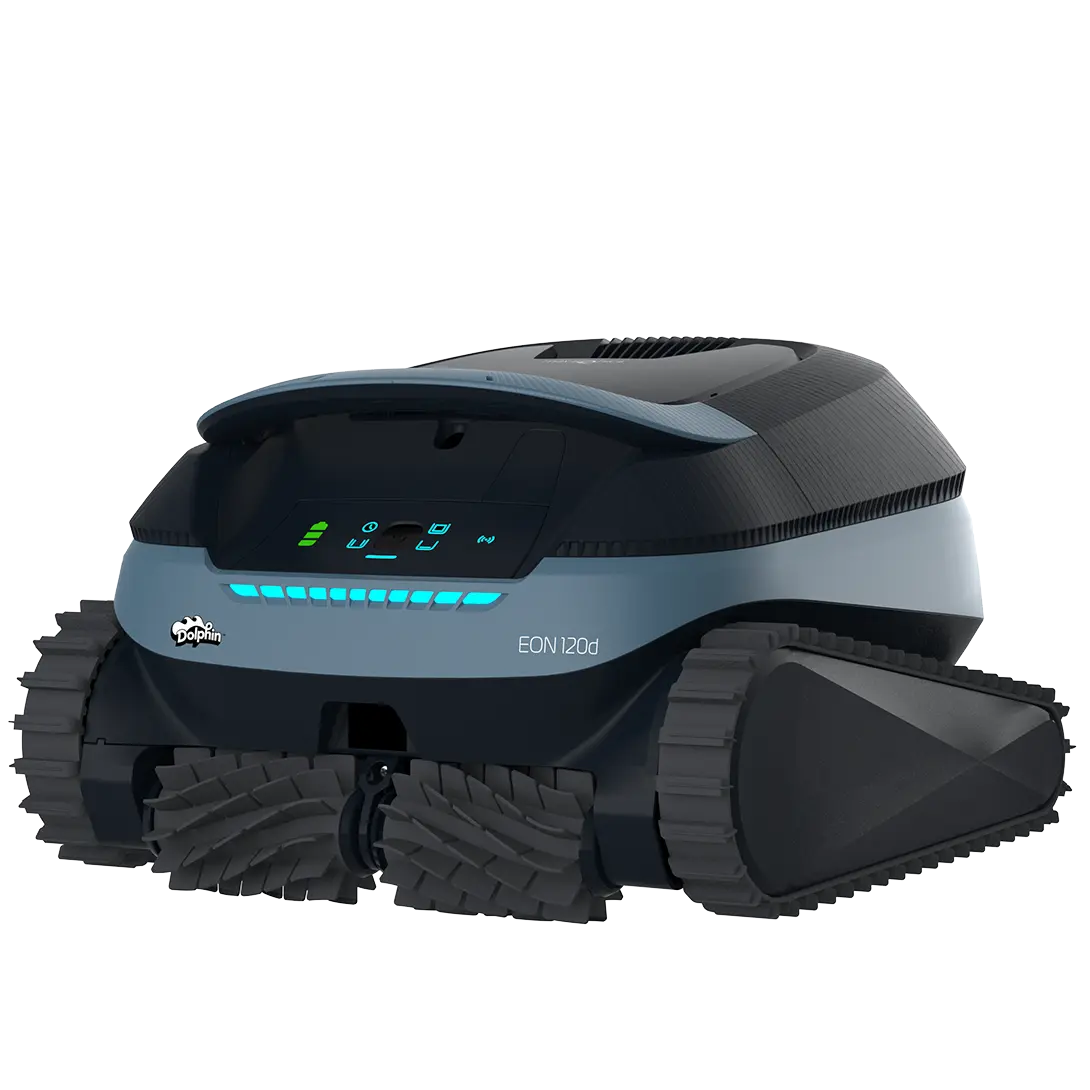
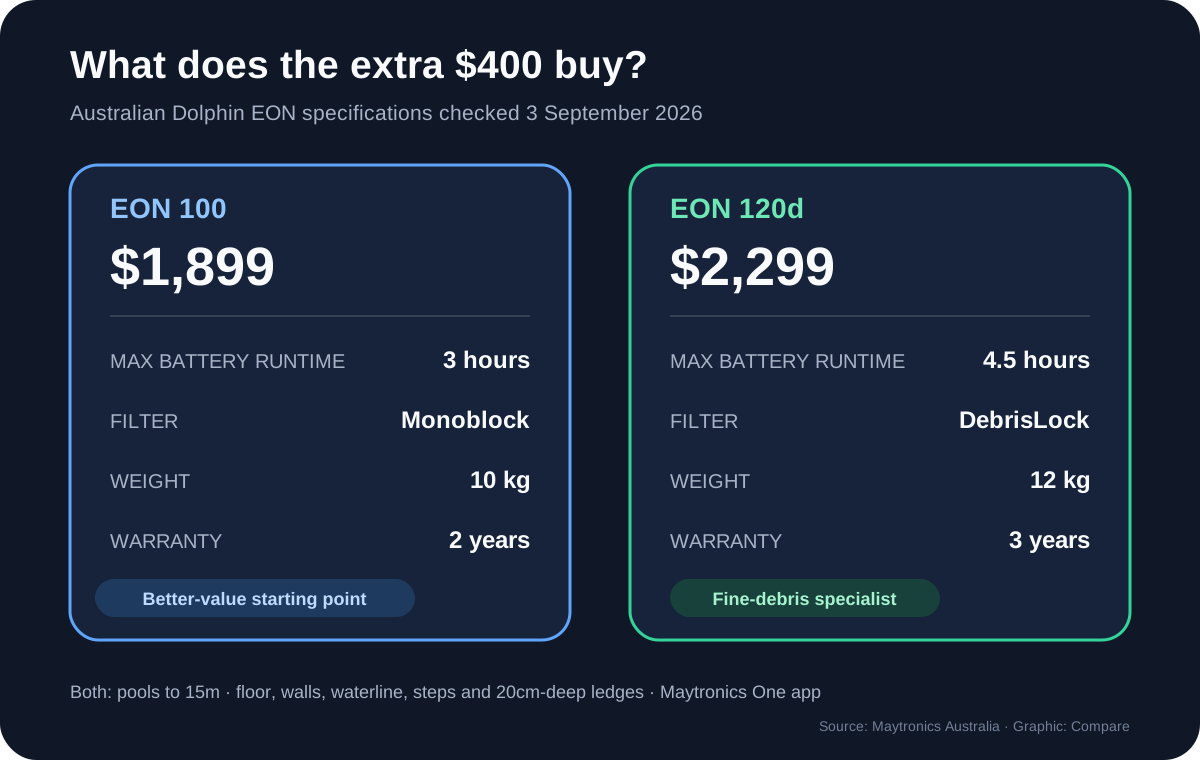
- Maytronics launched the Dolphin EON range in Australia at SPLASH! 2026, with the EON 100 priced at $1,899 and the EON 120d at $2,299.
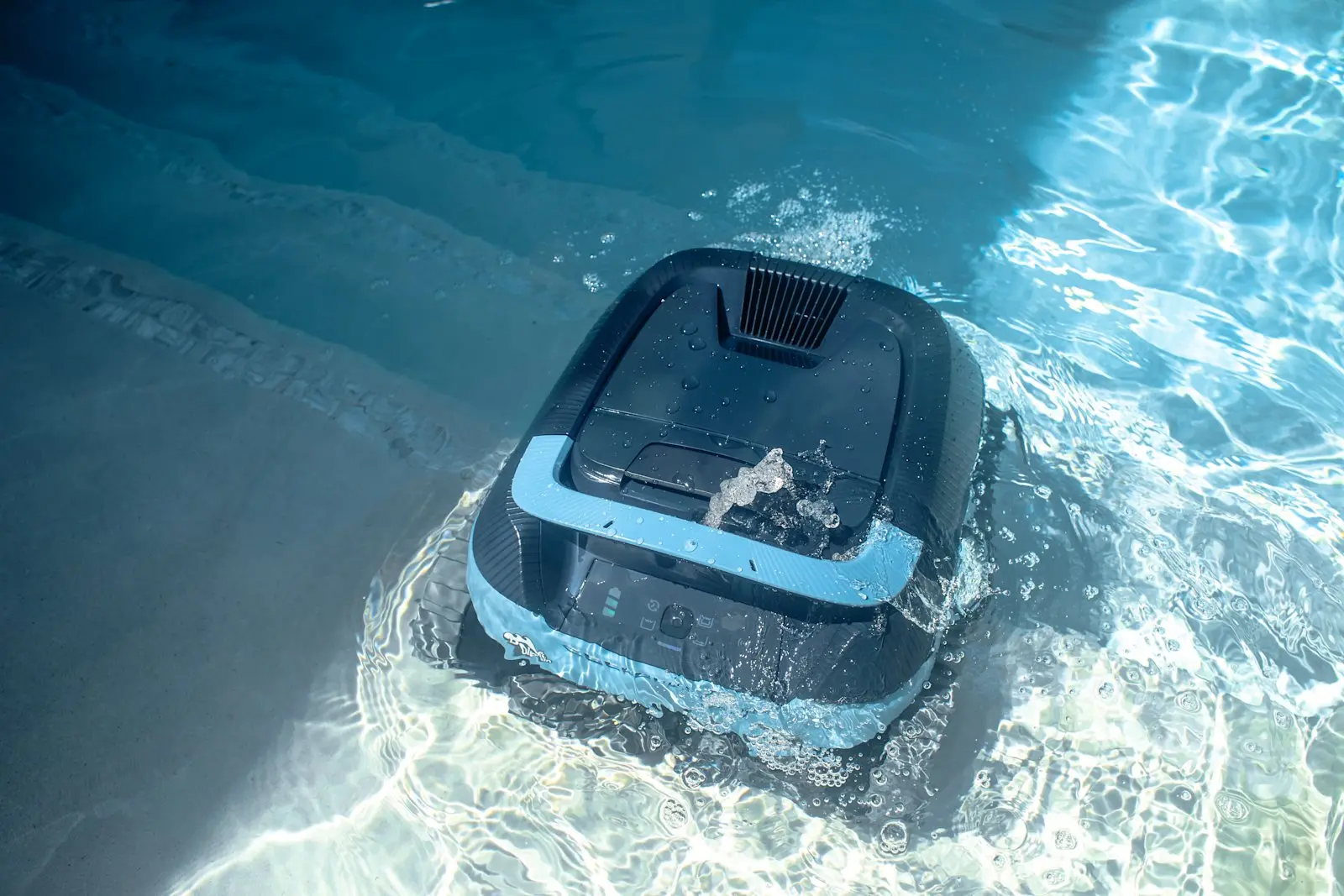
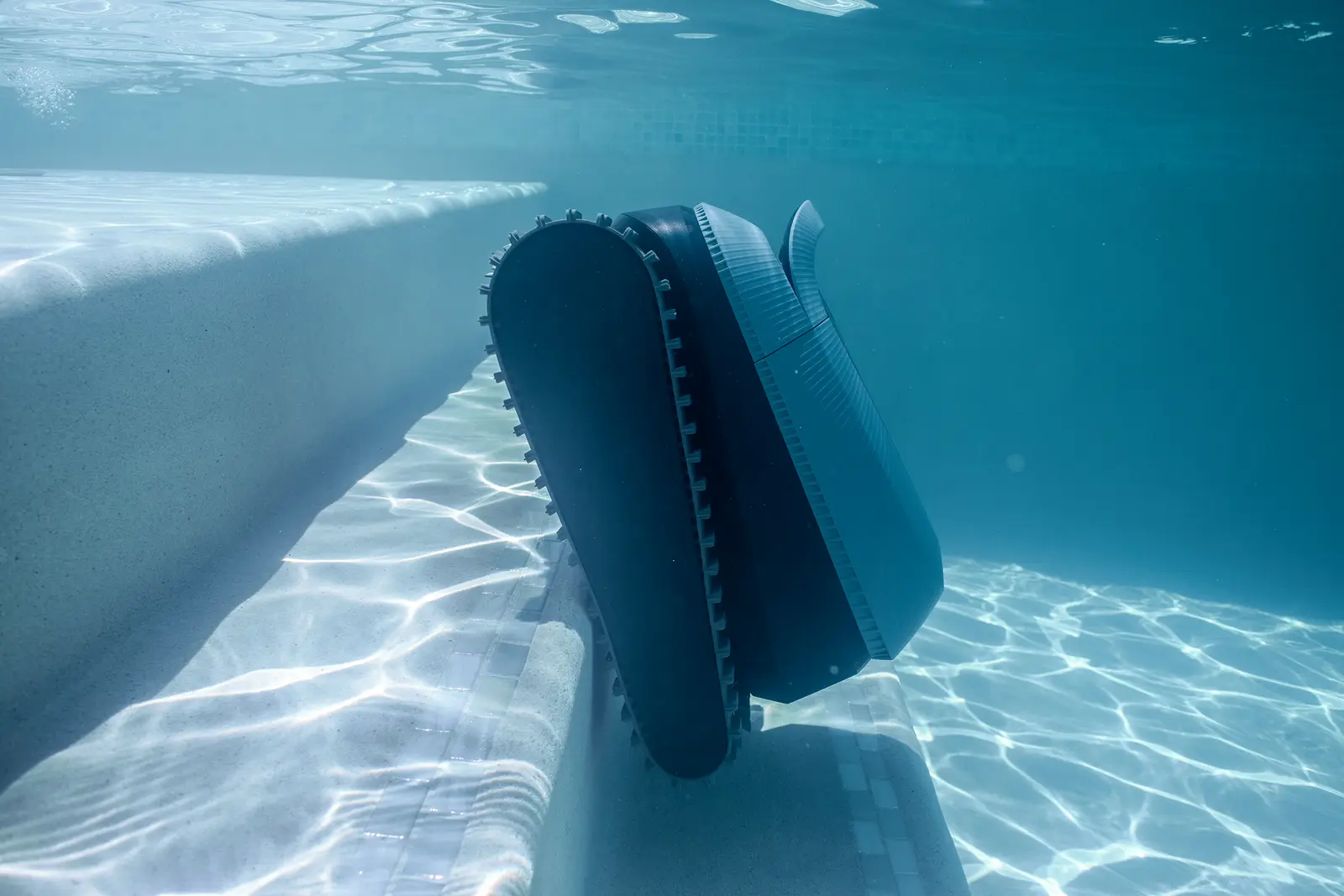
- Both are cordless, suit pools up to 15 metres and are designed to clean the floor, walls, waterline, steps and ledges in water as shallow as 20 centimetres.
- The EON 100 weighs 10kg and has up to three hours of battery runtime. The 120d weighs 12kg, runs for up to 4.5 hours and adds DebrisLock filtration, a sonic retrieval clicker and an extra year of warranty.
- An independent EON 120d test reported roughly 95% coverage and very effective grit capture, but also missed corners, some startup trouble and a filter basket that was frustrating to clean.
- Cordless removes cable management, not maintenance. You still need to charge the robot, lift it from the pool and clean the filter regularly.
Dolphin’s biggest Australian launch in a decade
Maytronics used the recent SPLASH! 2026 pool trade show to launch what it called its biggest new Australian product range in ten years. The new line-up includes corded S-Line cleaners, the surface-skimming Dolphin Skimmi and, most interestingly for home owners, two new cordless EON robots.
That timing makes sense. Spring has arrived, Australian pools are about to become a weekend job again and cordless competitors from Aiper, Beatbot, Zodiac, Mammotion and MOVA have become much harder to ignore. Dolphin has enormous recognition in pool shops, but the old assumption that a serious Dolphin must trail a power cable around the pool is disappearing.
The EON 100 is available directly from Maytronics Australia for $1,899. The EON 120d is $2,299. They are not bargain robots, although the price sits squarely in the increasingly busy middle of the premium cordless market rather than at its very top.
I have not tested either EON in my pool, so this is not my review. I have compared the Australian specifications with independent hands-on testing of the 120d, and the result is more useful than either a launch announcement or a five-star verdict based on opening the box.
The two EONs are more similar than the price suggests
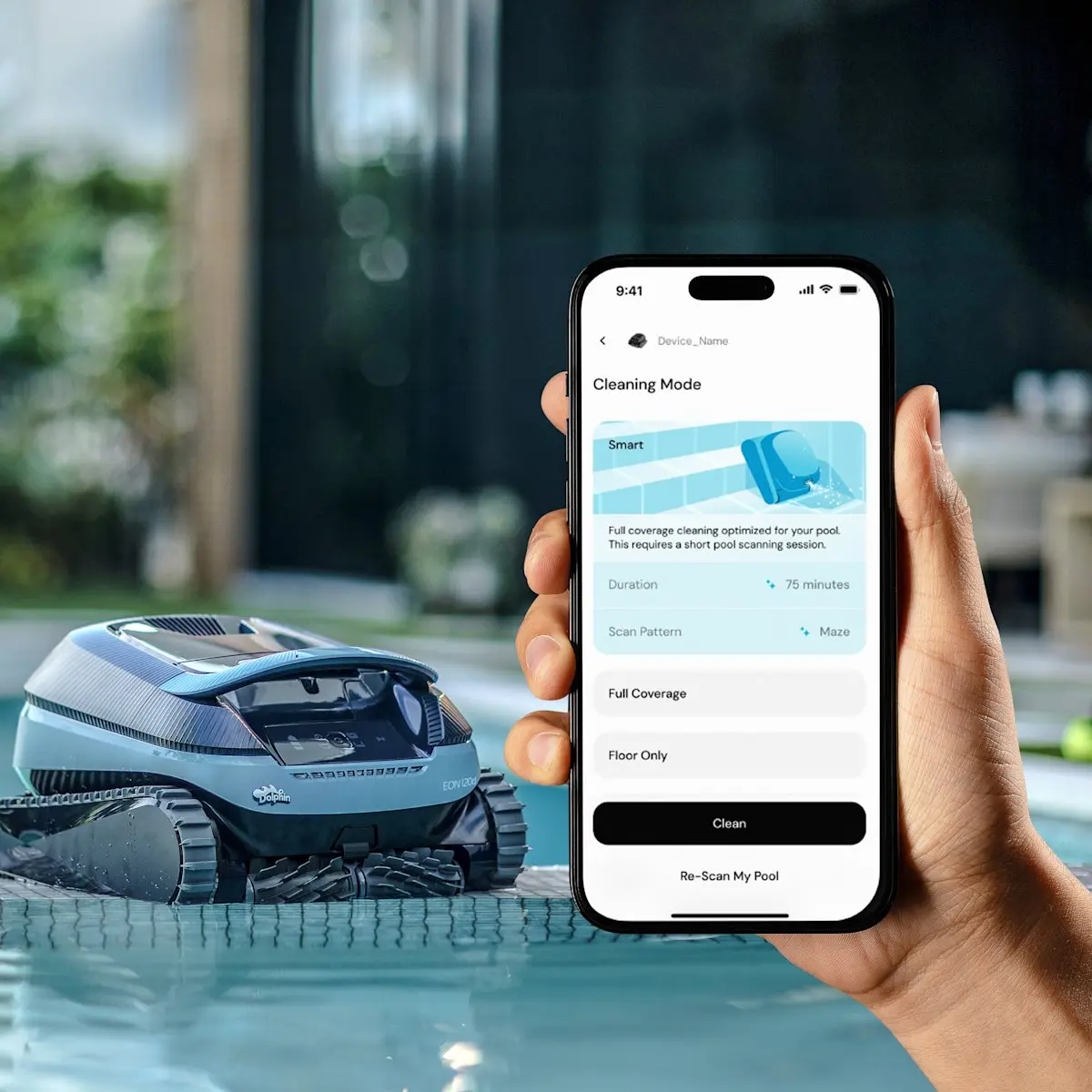
Both models are intended for pools up to 15 metres. Maytronics says each can clean the floor, walls, waterline, steps and sun ledges with at least 20cm of water above them. They share SmartMap navigation, JetIQ water jets for extra control around uneven areas, four brushes including two active scrubbers, six cleaning modes and the Maytronics One app.
Cycle choices are 1.5, two or 2.5 hours on both models. The larger battery claim on the specification sheet does not mean the 120d runs continuously for 4.5 hours in a normal clean. Instead, the spare capacity can support repeated shorter sessions through UltraRun mode. Maytronics claims up to one week of scheduled cleaning from the EON 100 and up to 2.5 weeks from the 120d, depending on the schedule and pool conditions.
The important upgrades are filtration, handling and support. The EON 100 uses a conventional 70-micron monoblock filter and carries a two-year warranty. The 120d adds DebrisLock, which is designed to capture ultra-fine material and backwash the filter internally, plus the sonic Clicker used to call the robot to a wall for retrieval. Its warranty extends to three years.
The catch is weight. The EON 100 is listed at 10kg while the 120d is 12kg before it fills with water and debris. Cordless sounds effortless when it is sitting dry in a product photo. Pulling a wet 12kg robot from the deep end is still a proper lift.
Can it really clean the steps and shallow ledges?
This is the feature I would pay attention to, because almost every modern robot claims some version of complete coverage. In reality, pool geometry is brutal. A cleaner that is brilliant on a flat floor can lose traction on a wall, drive past a narrow step or strand itself when it reaches a shallow tanning ledge.
The EON uses water jets to help it move and maintain grip where tracks alone may struggle. Maytronics says it can work in water only 20cm deep. That is a meaningful design target for modern pools with wide entry shelves, and it is more specific than simply printing ‘wall climbing’ on the box.
Independent testing of the EON 120d by PCWorld was encouraging but not perfect. The reviewer reported about 95% overall coverage in a test using synthetic leaves. The robot handled stairs reasonably well and could right itself after tipping over, but it repeatedly left some leaves in corners and on steps.
That sounds believable. A robot getting 95% of the pool without a cable is useful. A robot cleaning literally every surface in every pool shape is a marketing promise I would not accept until it has been tested in that particular pool.
The 120d filter is clever, but it may not be pleasant
DebrisLock is the main reason to consider the EON 120d. It is designed to trap fine dirt and prevent it escaping when the robot moves or is lifted. Sensors can detect a restriction and run a backwash process inside the pool to restore water flow. For people dealing with fine sand, dust or silt, that could matter more than another app screen.
The same independent test found the filter extremely effective at holding grit and other debris. Unfortunately, it also found leaves became stuck in the filter material and were difficult to remove even with a hose. The reviewer described the cleanup as the reason he lost interest in using the robot regularly.
That is an important ownership lesson. Better filtration is not automatically better if your pool mostly receives large gum leaves. A fine filter can make the water look better while creating a more annoying cleaning job. My own pool sits under trees, so I would want to see how the basket behaves after a genuinely ugly leaf load before paying the extra $400.
For ordinary leaves and routine cleaning, the simpler EON 100 filter may actually be the nicer thing to own. For fine grit or dusty conditions, the 120d has the stronger specification, but buyers should inspect how the basket opens and rinses before deciding.
Cordless is easier, but it is not automatically better
After using quite a few cordless pool robots, the biggest improvement is obvious: there is no cable to untangle, drag across the paving or coil up after every clean. It is much easier to drop the robot in for a quick run, particularly when you do not want a power supply sitting near the pool.
The trade-off is that a battery turns cleaning into a routine. The robot has to come out, drain, be rinsed and reach a dry charging point before the next run. A corded cleaner can repeat cycles without waiting for a recharge, which can still be the better arrangement for a large pool or during a week of relentless leaves.
Batteries also age. The three-year warranty on the 120d is reassuring, and Maytronics has a well-established Australian dealer and service network, but buyers should still ask what a replacement battery costs and whether it can be replaced locally once the warranty ends.
Cordless wins on day-to-day handling. Corded can still win on unlimited runtime, simpler long-term power delivery and avoiding another large lithium battery in the shed. Neither answer is universally correct.
The app cannot magically talk through pool water
Maytronics One can schedule cleans, select modes, show battery and filter status, record cleaning history and display the water temperature. There is a useful limitation hidden in the Australian product description: several app functions are used when the robot is out of the pool.
That is normal. Bluetooth and Wi-Fi perform terribly through water, so buyers should not imagine steering the EON around the deep end from the lounge. Settings are generally prepared before the robot goes in, while the EON relies on its onboard navigation once submerged.
The 120d’s little sonic Clicker is therefore more practical than it first appears. Shaking it in the water can stop a cleaning cycle and ask the robot to climb your nominated wall. PCWorld found that retrieval feature worked reliably. It does not lift 12kg for you, but it can save fishing around the floor with a hook.
Which EON should you buy?
My early pick for most people is the EON 100. At $1,899 it keeps the navigation, step cleaning, waterline coverage and app features that make this range interesting. It is two kilograms lighter and its simpler filter may be easier to live with in a leafy Australian pool.
The EON 120d makes sense when fine dust and grit are your real problem, you want to leave scheduled short cleans running across a longer period, or the Clicker and extra year of warranty are worth $400 to you. Its filtration looks genuinely effective, but I would not buy it assuming DebrisLock means the basket never needs an unpleasant clean.
I would still choose a corded model for a very large or constantly dirty pool where repeated cleaning matters more than cable-free handling. I would also consider a separate surface skimmer if most of the mess arrives as leaves floating on top, because catching them before they sink is often more effective than asking an expensive floor robot to collect them later.
The EON is a credible sign that cordless has caught up on coverage and filtration. It has not removed charging, lifting, basket cleaning or the need to match a robot to the pool. Before spending two grand, compare the EON against the other locally available cordless and corded models in our pool-robot catalogue, using your pool length, surface, steps and debris rather than the biggest feature list.
Primary sources
Read the evidence.
- Maytronics Australia’s SPLASH! 2026 product launchMaytronics Australia ↗
- Dolphin EON Australian range and model comparisonMaytronics Australia ↗
- Dolphin EON 100 Australian product pageMaytronics Australia ↗
- Dolphin EON 120d Australian product pageMaytronics Australia ↗
- Independent Dolphin EON 120d hands-on reviewPCWorld ↗
- Australian EON runtime, weight and warranty specificationsPool Robotics Perth ↗
Australian pricing, availability and specifications were checked on 3 September 2026. Patryk has not personally tested the Dolphin EON range. Performance comments are attributed to the cited independent review and may vary with pool shape, surface and debris.
Community
Add to the article.
Useful experiences, questions and corrections make the next reader’s decision easier.
Comments appear here after moderation.