

The short version
What you need to know.
- Ampol’s proposed A$225 million Evie acquisition requires ACCC clearance, with completion anticipated in the first half of 2027.
- The approximately 1,425 combined bays are an existing-network count, not a promise of that many new bays.
- Check each network’s current prices, payment method, availability and fees before travelling.
Approval comes before integration
Ampol’s proposed A$225 million purchase of Evie Networks could put a sizeable slice of Australia’s public charging under one owner. For drivers, the useful question is whether that makes the next charging stop easier, more reliable or cheaper.
There is a fairly important step before any of that: approval. Ampol announced the agreement on 1 October, with Australian Competition and Consumer Commission clearance required and completion anticipated in the first half of 2027. Ampol and Evie will operate independently until approval and completion.
What changes at the charger today?
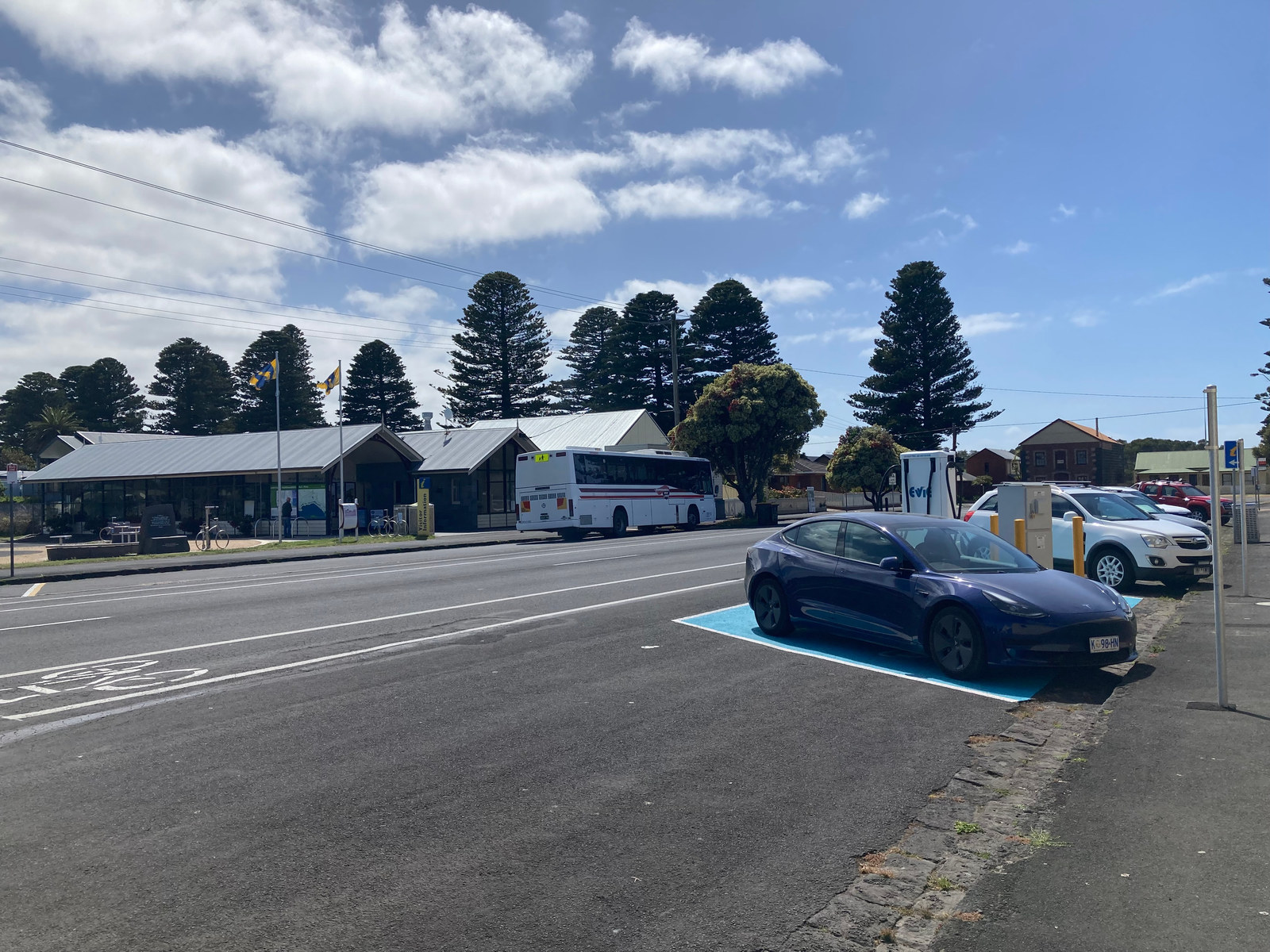
The announcement puts the combined AmpCharge and Evie footprint at approximately 1,425 charging bays across more than 400 sites. That is a count of the networks coming together, not a promise of 1,425 newly built bays. A change of owner does not magically shorten the queue on a long weekend.
For now, plan around the services each network actually offers. AmpCharge’s payment guide directs drivers to the Ampol app, with an exception for eligible business customers using an EV-enabled AmpolCard.
Evie has its own app, an account-linked Evie Pass and Autocharge at eligible chargers, which can start a session automatically after setup. Those existing options are worth understanding before you pull into a bay with a nearly empty battery.
The acquisition announcement does not set out a common app, shared payment system or cheaper charging tariff. Keep using the network-specific instructions until the operators announce something concrete.
Bigger needs to mean better
There is a sensible potential upside here. A larger operator could put more resources into maintenance, customer support and expanding busy locations. The benefit would be particularly useful if it meant fewer failed charging attempts or extra bays where drivers actually queue. Those are possible outcomes, though, rather than delivered improvements.
Competition deserves equal attention. If the deal completes, two separately owned networks would come under one owner. The practical question is how much independent choice remains near your home or along your regular route. A competitor fifty kilometres away is not much comfort when you need to charge here.
That does not establish that prices will rise. It does mean the customer test should go beyond a bigger national map: are useful alternatives available, is pricing easy to compare, and does service improve?
Five checks before your next charge
- Check the exact site price. Evie publishes site and connector pricing, while AmpCharge lists location rates in its app. Compare cents per kilowatt-hour, not just the logo on the charger.
- Confirm how you will start and pay. Have the right account ready and check eligibility before relying on an automatic-start feature or charging card.
- Check availability and a backup stop. A national bay total says little about whether the charger you need is free and working when you arrive.
- Read the parking and idle-fee conditions. Evie’s terms allow an idling charge after charging finishes. Check the applicable conditions at your stop rather than assuming the energy price is the whole bill.
- Compare the whole stop. A cheaper charger can be poor value if reaching it adds a detour or a long wait. As a simple example, a 10c/kWh difference saves A$5 on 50kWh delivered. Decide whether that saving suits your trip.
The Compare view
Judge this deal by what eventually happens at the plug. Reliable bays, straightforward payment and competitive prices would give drivers something worth celebrating. Ownership paperwork alone will not.
If you are comparing electric cars, base the charging plan on what works today. If home charging is possible, compare home EV chargers alongside the public network you would use. A proposed acquisition is useful context, but your weekly routine still gets the deciding vote.
Primary sources
Read the evidence.
- Agreement to acquire Evie, announced 1 October 2026Ampol ↗
- AmpCharge payment methods and location-specific pricingAmpCharge / Ampol ↗
- Current charging methods and site/connector pricingEvie Networks ↗
- Terms of service, including idling chargesEvie Networks ↗
Checked 11 October 2026. Proposed transaction status and timing are attributed to Ampol. Potential benefits and competition questions are analysis, not promises, regulator findings or evidence of a completed deal. Charging prices, payment options and availability can change; check the exact site. The 50kWh saving example is arithmetic, not a current tariff quote.
Community
Add to the article.
Useful experiences, questions and corrections make the next reader’s decision easier.
Comments appear here after moderation.