
The short version
What you need to know.
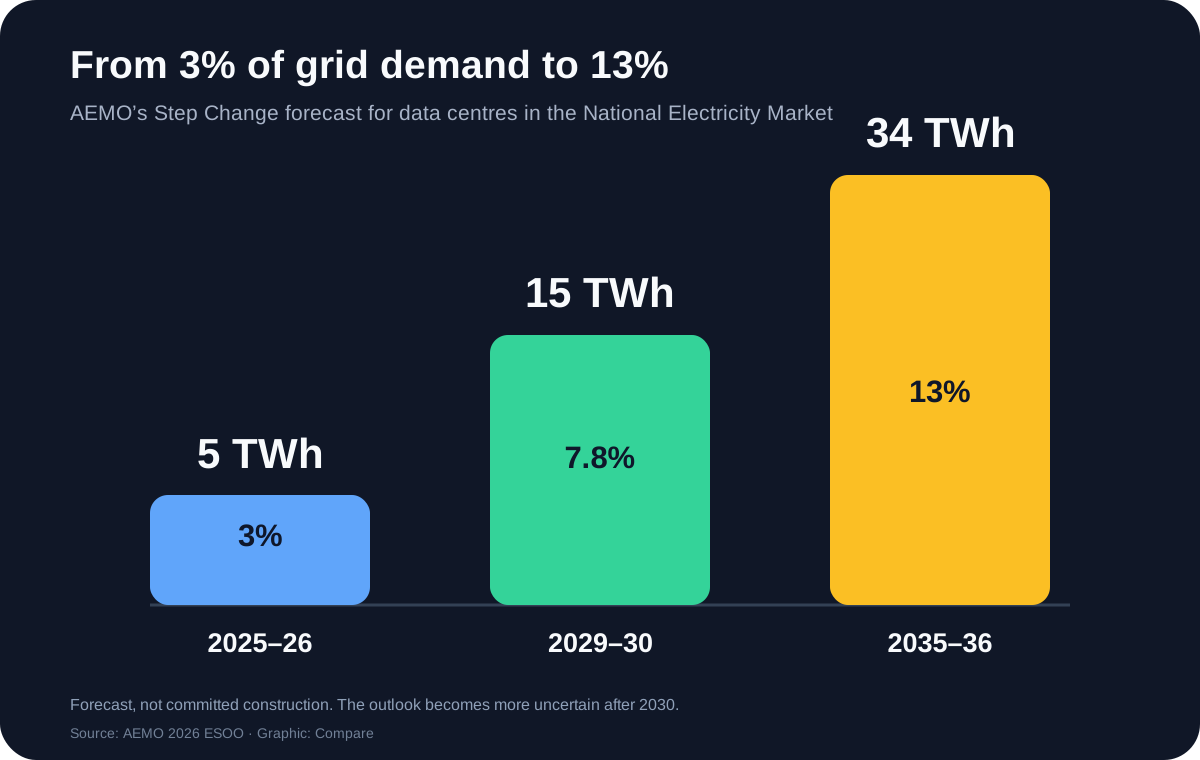
- AEMO forecasts data-centre electricity use in the National Electricity Market rising from about 5TWh in 2025–26 to 34TWh in 2035–36, increasing from roughly 3% to 13% of grid consumption.
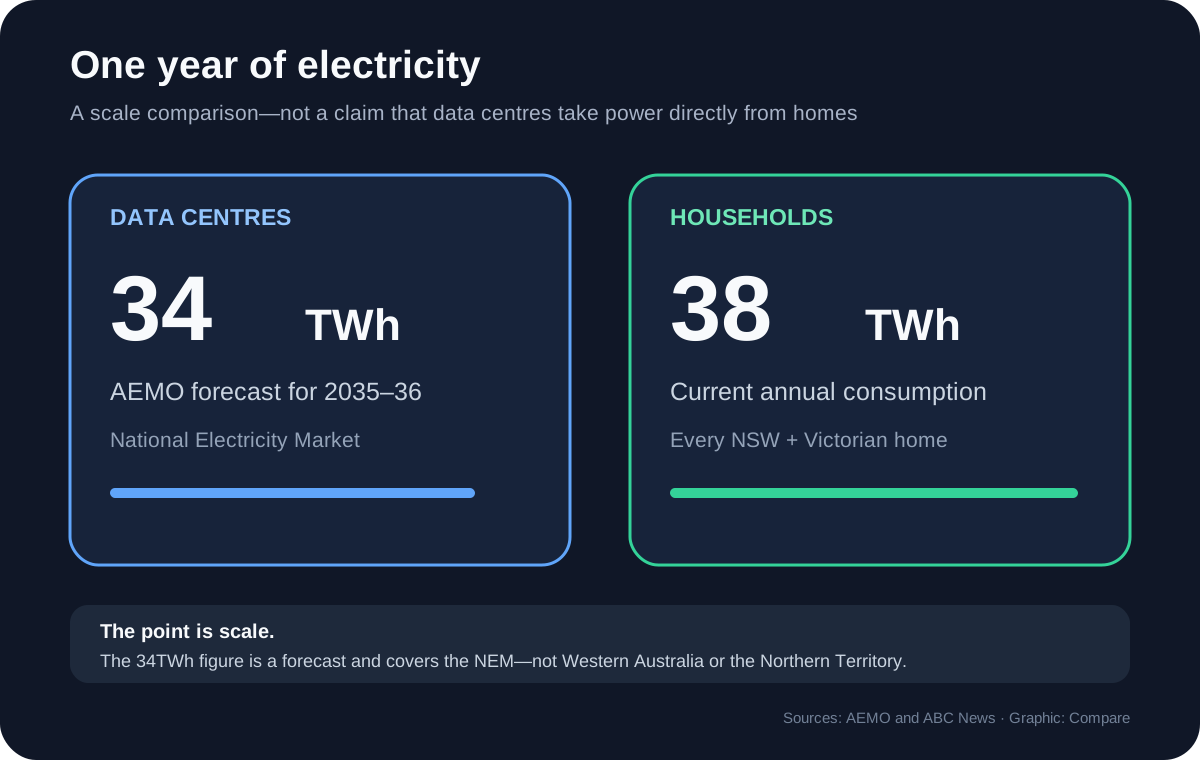
- That 34TWh is close to the 38TWh currently used by every household in New South Wales and Victoria combined, although it remains a forecast rather than a committed construction total.
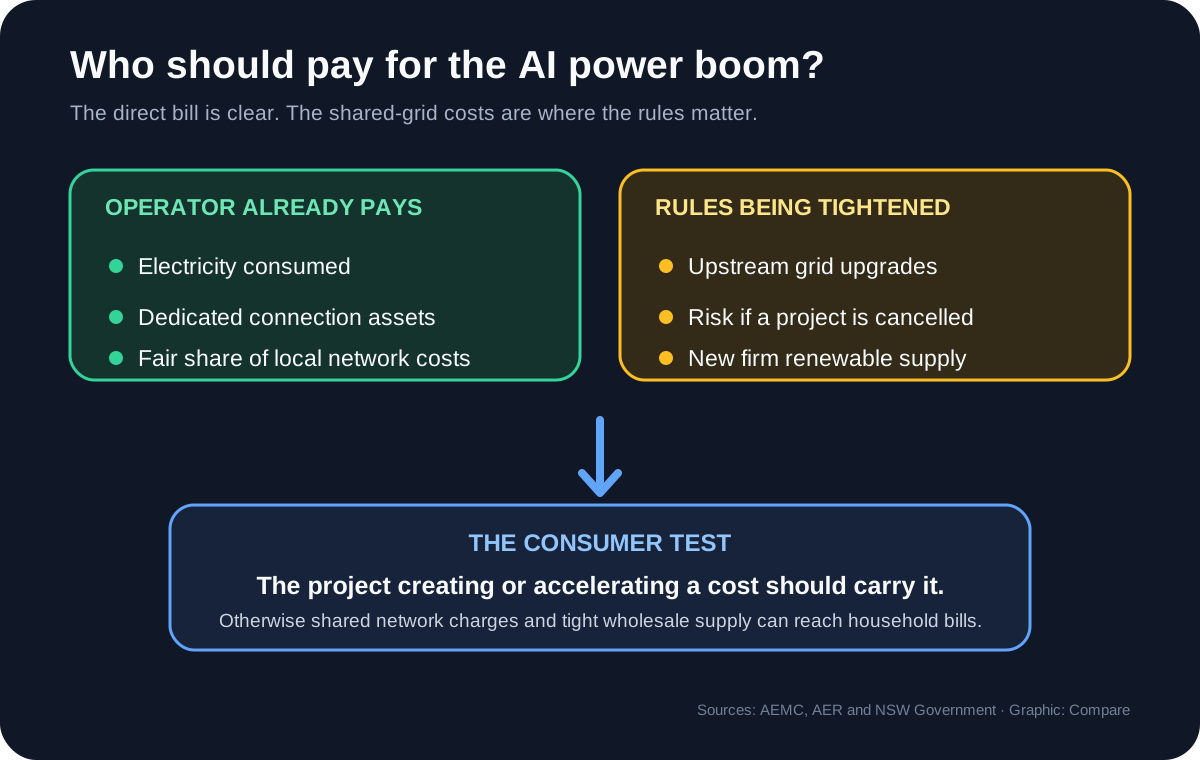
- Data centres already pay for their electricity and direct connection assets. The unresolved risk is who funds wider transmission, system-strength and shared-network upgrades caused or accelerated by their arrival.
- Regulators are developing rules intended to make large data centres fund those upgrades, bring new renewable generation and firming, register with AEMO and offer some demand flexibility.
- The forecast covers the NEM, which excludes Western Australia and the Northern Territory. It should not be described as 13% of every Australian electricity grid.
The 13% figure is big enough to change the grid
Data centres used about 5 terawatt-hours of electricity across the National Electricity Market in 2025–26. AEMO now expects that to reach roughly 15TWh by 2029–30 and 34TWh by 2035–36 under its most likely Step Change scenario. Their share of grid consumption would rise from about 3 per cent to 13 per cent.
A terawatt-hour is one billion kilowatt-hours, which is not a particularly friendly unit to picture. The more useful comparison is that every home in New South Wales and Victoria currently consumes about 38TWh a year. AEMO’s data-centre forecast gets surprisingly close to that number.
This is a genuinely dramatic revision. AEMO knows about 225 data-centre projects in development, more than double the 97 counted a year earlier, on top of around 165 already operating in the NEM. Most existing demand is concentrated in New South Wales and Victoria, where the cloud companies, fibre routes and customers are already clustered.
But 225 proposals do not mean 225 finished buildings. AEMO adjusts for projects being cancelled, delayed or never reaching their full connection capacity. Its own explainer says 36 per cent of the developing projects included in the previous outlook were later cancelled. The forecast becomes much less certain after 2030, so treat 34TWh as a serious planning case, not a meter reading sent back from the future.
What is actually using all that electricity?
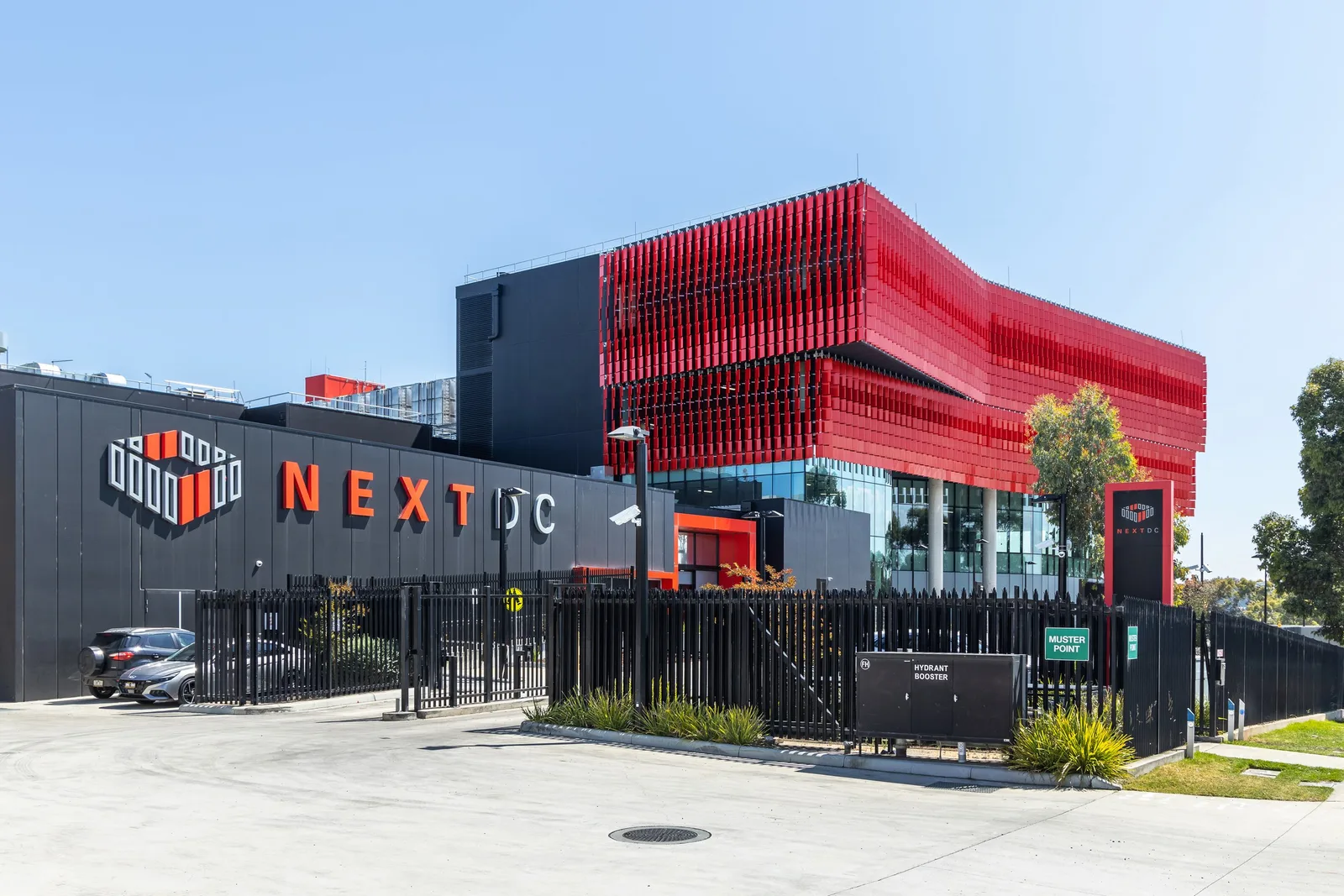
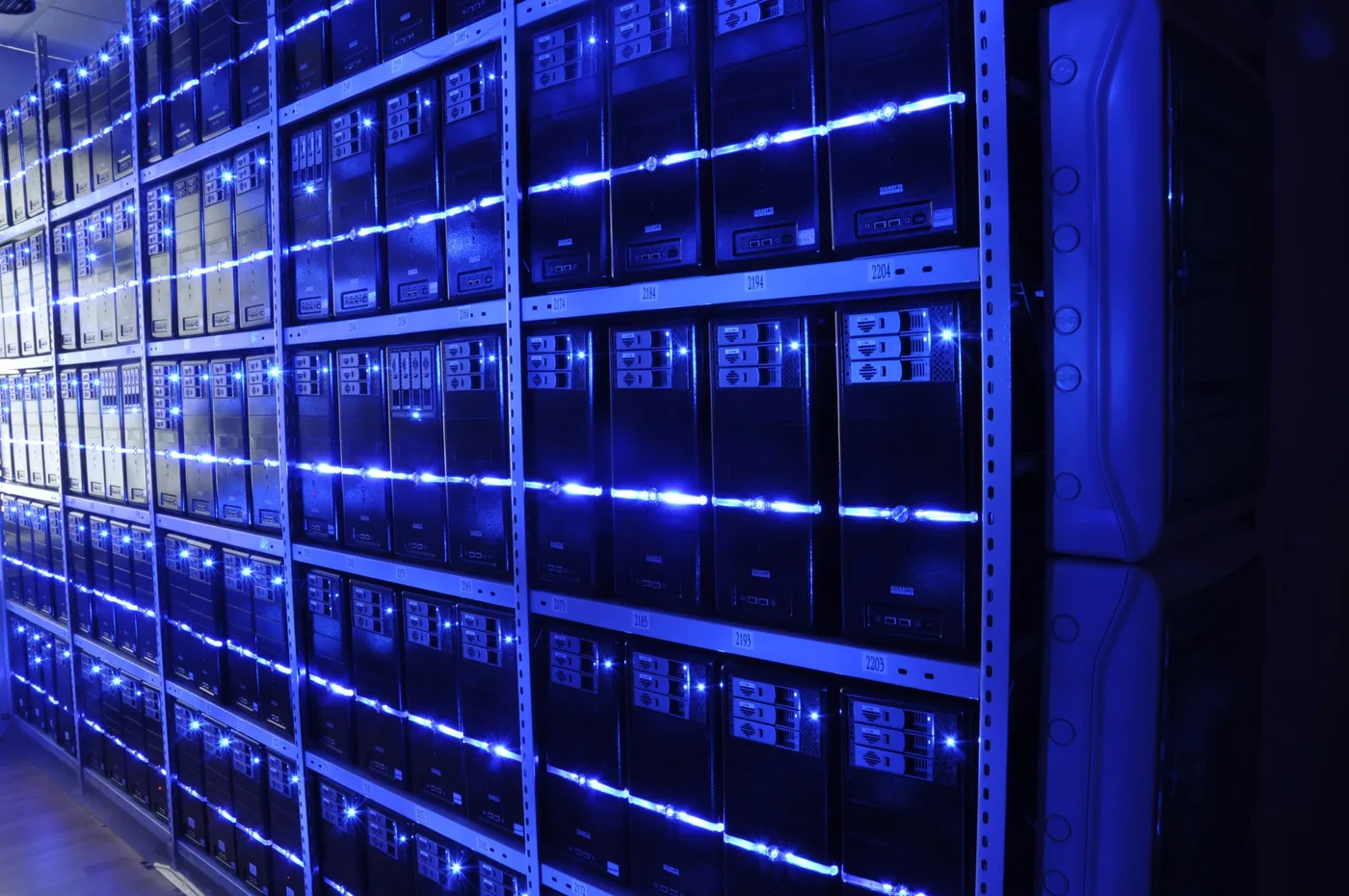
A data centre is not simply a warehouse filled with laptops. Thousands of servers perform computing and store information, while cooling equipment moves away the heat those computers create. There are also pumps, networking gear, power conversion equipment and losses through the uninterruptible power supplies designed to keep everything running when the grid has a bad afternoon.
AI increases the pressure because training and operating large models can require extremely dense clusters of specialised processors. Cloud storage, streaming, business software and ordinary internet services still matter, but AI is adding another large and rapidly growing customer for the same buildings.
The difficult part for the grid is not only the annual total. Many data centres want near-perfect uptime and consume heavily through the evening peak, overnight and during poor renewable conditions. A new solar farm can replace the energy over a year, but solar panels at midday do not by themselves keep a server hall running at 7pm on a windless evening. The system also needs firming from batteries, hydro, demand flexibility or other dispatchable supply.
Some AI workloads are more movable than banking transactions or hospital systems. Training can potentially shift by a few hours, slow briefly or move between facilities. The opportunity is real, but it should be written into connection and market arrangements rather than assumed because a technology company used the word ‘smart’.
Data centres are not receiving free electricity
The first part of the answer is straightforward: data-centre operators buy their electricity. A facility consuming hundreds of megawatts receives a very large bill, often supported by long-term power-purchase agreements. It also normally pays for the dedicated line, substation and other assets used only for its connection.
The Australian Energy Regulator has already tightened this in Victoria. Its current network decisions require data centres to pay the direct connection cost and a fair portion of shared distribution-network costs. That is important evidence against the idea that a family’s quarterly bill simply contains a hidden line saying ‘Microsoft’s electricity’. It does not work that way.
More large customers can sometimes help everyone. If a network has spare capacity, a major customer spreads fixed costs across more electricity consumption. Jemena argued that growing data-centre and business demand could allow distribution charges to fall even while its total revenue increased. A data centre can also give a new wind, solar or battery project the guaranteed customer it needs to obtain finance.
So the honest answer cannot be that more demand automatically means higher bills. Location, timing, flexibility and the amount of new infrastructure required matter just as much as the annual energy figure.
Where household bills could still be exposed
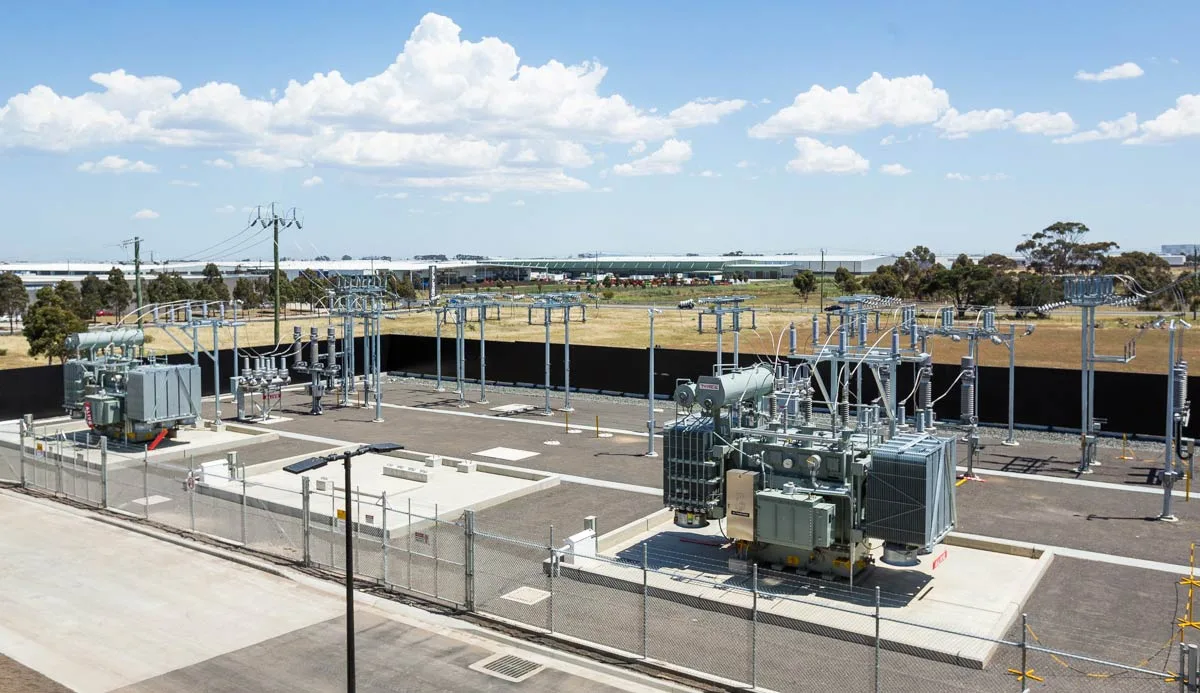
The risk begins when a data centre needs infrastructure that is not used only by that building. A connection can trigger or bring forward a larger transmission line, a stronger substation, system-strength equipment or other shared upgrades. If the rules let those costs enter a network’s regulated asset base, they can be recovered over many years from the broader customer base.
There is also stranded-asset risk. Imagine a network builds around a promised 500MW facility and the project is cancelled or uses far less power than contracted. Somebody still owns the new equipment and expects to recover the money. Regulators are considering bank guarantees, prepayments and other protections so that risk stays with the project creating it.
Wholesale electricity is the second pathway. Data centres buy electricity like other customers, but a large block of near-constant demand can push the market toward more expensive generators during tight periods. That higher clearing price can affect every retailer buying from the market. Energy Consumers Australia says international evidence shows substantial household impacts are possible, but it also says the Australian result remains unclear and requires proper modelling.
Finally, huge loads must behave predictably during grid disturbances. If a group of facilities disconnects at once, the sudden loss of demand can be as disruptive as a generator tripping. Better visibility, registration and technical standards cost money too, but operating the system blindly would be the more expensive experiment.
The rules are now trying to close that gap
The Australian Energy Market Commission has advised ministers that large data centres should bring new renewable generation, contract enough firm capacity, register as market participants and be encouraged to reduce or move demand when the grid is strained. That is a much stronger test than buying certificates linked to renewable projects that were already going to exist.
Energy Minister Chris Bowen has also asked the AEMC to close seven gaps in network cost recovery. The proposed approach would make distribution-connected data centres contribute to upstream transmission upgrades they trigger, provide financial protection against stranded assets and prevent those failed project costs being quietly rolled into bills for everybody else. Transmission-connected facilities would face clearer augmentation and state-scheme charges as well.
New South Wales is moving in the same direction. Its proposed framework says additional energy-infrastructure costs needed for data-centre growth should be recovered from operators with no net cost imposed on households or other businesses. That is exactly the principle consumers should expect.
The important caveat is status. Some Victorian connection decisions are already operating, but much of the broader national package is advice, proposed legislation or a rule-change process. The intention is clear; the final drafting, thresholds and enforcement will decide whether the protection is real.
A large flexible customer could help rather than hurt
There is a better version of the data-centre boom. A facility contracts genuinely new renewable generation, helps finance batteries or other firm capacity, locates where the network has room and temporarily reduces non-urgent computing when supply is tight. Its constant off-peak consumption can improve use of infrastructure that customers are already funding.
Data centres already contain significant backup-power equipment. With the right technical and commercial arrangements, batteries and flexible loads could provide grid services instead of sitting idle until an outage. Co-locating with generation can also reduce some network pressure, although it does not remove the need for dependable supply when that generator is unavailable.
This is why blanket claims in either direction are unhelpful. Data centres are not automatically parasites on the power system, and they are not automatically generous anchor customers lowering everyone’s bill. The result depends on rules that reward useful behaviour and stop private infrastructure risks being transferred to captive customers.
What about Western Australia?
AEMO’s 13 per cent figure applies to the National Electricity Market, covering Queensland, New South Wales, the ACT, Victoria, South Australia and Tasmania. Western Australia and the Northern Territory are not part of it.
That means the headline does not describe Perth’s South West Interconnected System or household bills in WA. Western Australia has its own electricity market, network planning and data-centre developments. Similar questions about who funds new capacity still apply, but the 34TWh forecast cannot simply be copied across the Nullarbor.
This geographical detail sounds fussy until a national headline lands in Perth and implies that our local grid is about to hand 13 per cent of its electricity to AI. It is not what AEMO said.
My verdict: households should not be underwriting the AI boom
Could data centres increase household electricity bills? Yes. If enormous new loads arrive faster than generation, storage and networks can support them, wholesale prices can rise. If shared upgrades or abandoned connection assets are spread across ordinary customers, network charges can rise as well.
But that outcome is not inevitable, and the 13 per cent number alone does not prove it will happen. Data centres already pay substantial energy and connection costs. Properly located and contracted projects can finance new supply, use spare network capacity and provide flexible demand that benefits the system.
My test is fairly simple. A new data centre should pay its direct connection, the network work it causes or accelerates, and the financial risk if its promised demand disappears. It should bring genuinely additional energy and enough firm capacity to cover its load. AEMO should be able to see and manage it like the major grid participant it is.
Australia can absolutely take the investment, jobs and computing capacity. We just should not hand the world’s largest technology companies an electricity version of ‘buy now, bill the neighbours later’. If the final rules genuinely make them bring power, flexibility and money with them, the boom can be managed. If the rules remain voluntary or full of gaps, households have every reason to watch their network charges carefully.
Primary sources
Read the evidence.
- 2026 Electricity Statement of OpportunitiesAustralian Energy Market Operator ↗
- Forecasting growing data-centre demandAustralian Energy Market Operator ↗
- Data centres to bring clean, firm energy and pay their wayAustralian Energy Market Commission ↗
- Victorian network revenue decisions and data-centre connection costsAustralian Energy Regulator ↗
- NSW data-centre connection and cost-recovery reformsNSW Government ↗
- Consumer impacts of data centres on the grid and billsEnergy Consumers Australia ↗
- Data-centre demand compared with NSW and Victorian homesABC News ↗
- NEXTDC M2 Melbourne data-centre photographNEXTDC ↗
- Server-room photographBalticServers.com / Wikimedia Commons, CC BY-SA 3.0 ↗
- AirTrunk MEL1 electrical infrastructure photographAirTrunk ↗
Information, forecasts and reform status were checked on 3 September 2026. The 34TWh figure is AEMO’s Step Change forecast for the National Electricity Market and remains uncertain, particularly after 2030. It does not include Western Australia or the Northern Territory.
Community
Add to the article.
Useful experiences, questions and corrections make the next reader’s decision easier.
Comments appear here after moderation.