
The short version
What you need to know.
- Roborock's first Australian robot mower range is scheduled to launch on 1 September, with six models priced from $1,409 to $4,999.
- MOVA has announced a $3,999 LiDAX Ultra 2000 AWD and now lists the smaller ViAX 300 for pre-order at $1,499 as part of a wider Australian smart-home push.
- Both companies are selling wire-free setup, but the products use different combinations of RTK satellite positioning, cameras, VSLAM and LiDAR.
- Coverage and slope figures are manufacturer claims. Tree cover, narrow passages, lawn edges, disconnected zones and local service can matter more in practice.
Why these two launches matter
Robot lawn mowers are not new in Australia, but the category is changing quickly. Older systems commonly relied on a physical boundary wire installed around the lawn. The newest wave uses satellite positioning, cameras, LiDAR or a combination of those systems to create virtual boundaries in an app.
That shift has opened the gate to brands that already know how to build autonomous household robots. Roborock and MOVA both built their names around floor-cleaning robots. Now they are carrying mapping, obstacle recognition and app automation outside, where the environment is far less controlled.
Roborock's Australian range is scheduled to arrive through Bunnings and other retailers on 1 September—the first day of spring. MOVA announced its new range in the same week, led by an all-wheel-drive LiDAR mower aimed at larger and more difficult properties. The timing turns two separate launches into a useful test of where the category is heading.

Roborock is launching six Australian models
Roborock has divided its first local range into Q, S and Z tiers. The line-up begins with rear-wheel-drive models for ordinary suburban lawns and finishes with four-wheel-drive machines carrying premium-mower prices.
The Q and S models use RTK satellite positioning with VSLAM, which uses cameras and visual landmarks to help the mower understand its surroundings. The Z120 instead combines LiDAR with VSLAM, while the larger Z150 returns to RTK and VSLAM. That difference matters: the most expensive model is not automatically the best choice for a heavily tree-covered yard.
- RockNeo Q105: $1,409, rated for lawns up to 500 m².
- RockNeo Q110: $1,899, rated for lawns up to 1,000 m².
- RockMow S108: $1,999, rated for lawns up to 800 m².
- RockMow S115: $2,499, rated for lawns up to 1,500 m².
- RockMow Z120 LiDAR: $3,499, rated for up to 2,000 m², with four-wheel drive and a claimed 80% maximum slope.
- RockMow Z150: $4,999, rated for up to 5,000 m², with four-wheel drive and claimed mowing efficiency of 250 m² per hour.

MOVA is betting on LiDAR and all-wheel drive
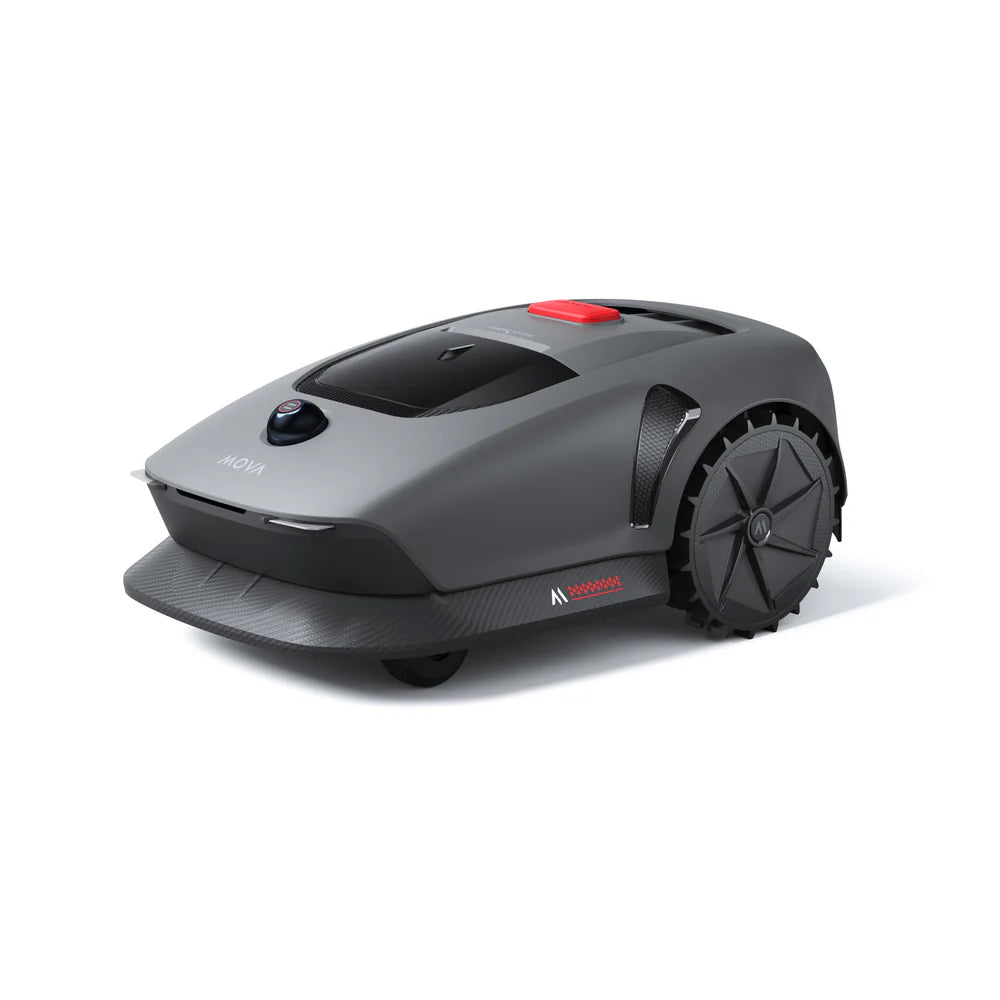
MOVA's headline Australian model is the $3,999 LiDAX Ultra 2000 AWD. Despite the 2000 in its name, MOVA says it can manage maps covering up to 4,000 m². It combines 360-degree 3D LiDAR with an AI-enhanced 1080p HDR camera, avoiding both a buried boundary wire and a separate RTK antenna.
The company claims its all-wheel-drive system can handle gradients of up to 80% and obstacles up to 6 cm. A 40 cm dual-disc cutting system is designed to cut within 3 cm of an edge, while dual-map management is intended for more complicated properties. The mower also includes GPS and three years of 4G service.
MOVA has also listed the ViAX 300 for pre-order at $1,499 for smaller yards. Local launch coverage listed it at $1,399, but MOVA's current Australian product page is the more useful live price reference. Its dual-camera navigation, 300 m² coverage limit and 40% slope claim make it a very different proposition from the flagship, and neither mower should be judged from a specification sheet alone.
RTK, LiDAR or vision: which approach suits your yard?
There is no navigation system that wins in every garden. RTK can provide accurate positioning over a large, open lawn, but the antenna and mower both need a reliable view of the sky. Tall buildings, dense tree cover and narrow side passages can make that more difficult.
LiDAR maps the mower's immediate surroundings rather than relying on satellite reception. That can be valuable under trees and beside buildings, although changing foliage, reflective surfaces and the quality of the mower's software still affect results. Cameras add object recognition and visual positioning, but performance can vary with lighting, weather and how well the system has been trained to recognise pets, toys and garden clutter.
The important question is not which acronym sounds newest. It is where the mower will lose confidence in your particular yard and what it does next. A good machine should slow down, stop or recover safely—not wander through a garden bed because its position became uncertain.
- Open lawn with a clear view of the sky: RTK can be accurate and efficient.
- Heavy tree canopy or walls close to the lawn: onboard LiDAR deserves closer consideration.
- Children, pets, toys or wildlife: examine obstacle recognition and blade-safety behaviour, not just mapping.
- Several disconnected lawn areas: check whether the mower supports multiple maps and how it moves between them.
- Very narrow passages: compare the mower's physical width with its minimum stated corridor width.
The competition was already strong
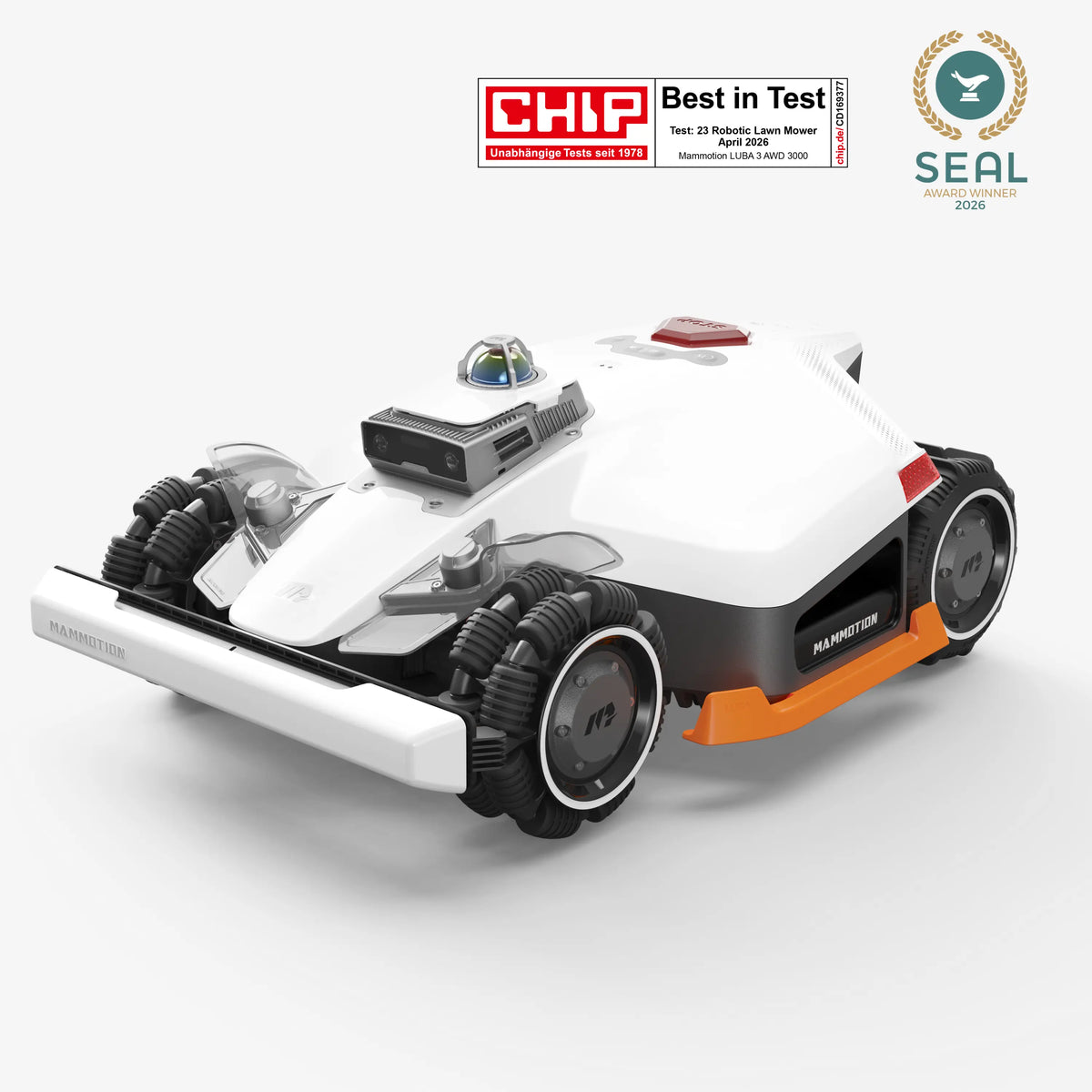
Roborock and MOVA are arriving in a market that already includes Mammotion, Segway Navimow, Ecovacs, Dreame, Husqvarna, Eufy, TerraMow and several specialist brands. Some have years of mowing experience, established Australian dealers or a growing base of owners who have already found the weak points.
That history matters because a robot mower is not a sealed appliance that stays inside. Blades wear, wheels encounter sand and mud, docks live outdoors, batteries age and software updates can change behaviour. Local parts, repair pathways and responsive support deserve to sit beside navigation and slope capability in any comparison.
The new launches are still positive for buyers. More credible competitors should put pressure on pricing, app quality and after-sales service. But a familiar robot-vacuum logo is not evidence that a brand has already mastered Australian lawns.
Should you buy one immediately?
The launches are worth watching, but there is little benefit in being first unless the mower is a particularly strong match for your property. Roborock's local range is only just reaching retailers, and MOVA's flagship is still described as coming soon. Independent Australian testing, owner reports and evidence of local parts support will make the buying decision clearer.
If you are shopping now, start with a rough lawn map rather than a brand. Mark tree cover, walls, slopes, narrow passages, separate zones, exposed sand and anywhere the mower could reach a road, pool or drop. Then shortlist machines whose navigation and drive systems suit those constraints.
- Measure actual mowable lawn area rather than the entire property block.
- Check the steepest transition as well as the average slope.
- Confirm whether an RTK antenna needs power, a mounting point and clear sky.
- Ask who handles warranty assessment, repairs and replacement parts in Australia.
- Read the boundary, obstacle and animal-safety documentation before enabling unattended or night mowing.
- Keep some budget for installation, edge trimming and changes to garden borders or access paths.
Primary sources
Read the evidence.
- Roborock CES 2026 mower families and navigation overviewRoborock Australia ↗
- Roborock Australian robot mower range, pricing and launch timingAppliance News ↗
- MOVA Australian smart robotics launch and LiDAX Ultra 2000 AWD specificationsMOVA Australia ↗
- MOVA Australian range and ViAX 300 launch pricingChannelLife Australia ↗
- Roborock mower warranty terms and Australian support contactRoborock ↗
Information was checked on 27 August 2026. Prices, specifications, retailer availability and launch timing can change. Coverage, slope and performance figures are manufacturer claims unless stated otherwise.
Community
Add to the article.
Useful experiences, questions and corrections make the next reader’s decision easier.
Comments appear here after moderation.