

The short version
What you need to know.
- Polestar Australia lists up to 3.3 kW of vehicle-to-load power with a compatible adaptor, sold separately.
- Check your car’s installed software and the adaptor’s compatibility before buying. The update can reach cars at different times.
- The selectable discharge floor and Camping mode’s 20% cutoff are separate settings.
What the update adds
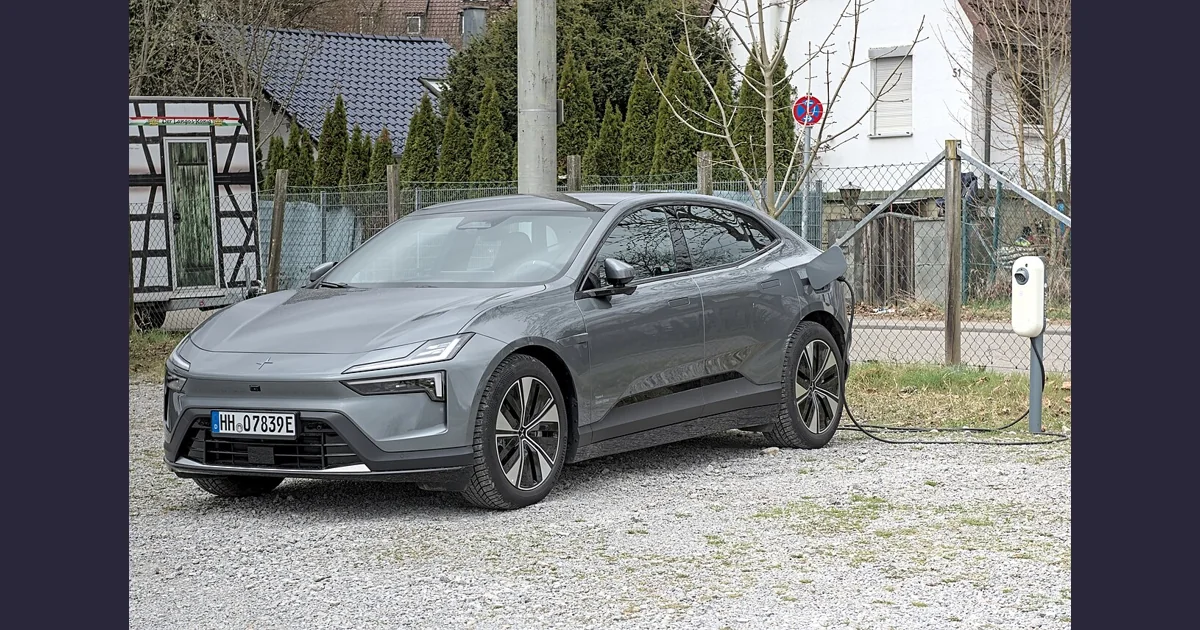
If you’ve ever packed a separate battery just to run a fridge on a weekend away, this update might save you a piece of kit. Polestar’s Australian release notes for software P4.3.0 add vehicle-to-load, or V2L, to the Polestar 4. With a compatible adaptor in the charging port, the car can supply up to 3.3 kW of single-phase AC to compatible external gear. Polestar’s Australian coupé specification lists the same output and describes the adaptor as an extra.
I’d check the car before ordering the adaptor. In the centre display, open Settings, then System, then Software updates. Polestar lists P4.3.0 in its Australian 2025 and 2026 model-year manuals, but says functions can depend on model year, market and options. A workshop may also have an update before it reaches your car over the air. If you’re buying used and this feature matters, ask to see it on the specific car rather than taking the version number in a listing as proof.
What can I plug in?
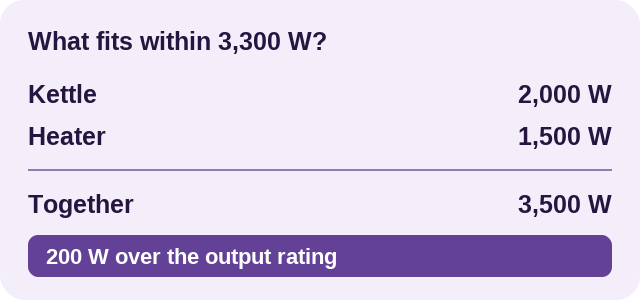
A camp fridge, laptop charger and lights are the sort of loads I’d start with. Look at the appliance labels before assuming that a heater or power tool can go on at the same time. A 2,000 W kettle plus a 1,500 W heater would ask for 3,500 W together, past the car’s 3,300 W rating. Motors and compressors may also draw more briefly at start-up. Follow the adaptor and appliance instructions rather than assuming the number on the box tells the whole story.
Power and energy are different. The 3.3 kW figure is the output ceiling; it doesn’t tell you how long the battery will last. A steady 500 W load for four hours uses about 2 kWh at the appliance, before the car’s conversion losses and any other consumption. A fridge cycles on and off, and running the cabin climate will change what the car uses overnight. Treat this as a planning example, not a tested runtime.
As a quick check before you leave, list what needs to stay on overnight and what you can run one at a time. I’d prioritise the fridge over anything that heats up. If you want to use a kettle, switch off the other high-draw gear first.
Set a reserve before you camp
Polestar says V2L stops discharging at the lower limit you choose in the car’s charging settings. I’d leave enough for the drive out and a detour, especially if there’s no reliable charger near camp. Camping mode is separate: it can keep the cabin climate and accessory outlets on, but the notes say the mode ends automatically when the battery reaches 20%. That 20% figure isn’t a universal V2L cutoff.
For a blackout, think in terms of powering compatible plug-in devices directly. The adaptor is not a whole-home backup system. Never connect its output to a household power point or switchboard. If you’re comparing home backup, use equipment expressly designed and installed for that purpose.
My take: this is most useful if you already own the car and regularly carry a fridge, lights or tools. Check the feature on your car, budget for the adaptor and leave a sensible charge reserve. I wouldn’t buy the car for V2L alone.
Sources
Read the evidence.
- Polestar 4 P4.3.0 release notes (2026)Polestar Australia ↗
- Polestar 4 P4.3.0 release notes (2025)Polestar Australia ↗
- Polestar 4 coupé Australian charging specificationsPolestar Australia ↗
- Powering a device with the car’s batteryPolestar Australia ↗
- Electrical appliance and portable backup safetyWA Building and Energy ↗
Information was checked on 24 November 2026. Details can change.
Community
Add to the article.
Useful experiences, questions and corrections make the next reader’s decision easier.
Comments appear here after moderation.