
The short version
What you need to know.
- The announced rollout begins 18 October; timing can differ by provider and connection.
- Extra capacity accounts for protocol overhead. A 15% allowance is not a guaranteed 15% real-world gain.
- Test uploads over Ethernet and check with your provider before buying hardware or changing plans.
The smaller number on your NBN plan matters
If your NBN plan includes 50Mbps uploads but the speed test never quite reaches 50, there may now be a useful change worth checking. Before you order a new router or pay for a bigger plan, give your existing connection another look. This one is about making room for the traffic around your files.
Leaptel’s 14 October announcement says NBN would begin rolling out upstream overprovisioning on 18 October 2026. That means extra upload capacity to account for protocol overhead. It does not mean everyone has already received it: Neptune’s post, corrected on 18 October, still describes timing as expected and says deployment may be gradual. Ask your provider about your service.
Extra headroom, not a new speed tier
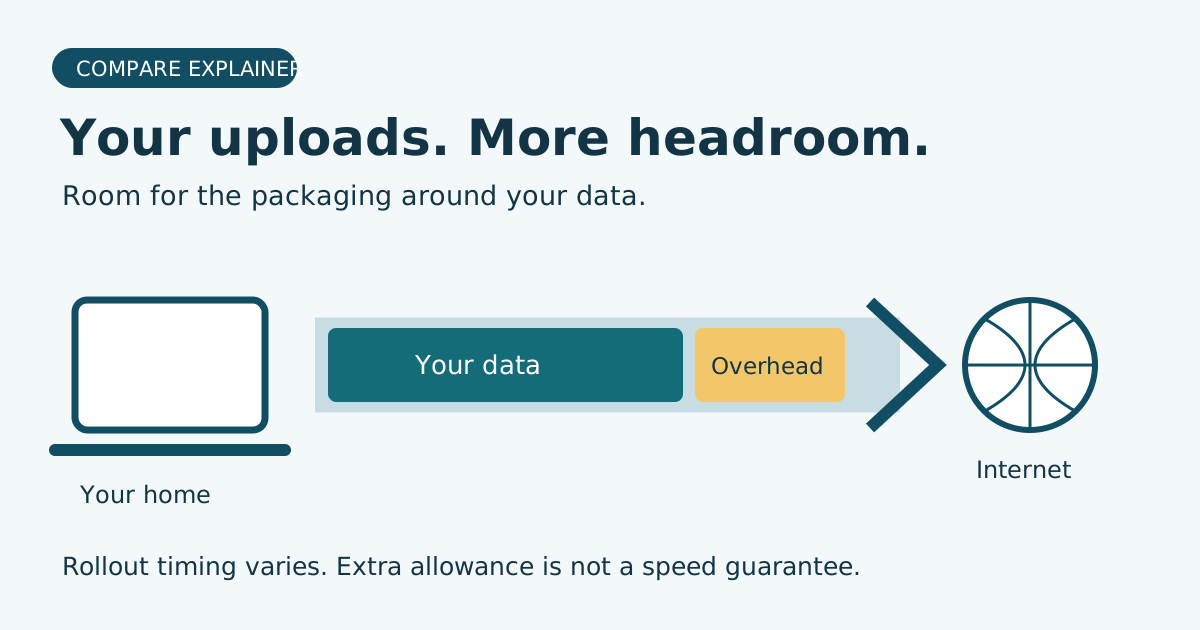
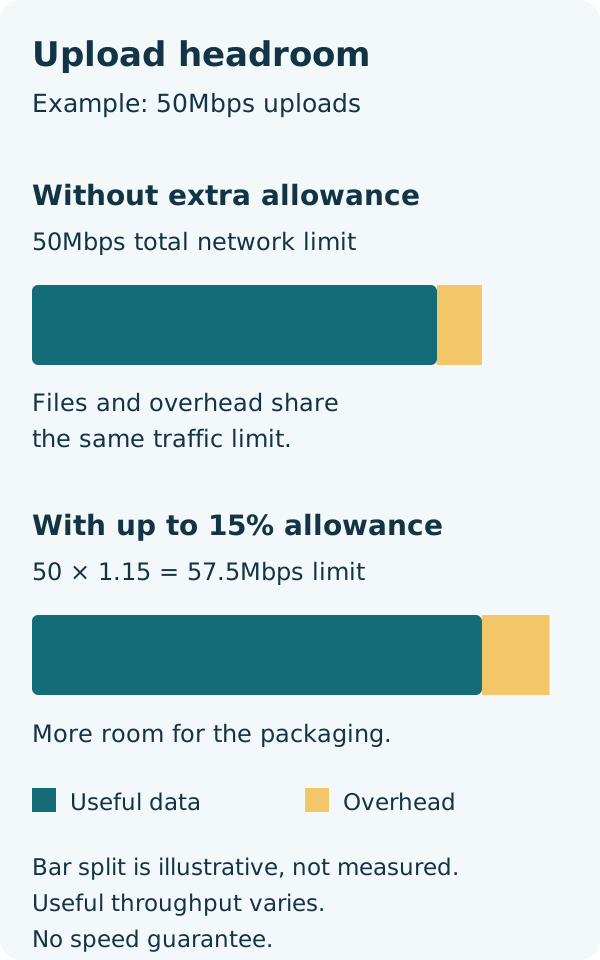
Your files travel with addressing and control information attached. That packaging consumes capacity too. Overprovisioning allows more traffic through the network limit so the useful data has a better chance of reaching the advertised upload rate.
For eligible fibre-to-the-premises (FTTP) and hybrid fibre coaxial (HFC) services, Leaptel lists up to 15% extra upstream allowance. A 50Mbps upload profile with that allowance has 57.5Mbps of network headroom. That is not a promise of 57.5Mbps in a speed test, or a guaranteed 15% improvement in your cloud backup. Neptune’s explanation separates the traffic limit from useful file data; actual results depend on the connection and equipment.
A plan with 50Mbps uploads might therefore test closer to 50, or sometimes above it, once enabled. It has not become a different retail plan. The destination server and whatever else is using your connection still get a vote.
Copper still has copper limits
Leaptel lists smaller allowances for fibre-to-the-node and fibre-to-the-building, with fibre-to-the-curb varying by profile. Those technologies retain copper in the access connection. Extra allowance cannot repair a noisy line or make it synchronise above its physical capability. Check your technology and plan with your provider rather than assuming every connection gets the fibre result.
On fixed wireless? Check separately with your provider. The fixed-line allowances described here should not be assumed to apply to your service.
Do this before spending money
NBN’s 14 October research found 62% of surveyed fixed-line customers did not understand upload speed’s importance or which applications depend on it; 44% were unsure of their plan’s upload speed. Start by finding the upload figure on your own plan. It is the number that matters when you send files, back up photos or join a video call.
- Connect a capable computer to your router by Ethernet, and turn off that computer’s Wi-Fi so you know which link you are testing.
- Pause cloud backups and other heavy household traffic. Temporarily disconnect a VPN if appropriate, then run the same reputable speed test a few times, including at a busy time. Record upload, download, latency and the test server.
- Compare with earlier wired results if you have them. A single Wi-Fi result cannot establish whether NBN changed your profile.
- If uploads remain low, ask your provider whether the allowance is active and whether your line or an existing router upload limiter is the bottleneck. Get advice before changing queue or shaping settings.
My take: check first, upgrade for a reason
This is a sensible bit of housekeeping for a number that usually hides behind the big download headline. It may help without a hardware purchase or a more expensive plan, but it will not solve every slow upload. If your current service now does the job, keep your money. If you still need more upload capacity, compare the second number on the plans, not just the biggest number on the ad.
Primary sources
Read the evidence.
- Upstream overprovisioning announcement, 14 October 2026Leaptel ↗
- Upload headroom, 16 October; correction 18 October 2026Neptune Internet ↗
- The overlooked importance of upload speed, 14 October 2026NBN Co ↗
Source-based explainer checked 27 October 2026. No firsthand performance testing. Provider timing and service eligibility vary. Fixed-wireless figures omitted because provider descriptions disagree. Illustrations are original editorial diagrams, not network measurements.
Community
Add to the article.
Useful experiences, questions and corrections make the next reader’s decision easier.
Comments appear here after moderation.