
The short version
What you need to know.
- The bill was introduced on 27 October 2026. These are proposed changes, not enacted rules.
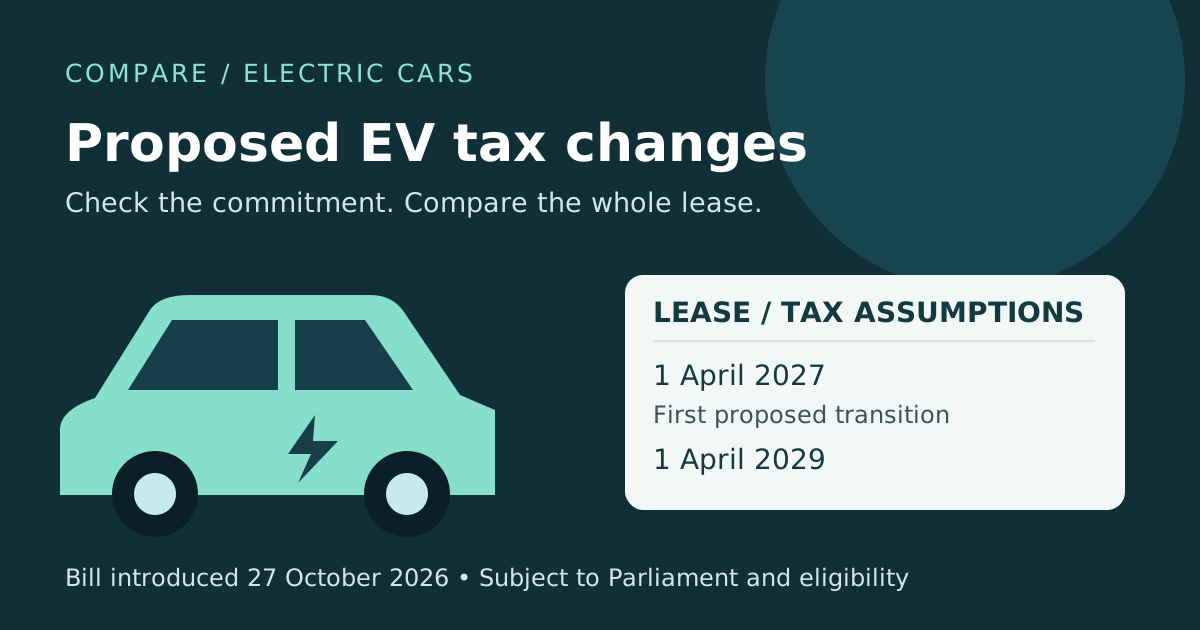
- New eligible commitments would face different treatment from 1 April 2027 and 1 April 2029.
- Existing eligible commitments have proposed protection. Confirm what a replacement or changed arrangement means.
The news is the bill, not a tax change overnight
If you are comparing an electric car through a novated lease, put the tax assumptions beside the monthly repayment. The government introduced the Treasury Laws Amendment (Tax Reform No. 4) Bill 2026 on 27 October, including changes to the electric car discount. This is proposed legislation. Introduction does not make it law.
A novated lease involves you, your employer and a finance provider, with payments arranged through your salary. Fringe benefits tax, or FBT, is part of the employer-provided car calculation. A concession can change the package cost, but it is not a cash rebate available to every EV buyer.
Current ATO eligibility includes battery-electric and hydrogen fuel-cell cars, first both held and used on or after 1 July 2022, with no luxury car tax ever payable on sale or importation, and private use by current employees or their associates. New plug-in hybrid arrangements generally stopped qualifying from 1 April 2025; limited earlier commitments can retain protection.
Two dates to put beside the quote
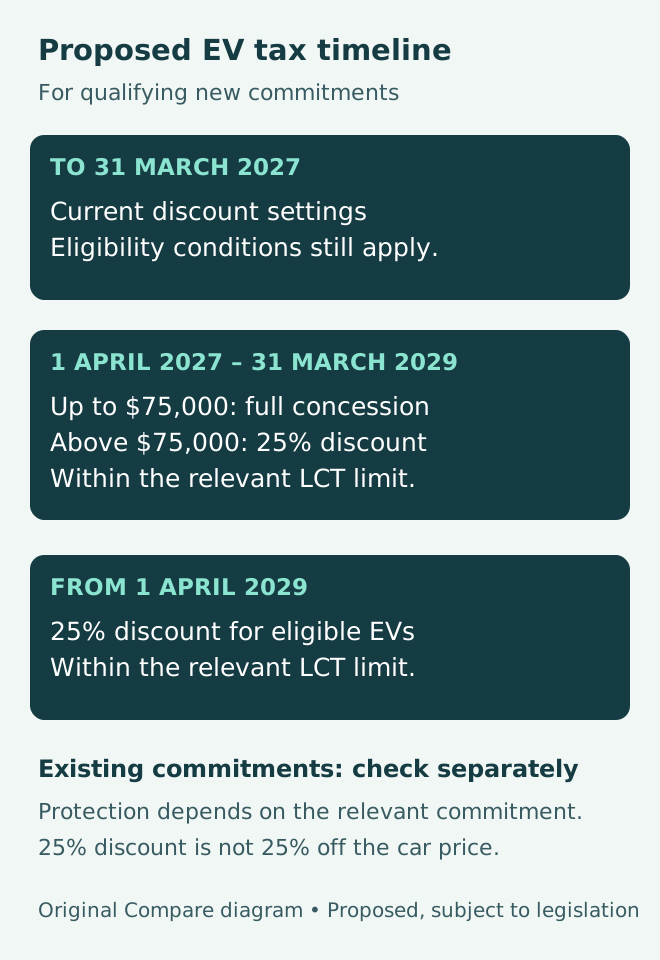
The policy was announced in May; yesterday’s bill moves it into Parliament. The proposed transition keeps the existing discount settings through 31 March 2027. Eligibility still matters: having an electric badge on the boot does not settle the tax treatment.
From 1 April 2027 to 31 March 2029, eligible EVs valued at $75,000 or less would retain the full FBT concession for qualifying new commitments. Eligible vehicles above $75,000, within the fuel-efficient luxury car tax limit, would receive a 25% discount instead. From 1 April 2029, the partial concession would extend to all eligible EVs within that limit for new commitments.
Treasury’s second-reading speech describes that 25% reduction as applying to the usual 20% statutory formula rate. In a straightforward full-year illustration, 20% becomes 15%. That is not a 25% reduction in the car price, your lease repayment or your total tax bill. Ask for the actual calculation.
Existing leases need a careful reading
The October speech says eligible cars would retain the treatment applying when their last relevant commitment began. Treasury’s consultation summary also ties protection to when the commitment to provide the vehicle is made. That is more specific than “I ordered one before the deadline”.
Do not assume protection follows the car forever. Treasury’s September draft explanatory materials discuss refinancing, contract changes and employer changes as potential new commitments. Those are consultation materials, not proof of the final law. Ask your provider and a qualified tax adviser to confirm the introduced bill’s treatment of your arrangement before relying on grandfathering.
Compare the whole deal before the deadline
Request a written breakdown covering the vehicle value used for eligibility, finance rate, administration fees, insurance, running-cost assumptions and end-of-lease residual. Compare the same car and ownership period against buying outright or ordinary finance. A smaller payslip deduction is only one part of the bill.
Also ask what happens if delivery slips, you change jobs or you end the lease early. Keep charging costs realistic for your household, including installation if needed. A tax deadline is a fairly expensive reason to discover the car does not suit your parking.
My take: price the car, then the concession
Targeting support towards cheaper EVs is a reasonable policy aim. The catch is that salary packaging access and individual circumstances still shape who benefits. My starting point would be a car you can afford and charge reliably, followed by a written comparison with the proposed rules clearly labelled. Get advice for your circumstances before signing. This is general consumer information, not personal tax advice.
Primary sources
Read the evidence.
- Bill introduction announcement, 27 October 2026Australian Treasury ↗
- Second-reading speech, 27 October 2026Australian Treasury ↗
- Original policy announcement, 5 May 2026Australian Treasury ↗
- September consultation and draft explanatory materialsAustralian Treasury ↗
- Current electric cars exemption and eligibilityAustralian Taxation Office ↗
Checked 28 October 2026. Proposed legislation, subject to Parliament. September consultation materials are identified as drafts; the public Parliament bill and explanatory memorandum pages could not be retrieved during checking. No personal tax calculations, firsthand lease experience or measured search-volume claims. Independent editorial; original Compare illustrations.
Community
Add to the article.
Useful experiences, questions and corrections make the next reader’s decision easier.
Comments appear here after moderation.