
The short version
What you need to know.
- The eSafety Commissioner has recommended automatic face blurring, an unmistakable recording indicator that cannot be disabled or covered, and recording that stops if the indicator is obstructed. These are recommendations, not current mandatory product rules.
- A separate proposal from the Greens would temporarily stop imports of wearable recording devices while privacy laws are reconsidered. It has not passed parliament and legitimate accessibility uses are expected to be considered.
- Filming in an open public place is not automatically illegal, but every state and territory regulates private conversations, while several also regulate private activities and optical surveillance. Recording and publishing can be separate legal questions.
- A venue, employer, school, pool or private-property operator can impose conditions that are stricter than the general law and can require wearers to stop recording or leave.
- The strongest buying test is not simply camera quality. Check how obvious the recording indicator is, whether recording stops when it is covered, where footage and transcripts go, how they are deleted and whether the useful features justify wearing a camera around other people.
Australia has not banned smart glasses
The headline needs a careful first sentence: Australia's eSafety Commissioner has not banned Meta, Rokid or any other pair of camera-equipped glasses. eSafety has published Safety by Design recommendations for manufacturers while the federal government and privacy regulator consider whether existing laws are adequate.
The recommendations are substantial. eSafety says recording indicators should be clear and unmistakable, should not be capable of being disabled or easily obscured, and should block recording when tampered with. It also wants the faces of people who have not given informed consent blurred automatically, recording disabled when the glasses are not being worn, and livestreaming delayed so moderation can occur.
Separately, the Greens intend to introduce a bill seeking a 12-month import pause for smart glasses and other wearable recorders while stronger privacy protections are considered. Crossbench support gives the proposal political attention, but a proposal is not law. The federal government says it is considering the wider issue through its next stage of privacy reform.
Why glasses feel different from a phone camera
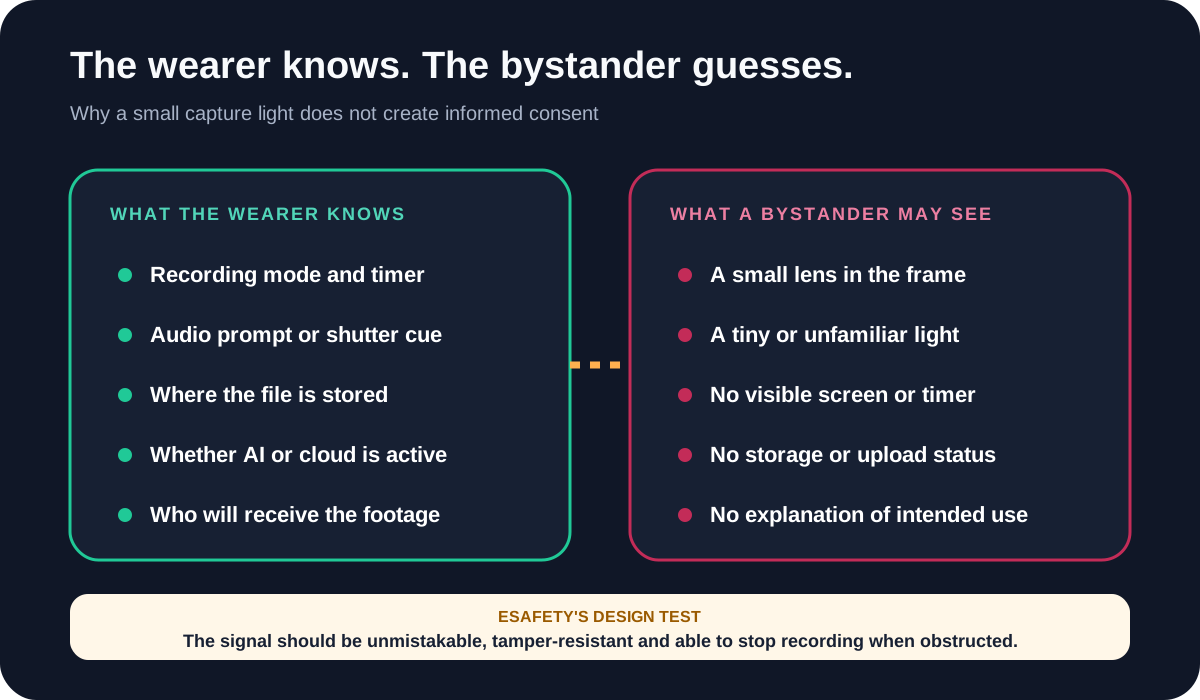
A phone being held at eye level is a social signal. Most people notice it, move away or ask what is being filmed. Smart glasses remove that signal because the wearer can look directly at someone while appearing to do nothing more than hold a conversation.
The hardware is not necessarily invisible. Camera lenses and capture lights are normally present on the frame, but they can be small, unfamiliar or difficult to notice in bright sunlight. The bystander also cannot see the interface the wearer sees or hear prompts delivered through the speakers. That information imbalance is the core problem.
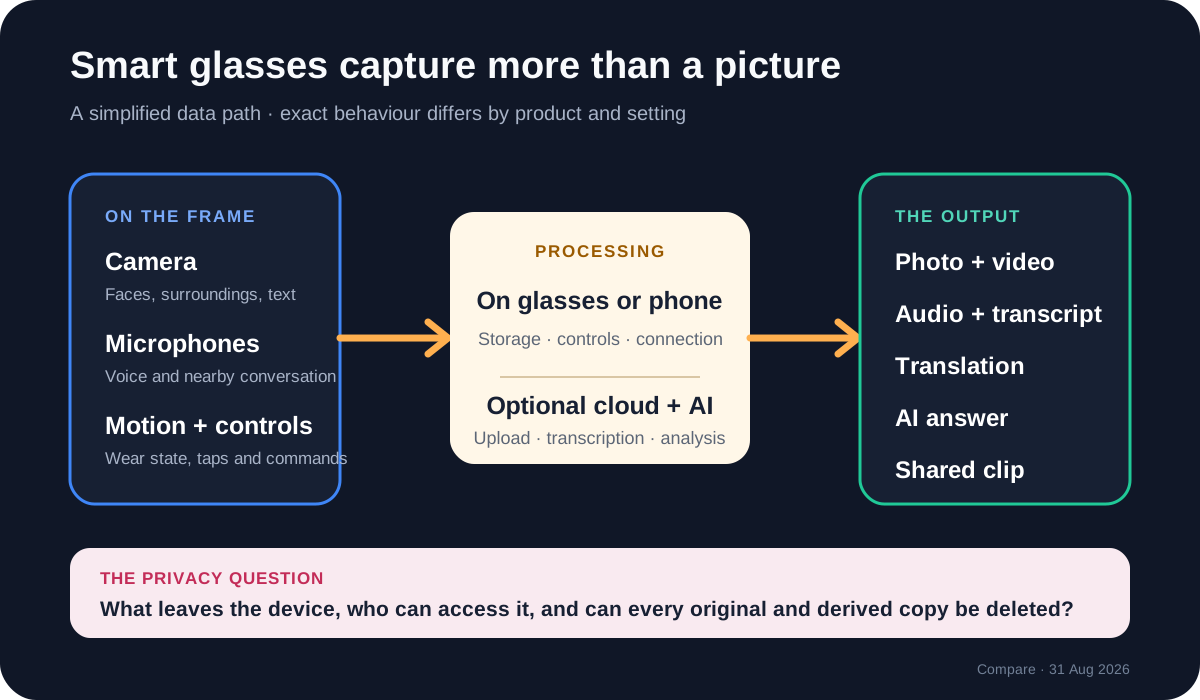
It becomes more serious when a device combines video, audio, location, a connected phone and AI. A short clip may contain a person's face, voice, workplace, companions and conversation. Uploading it can add account identifiers, cloud processing, transcripts or automatic analysis. The risk is no longer confined to the pixels saved on the glasses.
Can the recording light simply be covered?
On a well-designed product, it should not be that simple. Some manufacturers use a capture LED and newer designs may detect obstruction, but the implementation is model-specific. Cheap camera glasses can use a light that is difficult to notice, and online reports have shown users attempting to conceal or defeat indicators on better-known products.
That is why eSafety's recommendation matters. It shifts responsibility from a warning in the manual to a hardware and software control: if the light is covered or modified, recording should stop. The indicator also needs to communicate something meaningful to people who have never seen that model before.
Automatic face blurring is harder than it sounds. A device would need to distinguish people who consented from everybody else, preserve accessibility and legitimate documentation uses, and avoid uploading an unblurred original before processing. Buyers should ask whether blurring happens on-device, whether an original is retained and whether the wearer can reverse it.
What Australian recording law actually says
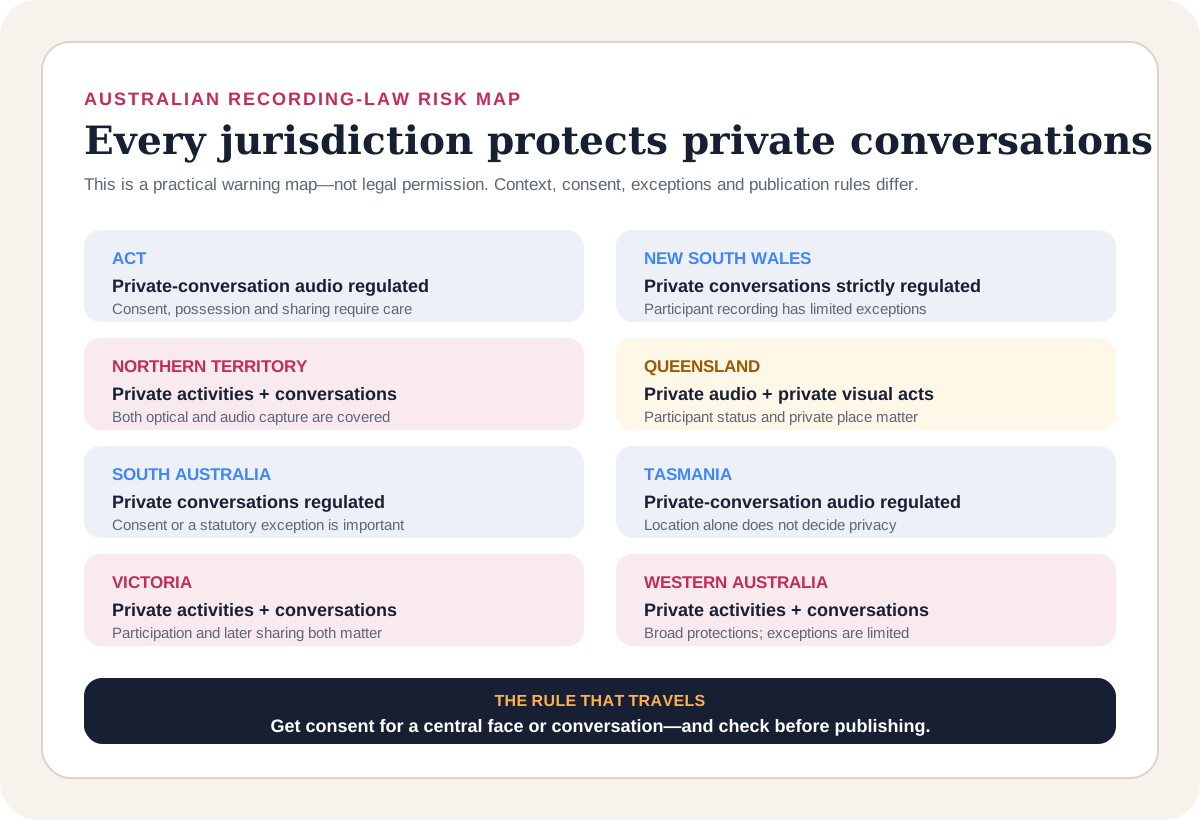
There is no single Australian rule saying that every person visible in a public video must consent. Equally, the phrase 'you can film anything in public' is dangerously broad. The location, subject, audio, expectation of privacy, way the recording was obtained and what happens to it afterwards all matter.
All states and territories regulate the use of listening devices to capture private conversations. Several jurisdictions also regulate optical recording of private activities. A conversation can remain private in a café, workplace or other accessible location if the circumstances indicate that participants did not expect it to be overheard or recorded. Exceptions differ and may involve consent, participation in the conversation, protection of lawful interests or other tightly defined circumstances.
Publication is another layer. A recording that was lawful to make is not automatically lawful to upload, monetise or use to embarrass someone. Surveillance-device laws can restrict communication of recordings; defamation, confidentiality, stalking, harassment, intimate-image and child-protection laws may also apply. Australia's newer statutory tort for serious invasions of privacy can provide a civil path where an intentional or reckless invasion causes sufficiently serious harm.
Businesses and venues do not need to wait for parliament
Private-property operators can set conditions of entry. A shop, gym, event, school, childcare service, workplace or swimming pool may prohibit cameras or wearable recording even where incidental public filming might otherwise be lawful. Brisbane City Council has already moved to prohibit covert filming devices, including smart glasses, at its public pools.
For the wearer, arguing about the narrow boundary of surveillance law at the front desk is a poor strategy. If staff tell you recording is not permitted, stop recording and remove or switch off the device. Refusing to comply can become a property-access or workplace-conduct problem even before privacy legislation is considered.
For organisations, a workable policy should cover all recording devices rather than naming one brand. It should define sensitive areas, accessibility exceptions, authorised business devices, storage rules, signage and what staff should do when recording is suspected.
The useful side of AI glasses is real
I do not think every person wearing smart glasses is trying to film strangers. I have been using AI glasses for notifications, live translation, hands-free video and AI assistance. Translation helped my wife follow Polish conversations at an event, while hands-free capture has been genuinely useful when demonstrating products or doing something with both hands.
Those benefits are why a blanket social rejection would be unfortunate. But my latest Dirt Report is not a product review: it looks directly at the Australian privacy backlash, the risk of covert recording and the growing push for restrictions on camera-equipped glasses. I have linked that video beside this article and in the source list below.
But useful intent does not solve the bystander's problem. They cannot know whether I am reading a notification, translating a sign or filming them. The social licence for this category will depend on manufacturers making that difference obvious without forcing everyone nearby to recognise dozens of tiny proprietary LEDs.
What buyers should check before purchasing
Meta, Rokid and lower-cost camera glasses should not be compared only on resolution and battery life. The privacy design affects where you can comfortably use them, whether other people trust you and whether the product becomes unwelcome at workplaces and venues.
- Recording indicator: Is it visible from normal conversation distance and in bright daylight?
- Tamper protection: Does photo or video capture stop if the indicator is covered?
- Audio behaviour: Can the glasses record conversations, and is there a separate audio indication?
- Storage path: Are files kept on the glasses, transferred to the phone or uploaded automatically?
- AI processing: Are images, voices or transcripts sent to a cloud service or used to improve models?
- Deletion: Can you permanently remove originals, derived clips, transcripts and cloud copies?
- Live features: Can the product livestream, identify faces or retrieve personal information about people nearby?
- Prescription and accessibility use: Can the required features work without enabling unnecessary recording or cloud access?
- Venue compatibility: Would you be comfortable wearing them at work, around children, in a gym or at a private event?
Are smart glasses becoming socially unacceptable?
They are moving toward a trust crisis, but that is not the same as inevitable rejection. Smartphones survived their own camera backlash because people learned the visible gesture of recording and venues developed rules. Smart glasses need an equivalent signal—and a tiny white dot is probably not enough.
Automatic face blurring may be technically messy, and an import pause may never become law. The regulator's broader point is still persuasive: companies cannot sell discreet, AI-connected cameras at mass-market prices and place the entire burden on individual manners after harm occurs.
My view is that camera glasses remain worth considering when they solve a specific problem such as translation, accessibility or hands-free documentation. I would avoid buying them merely because hidden capture looks convenient. If people around you cannot tell when the camera is active, the product has not solved the most important design problem it created.
Primary sources
Read the evidence.
- Smart glasses and online safetyeSafety Commissioner ↗
- Surveillance wearables and Australian privacy lawOffice of the Australian Information Commissioner ↗
- Proposed Australian import pause for smart glassesABC News ↗
- Current reporting on eSafety's face-blurring proposalThe Guardian Australia ↗
- Filming with a smartphone or hidden cameraArts Law Centre of Australia ↗
- Filming in public placesArts Law Centre of Australia ↗
- My Dirt Report on the smart-glasses privacy backlashTech Man Pat on YouTube ↗
Information was checked on 31 August 2026. The legal section is general consumer information, not legal advice. Surveillance, privacy, workplace and venue rules depend on the jurisdiction, circumstances, device behaviour and intended use. Obtain legal advice for a specific recording or publication decision.
Community
Add to the article.
Useful experiences, questions and corrections make the next reader’s decision easier.
Comments appear here after moderation.