
The short version
What you need to know.
- Eligible Sealion 7 owners can now apply to Amber’s vehicle-to-grid program, with BYD battery-warranty support for participants.
- Amber advertises a StarCharge Halo and standard installation from $2,990; your property, network and program acceptance still need checking.
- Savings depend on your driving, charging, household use and electricity prices. A large car battery does not guarantee a large return.
What changed for Sealion 7 owners?
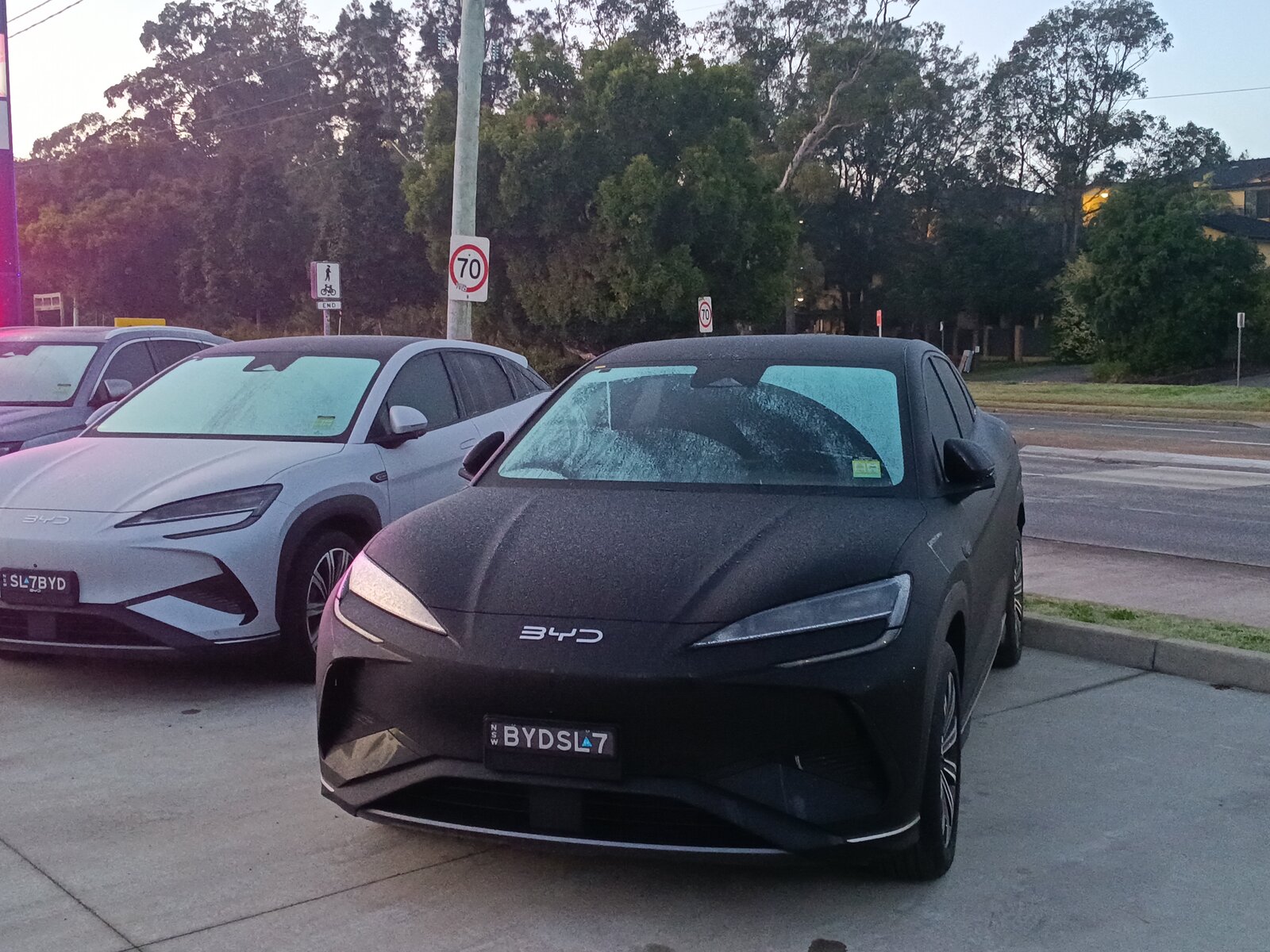
Amber and BYD announced on 18 September that the Sealion 7 is joining their vehicle-to-grid program alongside the Atto 3. Eligible owners can apply to use their car battery to supply the house and export electricity through Amber’s controls, with BYD battery-warranty support for participants.
This is a live, expanding program with an application process. Amber reported more than 50 operating V2G sites and over 8,000 people waiting. ARENA describes the expansion as a trial growing to 1,000 V2G homes, supported by an additional $13.6 million, taking its total funding to $16.8 million. Those 1,000 homes are the target, not the number already connected.
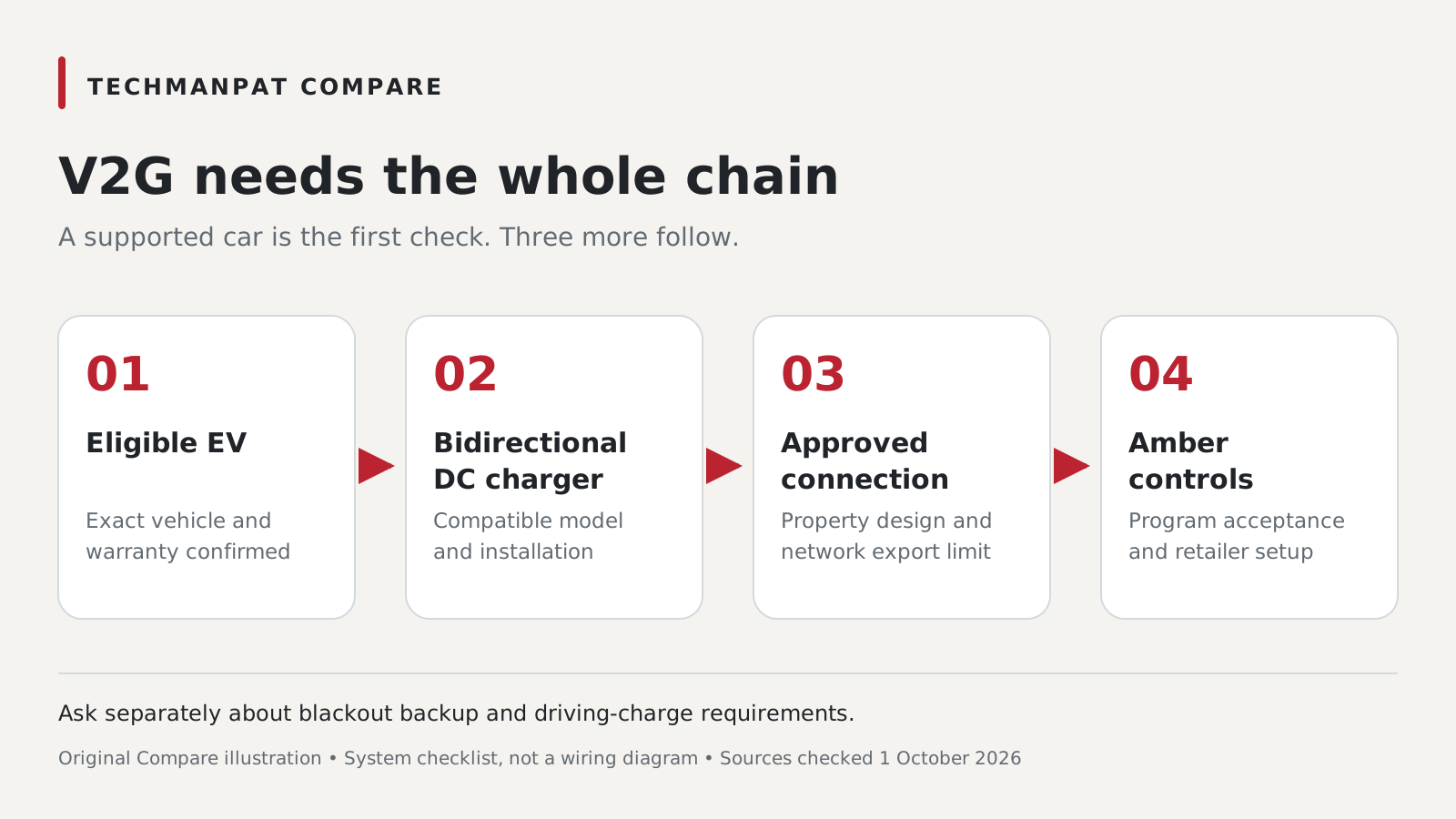
You need more than the car and a charging cable
Vehicle-to-home, or V2H, supplies household loads from the car. Vehicle-to-grid, or V2G, exports to the electricity network. The Sealion 7’s existing vehicle-to-load function powers individual appliances; it does not establish that your house is ready for grid-connected bidirectional charging.
Amber currently names the StarCharge Halo in its subsidised offer. StarCharge describes the 7.4 kW and 11 kW Halo models as bidirectional DC wallboxes. A normal one-way AC home charger cannot do this job. Backup during a blackout is another installation question: have the installer document the equipment, circuits and operating conditions rather than assuming V2G includes it.
Check StarCharge’s Halo equipment details →
The advertised charger price is only the starting point
Amber lists $2,990 including GST for a single-phase 7.4 kW Halo with standard installation, or $4,490 for the three-phase 11 kW package. The authorised installer’s site assessment determines your actual quote. Ask what standard installation includes and price any switchboard work, extra cabling and other site requirements before comparing it with a conventional charger.
The program runs for at least 12 months from onboarding. Participants agree to keep Amber as retailer at that address for that period, take part in research and allow anonymised data sharing with ARENA. Amber’s published subscription is $25 a month, or $300 a year, alongside electricity and other supply costs.
The September announcement also offers eligible new Sealion 7 Premium and Performance buyers 6% off base RRP including GST. Confirm that offer and the final drive-away price in writing; Amber’s hub currently describes the vehicle discount only for the Atto 3.
Your postcode still gets a vote
Amber’s retail footprint covers Victoria, NSW, South Australia, the ACT and south-east Queensland’s Energex network. It does not include WA, Tasmania or the NT. Being inside that footprint still leaves the particular property and equipment to approve.
Energex, for example, requires a connection application and approval before bidirectional charging is installed. Existing solar and battery inverters, total inverter capacity and export limits affect the design. Ask the installer for your own distributor’s requirements and the approved export limit. A national announcement is useful; the local network still has paperwork.
Get the warranty answer for your exact vehicle
BYD’s program support matters because it addresses the extra use of an expensive battery. Keep its scope clear: Amber’s announcement supports participating eligible vehicles. It does not establish warranty approval for every Sealion 7 and charger combination outside the program.
BYD’s published Australian handbook sets battery coverage at eight years or 160,000 kilometres, whichever comes first, with at least 70% capacity retention, subject to its terms. Before committing, obtain the program’s written warranty exemption for your vehicle, including operating conditions and what happens if you leave. A headline cannot answer those individual details.
The quiet months belong in the calculation too
Amber’s August fleet update gives a useful reality check. Across 64 connected sites, it reported roughly $34 per home in V2H and V2G discharge value: about $29 from avoiding household grid purchases and $5 from exports. That is a company-reported monthly average, not net profit or a forecast for Sealion 7 owners.
A fair comparison includes charging costs, conversion losses, battery use, the subscription and the installed price. Petrol savings from replacing a combustion car should be considered separately from the extra benefit of buying V2G equipment. Your driveway may earn its keep, but it has not been given a salary.
Five checks before you pay
Start with your normal week: where the car parks, when you need it and how much charge must remain for driving. Then put these answers beside a conventional charging quote and your current electricity bill.
Compare home EV chargers and installation needs →
- Has Amber accepted this vehicle and property into the program?
- Does the quote identify the exact charger, all installation costs and network approval?
- Have you received the written warranty conditions and program exit terms?
- Will the car be plugged in when your household needs stored energy?
- Does the annual comparison use your own usage and realistic prices, including quiet months?
Primary sources
Read the evidence.
- Sealion 7 program expansion and vehicle discount, 18 September 2026Amber Electric ↗
- Current V2G program hardware, prices and participation conditionsAmber Electric ↗
- Additional funding and expanded trial, 29 May 2026ARENA ↗
- Halo IEC 7.4/11 kW bidirectional DC wallboxStarCharge ↗
- Retail network coverageAmber Electric ↗
- Bidirectional charging and network approvalEnergex ↗
- Australian warranty handbook, section 1.3.1BYD Australia ↗
- Subscription price, Q3 update, 10 July 2026Amber Electric ↗
- August 2026 V2X fleet results, published 9 September 2026Amber Electric ↗
- Sealion 7 Australian specifications and V2LBYD Australia ↗
- Sealion 7 photograph, West Gosford, July 2026; CC0JaredMcKenzie / Wikimedia Commons ↗
Sources checked 1 October 2026. Prices and acceptance are subject to Amber’s site assessment and current terms. Amber’s September announcement and current hub differ in how they describe the new-vehicle discount; confirm it directly before relying on it. Fleet results are provider-reported and do not guarantee future savings.
Community
Add to the article.
Useful experiences, questions and corrections make the next reader’s decision easier.
Comments appear here after moderation.